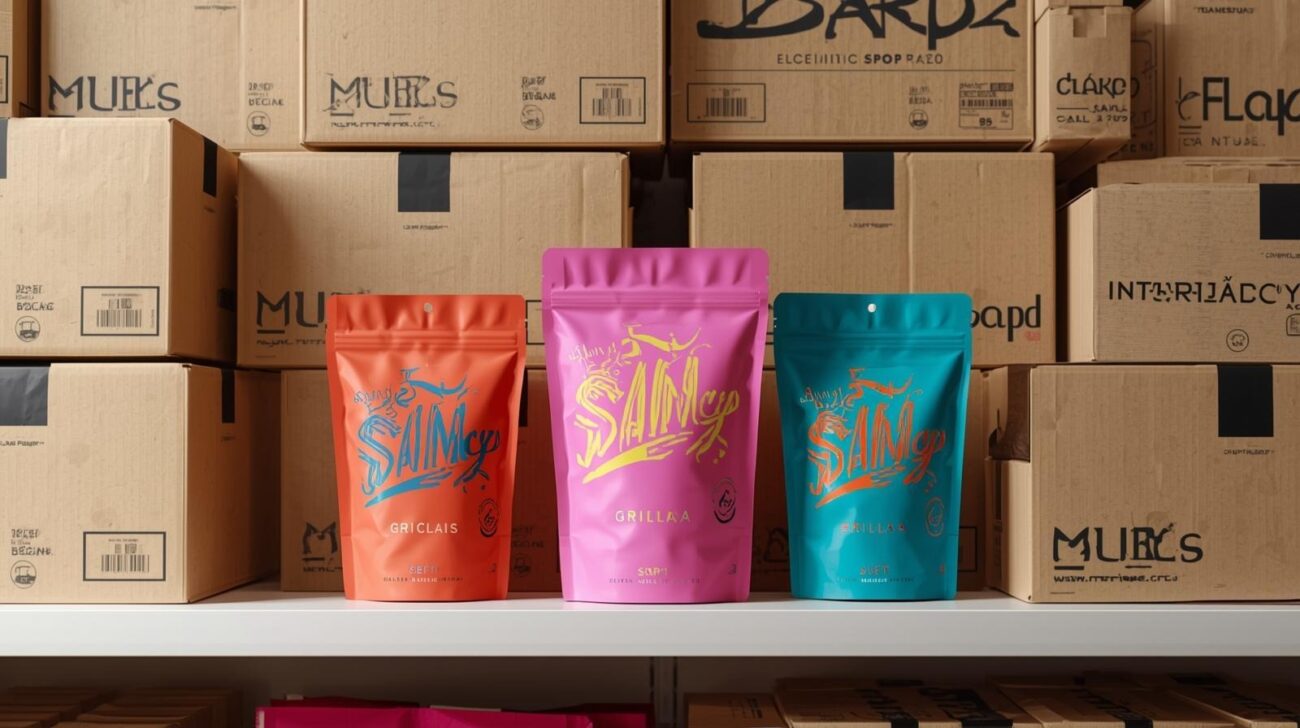
Some products need more from packaging than a visually attractive exterior. Coffee, snacks, dried foods, powders, pet treats, and similar products can be sensitive to moisture, oxygen, light, and repeated opening. For these applications, Custom Mylar Bags provide a flexible packaging format that combines product protection, convenient storage, and extensive printable space.
Unlike rigid boxes, Mylar Packaging can be designed around the volume and characteristics of the contents without adding unnecessary bulk. Brands can choose stand-up formats, flat pouches, zipper closures, heat-sealed openings, and custom printing according to how the product will be filled, displayed, stored, and used.
The result is packaging that can work throughout the product lifecycle—from production and retail display to storage in the customer’s home.
Why Mylar Packaging Is Used for Sensitive Products
Packaging performance becomes particularly important when environmental exposure can affect the product inside.
Depending on their construction, Mylar Bags and multilayer flexible pouches can provide barrier properties that help limit exposure to factors such as moisture, oxygen, and light. The exact performance depends on the complete material structure, thickness, seals, and closure system rather than the name “Mylar” alone.
This makes material specification an important part of the packaging process.
A dry snack does not necessarily require the same barrier properties as roasted coffee. Powders, confectionery, dried fruit, and pet products may also have different requirements.
Businesses should therefore develop the pouch around the product rather than selecting packaging based only on appearance.
Stand-Up Pouches Combine Storage With Shelf Presentation
One of the most recognizable flexible packaging formats is the stand up pouch.
Its bottom gusset allows the package to stand vertically when filled. This provides a stable front-facing surface for branding while helping retailers arrange products efficiently.
Stand up pouch bags can be particularly useful for:
- Coffee
- Tea
- Nuts and seeds
- Dried fruit
- Granola
- Confectionery
- Spices
- Powders
- Pet treats
- Shelf-stable snacks
Because the pouch stands upright, both the front and back panels can carry printed information without requiring an additional carton simply for display.
For ecommerce brands, flexible pouches can also occupy less space than many rigid packaging formats.
Resealable Bags Make Multi-Use Products More Convenient
Many packaged products are not consumed immediately after opening.
A customer may open coffee in the morning and return to it the following day. Snacks may be eaten over several occasions. Pet treats, powders, and dry ingredients can remain in use for weeks.
This is where Resealable bags become useful.
A zip lock closure allows the package to be opened and closed repeatedly after the original seal has been broken. Properly designed Zipper Bags, Zip Lock Bags, and Ziplock Bags can improve convenience by allowing customers to keep products inside their original packaging.
A Resealable pouch can also reduce the need for customers to transfer contents into a separate storage container.
However, the zipper should not automatically be treated as the original tamper or freshness seal. Depending on the product, a separate heat sealed section may be used above the zipper and opened by the customer before the resealable feature becomes accessible.
Heat Sealing Adds an Important Packaging Function
A zipper offers convenience after opening, while heat sealing can serve a different purpose.
During production, the top of a pouch may be sealed after filling to create a closed package for distribution. Tear notches can then make the sealed section easier for customers to open.
This creates a useful sequence:
The product is filled, the package is sealed, the customer opens the original seal, and the zipper is then used for repeated access.
The seal design, temperature, equipment, and material compatibility all influence performance. Businesses should test actual production pouches with their filling and sealing processes rather than assuming every flexible package will behave identically.
A premium printed pouch is of little value if the seal does not perform reliably.
Mylar Food Storage Bags Need Product-Specific Planning
Mylar food storage bags are frequently associated with preserving dry products, but brands should avoid assuming that every pouch is suitable for every food application.
Food packaging should use materials appropriate for the intended food-contact application. Product characteristics, expected shelf life, filling process, storage conditions, and distribution environment can influence the required construction.
For example, dry snack packaging and frozen-food freezer bags face very different conditions.
Similarly, products containing oils can interact with packaging differently from dry powders.
The appropriate Food Pouches should therefore be selected with the specific product and applicable requirements in mind.
What Role Does an Oxygen Absorber Play?
Some dry-food storage applications use an oxygen absorber inside the package to reduce residual oxygen after sealing.
However, oxygen absorbers should not simply be added to every product.
Their suitability depends on the food, moisture level, storage objective, package barrier properties, and safe food-storage practices. Using them incorrectly can create problems rather than improve storage.
For commercial food packaging, businesses should determine the correct packaging system and shelf-life requirements with qualified food-packaging or food-safety professionals.
The pouch, seal, storage environment, and any internal preservation component should be considered as one system.
Foil Bags Can Provide Different Barrier Characteristics
The terms Foil Bags, Mylar Foil Bags, and Mylar pouches are sometimes used interchangeably in general marketing, but flexible packaging structures can differ considerably.
Some packages contain metallized films, while others may incorporate foil or different laminated layers. Those differences can affect barrier performance, appearance, flexibility, sealing, and recyclability.
This is why brands should request actual material specifications rather than selecting a pouch solely because it has a metallic appearance.
For products requiring greater protection from light or environmental exposure, the appropriate multilayer structure can be selected according to measurable performance requirements.
Packaging decisions should be based on what the product needs, not simply what the material looks like.
Printed Mylar Bags Can Become the Primary Branding Surface
Flexible packaging offers a substantial printable area relative to its weight.
Printed Mylar Bags can incorporate logos, product names, flavor distinctions, illustrations, preparation information, barcodes, QR codes, and other relevant details directly onto the pouch.
For retail products, this means the package can provide both protection and shelf communication.
Strong designing packaging decisions begin with hierarchy.
Customers should be able to recognize the brand and identify the product quickly. Secondary information should remain readable without competing with the main design.
Instead of filling every available area, brands can use space strategically. A clear front panel often creates a stronger impression than excessive graphics and claims.
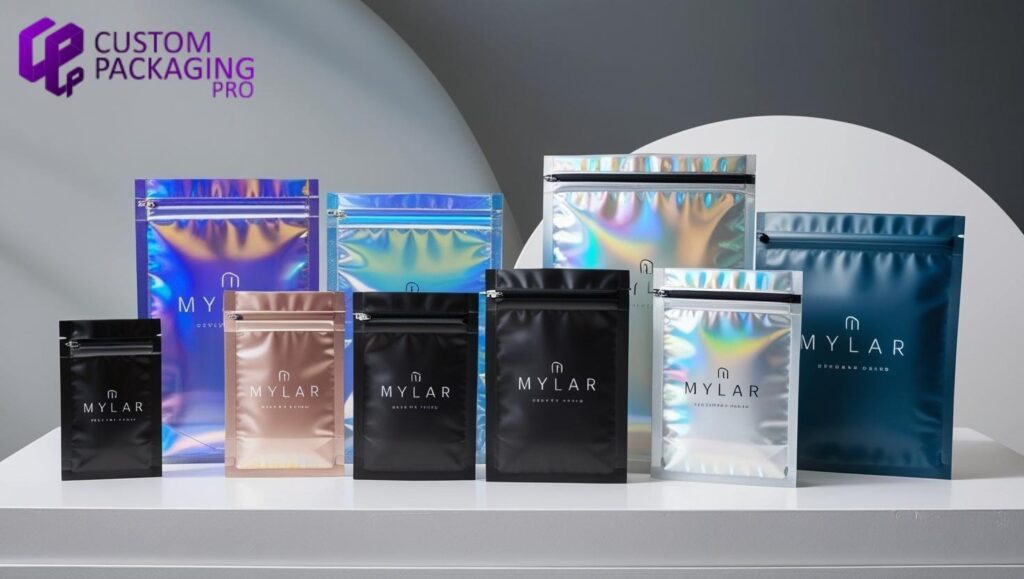
Digital Printing Can Help Brands Manage Multiple SKUs
Businesses with several flavors, sizes, or product varieties need packaging that remains consistent while making individual products easy to identify.
Digital printing can be useful for selected custom packaging projects because artwork can be changed between designs without abandoning the broader visual system.
A snack company, for example, could maintain the same logo position and pouch layout while assigning different graphics to each flavor. A coffee brand could distinguish roasts through typography or illustrations while preserving a recognizable family appearance.
This can also support limited editions or seasonal designs where appropriate.
The printing method should ultimately be selected according to quantities, materials, design requirements, budget, and production capabilities.
Die-Cut Features Can Improve Functionality
Flexible packaging can incorporate die cut features that improve handling or presentation.
A hang hole can allow lightweight products to be displayed on retail hooks. Tear notches can guide opening. Rounded corners may improve handling, while certain pouch shapes can differentiate products visually.
Each feature should solve a practical problem.
An unusual shape that looks interesting but reduces filling efficiency or creates excessive material waste may not be worthwhile. Likewise, a feature that interferes with seals or printable areas can create complications elsewhere.
Custom pouch design works best when structure and graphics are developed together.
Child-Resistant Packaging Is a Specialized Requirement
Some regulated or potentially hazardous products may require Child Resistant Mylar bags or other specialized packaging depending on the contents and jurisdiction.
Child-resistant packaging is not simply a zipper that feels difficult to open. Where legally required, the packaging may need to satisfy specific standards or testing requirements.
Businesses dealing with products subject to such requirements should verify applicable laws and obtain appropriate packaging documentation before production.
The same principle applies to tamper-evident features and required warnings.
Compliance requirements should be identified before artwork and structure are finalized, not added as an afterthought.
Custom Sizes Can Reduce Material and Product Movement
A pouch that is significantly larger than its contents can look underfilled and use more material than necessary.
Custom Mylar Bags can be developed around the intended fill volume, product density, headspace, sealing area, and display requirements.
The correct dimensions can improve both appearance and packing efficiency.
A powder may settle differently from chips or pet treats, even when the products have similar weights. Brands should therefore test actual fills rather than choosing pouch dimensions based entirely on weight.
The gusset, zipper position, seal area, and required headspace should all be considered before dimensions are approved.
Flexible Packaging Can Reduce Shipping Bulk
One advantage of Pouch Bags is their relatively low empty-package volume compared with many rigid containers.
Unfilled pouches can be stored compactly, while filled packages can often use space efficiently in shipping cartons. Lower packaging weight may also benefit transportation efficiency depending on the complete packaging system.
However, flexible packaging is not automatically the most sustainable choice for every product.
Multilayer films can be difficult to recycle through conventional household systems. Environmental performance depends on material composition, product protection, waste prevention, transportation, and available recovery infrastructure.
Brands should avoid unsupported environmental claims and evaluate the complete lifecycle of the packaging instead.
Wholesale Mylar Bags Require More Than a Price Comparison
As businesses scale, Mylar Bags Wholesale can provide consistency across larger production runs.
But the lowest unit price should not be the only consideration.
Brands should evaluate print consistency, material specifications, sealing performance, dimensional tolerances, zipper quality, production capacity, and expected turnaround times.
Packaging should also be tested on the equipment used for filling and sealing.
A small dimensional change may affect how efficiently a pouch runs through production. Similarly, inconsistent seals or zippers can create problems that cost more than any initial packaging savings.
Long-term cost effectiveness comes from packaging that performs consistently across production, shipping, retail, and customer use.
Building a Better Mylar Packaging System
The most successful flexible packaging is developed as a system rather than a decorative pouch.
The material structure protects the contents. The dimensions accommodate the correct fill. The seal secures the package before opening. The zipper provides repeat-use convenience. Printing communicates the product clearly. The structure supports storage and retail display.
When these elements work together, Mylar Packaging can provide a versatile solution for many dry, shelf-stable, and retail products.
When one element is ignored, even visually impressive packaging can create operational or customer-experience problems.
Creating Custom Mylar Bags With Custom Packaging Pro
Custom Packaging Pro develops Custom Mylar Bags, Printed Mylar Bags, stand-up pouches, Zipper Bags, Resealable pouches, and other flexible packaging formats for different product applications. Businesses can customize pouch dimensions, printed branding, closures, structural features, and finishing options according to product and presentation requirements.
Brands requiring larger quantities can develop custom wholesale packaging, while businesses building a broader retail range can coordinate flexible pouches with custom product packages and other branded packaging formats. As a custom packaging supplier, Custom Packaging Pro helps businesses bring sizing, printing, structure, and presentation together in a packaging solution designed around the product.
FAQs
- What are custom Mylar bags commonly used for?
Custom Mylar bags can be used for suitable products such as coffee, tea, dry foods, snacks, powders, confectionery, pet treats, and other items requiring flexible packaging. Material specifications should always be matched to the intended product.
- What is the advantage of a stand-up pouch?
A stand-up pouch uses a bottom gusset that allows the filled package to stand vertically. This can improve shelf presentation while providing useful printable space for branding and product information.
- Can Mylar bags have resealable zippers?
Yes. Many pouch formats can include zip-lock closures that allow customers to open and close the package after the original seal has been broken.
- Can Mylar bags be custom printed?
Yes. Custom Printed Mylar Bags can incorporate branding, product graphics, instructions, barcodes, QR codes, and other appropriate information using compatible printing methods.
- Are Mylar bags suitable for long-term food storage?
Suitability depends on the specific food, packaging material, barrier properties, sealing method, storage conditions, and intended shelf life. Businesses should validate the complete packaging system for their particular food product.
- Can Mylar bags be ordered wholesale?
Yes. Wholesale production is available for businesses requiring larger quantities. Material specifications, pouch dimensions, printing, closures, and production requirements should be finalized before placing a large-volume order.
