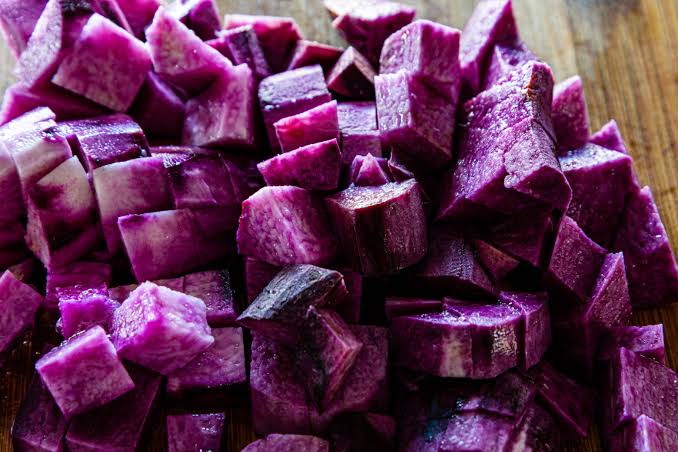
Ube contains natural antioxidants, particularly anthocyanins, the plant pigments responsible for its distinctive purple color. This tropical tuber, also known as purple yam, has attracted attention not only for its sweet, slightly nutty flavor but also for its nutritional composition. Its vibrant flesh offers more than an attractive appearance in desserts and colorful dishes.
Native to tropical regions and widely enjoyed in Filipino cuisine, ube belongs to the species Dioscorea alata. Like many deeply colored plant foods, it contains compounds that can help neutralize free radicals under certain conditions. These molecules are associated with oxidative stress, a biological process involved in cellular damage and several chronic diseases. However, eating antioxidant-rich foods does not automatically prevent or treat disease.
The purple color of ube acts like a natural signature of its plant pigments. Among these compounds, anthocyanins have received considerable scientific attention for their antioxidant activity. Their concentrations vary according to the variety, growing conditions, storage methods, and preparation techniques. Not every purple yam provides exactly the same antioxidant profile.
For people interested in nutritious ingredients, incorporating ube into everyday meals offers a practical way to diversify their intake of plant foods. Fresh purple yam, cooked preparations, and minimally processed powders can all contribute useful nutrients, although their composition differs. Understanding the antioxidants found in ube, their potential effects, and how cooking influences them makes it easier to appreciate this colorful ingredient without exaggerating its health benefits.
What antioxidants are naturally present in ube?
The antioxidant properties of ube come from several naturally occurring plant compounds. The most recognizable are anthocyanins, a family of water-soluble pigments also found in blueberries, blackberries, purple cabbage, and certain varieties of sweet potato. These substances contribute to the characteristic violet appearance of many plants.
Anthocyanins belong to the broader family of polyphenols. Laboratory studies show that some polyphenols can neutralize reactive molecules and participate in chemical reactions associated with antioxidant protection. Their activity depends on their structure, concentration, and surrounding environment.
Ube may also contain other phenolic compounds that contribute to its overall antioxidant capacity. However, the precise mixture varies considerably between cultivars. A deeply purple variety may contain a different concentration of pigments from a lighter-colored one.
Although ube contains vitamins and minerals, its antioxidant reputation is mainly associated with its plant pigments and phenolic compounds rather than exceptionally high levels of conventional antioxidant vitamins.
Anthocyanins and the purple color of ube
The distinctive color of purple yam comes largely from anthocyanin pigments stored within plant cells. These compounds absorb certain wavelengths of light, creating shades that range from lavender to dark violet.
Researchers have identified several anthocyanin derivatives in purple yam, including compounds related to cyanidin and peonidin. Their relative abundance depends on the specific variety of Dioscorea alata being examined.
Anthocyanins are interesting because their chemical structures allow them to interact with reactive compounds in laboratory conditions. This explains why extracts from purple plants frequently demonstrate measurable antioxidant activity.
Nevertheless, the situation inside the human body is more complex. Anthocyanins undergo digestion, absorption, and metabolism. The compounds circulating in the bloodstream may differ from those originally present in the food.
Consequently, a strong laboratory antioxidant measurement does not prove that eating ube produces the same effect in human tissues. The purple color is a useful indicator of certain pigments, but color intensity alone cannot establish nutritional superiority.
Phenolic compounds and antioxidant activity
Beyond anthocyanins, purple yam contains other phenolic compounds that may contribute to its measured antioxidant capacity. These molecules are produced naturally by plants and participate in processes involving growth, environmental adaptation, and protection.
Scientists commonly assess antioxidant activity using laboratory methods such as DPPH or ABTS assays. These techniques estimate how well an extract reacts with particular free radicals under controlled conditions.
Such measurements are useful for comparing samples, but they cannot directly predict the health effects of eating a particular amount of ube. Digestion, individual metabolism, and the complete composition of a meal can influence what happens to these compounds.
Research involving purple yam extracts provides interesting preliminary observations. Still, human clinical evidence specifically demonstrating protective effects from ordinary ube consumption remains limited.
For everyday nutrition, the most reasonable approach is to view these phenolic compounds as one appealing feature of a varied diet containing fruits, vegetables, legumes, and other plant foods.
How can the antioxidants in ube affect human health?
To understand the potential benefits of ube antioxidants, it helps to examine how the body handles free radicals. These reactive molecules are generated naturally during metabolism and through exposure to factors such as pollution, ultraviolet radiation, and tobacco smoke.
Free radicals are not always harmful. Some participate in normal cellular communication and immune responses. Problems can develop when reactive molecules accumulate beyond the capacity of the body’s protective systems, contributing to oxidative stress.
The human body already possesses several antioxidant defenses, including specialized enzymes. Dietary compounds may interact with these systems, but the effects depend on the specific substances consumed and how the body processes them.
Because ube contains anthocyanins and other polyphenols, researchers are interested in its possible role in supporting normal cellular function. However, evidence from laboratory experiments should not be interpreted as proof that purple yam prevents cardiovascular disease, diabetes, cancer, or premature aging.
Antioxidant-rich foods are valuable within balanced dietary patterns, especially when they replace less nutritious choices. Their benefits may reflect the combined contribution of fiber, vitamins, minerals, and plant compounds rather than antioxidant activity alone.
Ube nutrition goes beyond its antioxidant content
While purple pigments attract attention, the nutritional value of ube extends beyond antioxidants. As a starchy tuber, purple yam primarily provides carbohydrates, which serve as an important energy source for the body.
Ube also contains dietary fiber, although the amount depends on the variety and preparation method. Fiber contributes to normal digestive function and can support regular bowel movements when consumed alongside sufficient fluids.
Its carbohydrate content makes portion size relevant for people who monitor their blood glucose levels. Although purple yam contains potentially beneficial plant compounds, it remains a carbohydrate-rich food. Its effect on blood sugar depends on serving size, cooking, processing, and accompanying ingredients.
Ube can provide potassium and smaller amounts of other minerals. Potassium contributes to normal muscle and nerve function and plays a role in fluid balance. Actual nutrient quantities differ between fresh, cooked, and processed products.
People sometimes describe purple yam as a superfood because of its color and antioxidant activity. Yet no single food guarantees better health. Ube is most useful as part of a dietary pattern that includes a wide selection of vegetables, fruits, whole grains, and protein sources.
Does cooking reduce the antioxidants in ube?
Cooking can change the antioxidant content of purple yam, particularly because anthocyanins are sensitive to temperature, oxygen, and surrounding acidity. Some pigments may degrade during prolonged heating, while others remain relatively stable depending on the preparation conditions.
Boiling, steaming, baking, and roasting can produce different results. When ube is boiled, some water-soluble anthocyanins may move into the cooking water. Discarding that liquid can therefore reduce the amount retained in the finished food.
Steaming may limit direct contact with water, potentially helping preserve certain soluble compounds. Nevertheless, retention depends on cooking duration, temperature, yam variety, and the specific pigments present.
Heat also softens plant tissues, making some compounds more accessible during digestion or laboratory extraction. This means that measured antioxidant activity does not always decrease in a simple, predictable way during cooking.
For practical preparation, cook ube thoroughly using the shortest suitable cooking time. Steaming until tender is a convenient option, while baking can provide a pleasant texture and concentrated flavor.
Raw ube should not be treated as a healthier alternative simply because it has not been heated. Proper cooking improves palatability and helps address naturally occurring undesirable compounds found in some yams.
Fresh ube versus ube powder: antioxidant differences
Fresh purple yam and ube powder can both contain plant compounds with antioxidant activity, but they are not nutritionally identical. Their differences depend largely on the manufacturing process and the ingredients used.
Fresh ube contains substantial moisture, natural starch, fiber, and purple pigments. It requires peeling, cooking, and preparation before consumption. When handled appropriately, it offers a straightforward way to enjoy purple yam without unnecessary added ingredients.
Pure ube powder is generally produced by dehydrating processed purple yam and grinding it into a fine powder. Removing moisture concentrates many components by weight, but drying temperatures and processing conditions can affect pigment retention.
Some products marketed as ube powder contain sugar, artificial flavorings, coloring agents, or other ingredients. These formulations should not be assumed to have the same antioxidant composition as pure dehydrated purple yam.
Checking the ingredient list is particularly important when purchasing powders intended for smoothies, baking, or beverages. A product made primarily from purple yam is different from a sweetened drink mixture with added ube flavor.
Neither fresh ube nor powder can be declared universally superior for antioxidant intake. A reliable comparison requires information about the variety, processing method, serving size, and measured concentrations of relevant compounds.
Simple ways to include antioxidant-rich ube in your diet
Ube works well in both sweet and savory preparations. Its mild, slightly earthy taste pairs with coconut, milk, oats, yogurt, and various fruits. This flexibility makes it easy to incorporate into meals without relying exclusively on desserts.
For breakfast, cooked purple yam can be mashed and mixed into oatmeal or served alongside eggs and fruit. It can also be blended into smoothies with plain yogurt and berries, creating a colorful preparation containing protein, fiber, and different plant compounds.
When using ube powder, choose an unsweetened product when possible. Small quantities can add color and flavor to pancake batter, porridge, or homemade yogurt bowls. Follow the manufacturer’s preparation instructions, particularly when the powder is not clearly labeled as ready to eat.
Traditional ube desserts can certainly fit into an enjoyable diet, but recipes containing substantial amounts of condensed milk, butter, or added sugar should be considered desserts rather than concentrated sources of health benefits.
The most useful approach is to combine ube with other nutritious foods, keep portions appropriate for individual energy needs, and enjoy a variety of naturally colored plants.
