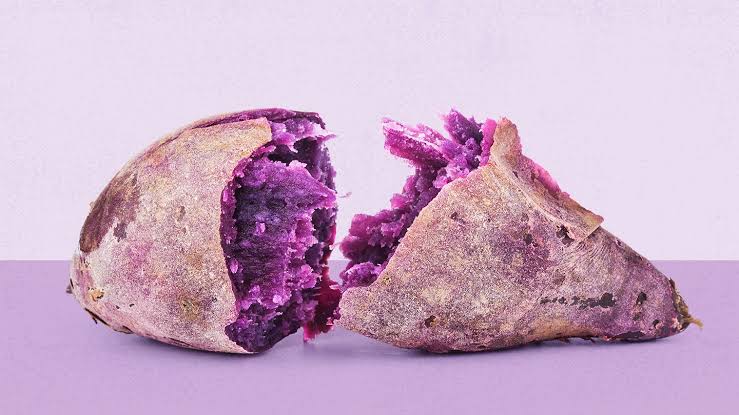
Ube gets its distinctive purple color from naturally occurring plant pigments called anthocyanins. These compounds belong to the flavonoid family and are responsible for many of the red, blue, and purple shades found in fruits, vegetables, and edible roots. In purple yam, they accumulate in the flesh, creating the beautiful violet appearance that makes this tropical tuber instantly recognizable.
Scientifically known as Dioscorea alata, ube is a species of yam widely cultivated in Southeast Asia, particularly in the Philippines. Its purple flesh is not the result of artificial coloring or genetic modification. Instead, the color develops naturally as the plant grows and produces protective compounds within its tissues. Depending on the variety, the interior may range from pale lavender to an intense violet that resembles a splash of natural watercolor.
What makes ube particularly interesting is that its pigmentation involves compounds also found in blueberries, blackberries, purple cabbage, and certain varieties of sweet potato. These natural antioxidants are studied for their potential role in protecting cells against oxidative damage. However, the health effects of eating ube depend on its overall nutritional composition, preparation, and place within a balanced diet.
The growing popularity of ube has also raised questions about its authentic color, especially when comparing fresh purple yam with powders, desserts, and commercial preparations. Understanding the origin of its pigmentation helps explain why some products look naturally violet while others appear unusually bright. The chemistry behind this color also reveals how cooking, acidity, and storage influence the appearance of purple yam.
Anthocyanins are responsible for the purple color of ube
The characteristic pigmentation of purple yam comes primarily from anthocyanins, water-soluble pigments that belong to a larger group of plant compounds known as polyphenols. These substances absorb and reflect light in ways that produce visible shades ranging from pink and red to blue and purple.
In ube, the anthocyanin profile includes derivatives of pigments such as cyanidin and peonidin. The exact composition varies between cultivars, growing conditions, and stages of maturity. This natural variation helps explain why two pieces of purple yam may display noticeably different colors despite belonging to the same species.
Many anthocyanins in purple yam occur in chemically modified forms. Some are attached to sugar molecules, while others contain additional organic acid groups. These structural differences can influence pigment stability, color intensity, and how the compounds respond to processing.
Anthocyanins are stored mainly within cellular compartments called vacuoles. Their final appearance depends partly on the chemical environment inside these structures, particularly acidity. A small change in pH can alter the visible shade without necessarily changing the identity of the underlying pigment.
The natural purple pigmentation of ube is therefore the result of plant biochemistry rather than an added ingredient. While its appearance attracts attention, the pigments also participate in biological processes that can help plants respond to environmental conditions.
Why do some ube varieties have a deeper purple color?
Not every purple yam has the same color intensity. Some varieties produce flesh with a pale violet appearance, while others develop a rich purple that becomes particularly striking when cooked. These differences are mainly associated with genetic characteristics and pigment concentration.
Different cultivars of Dioscorea alata possess distinct capacities to synthesize and accumulate anthocyanins. Varieties that produce larger quantities of these pigments generally develop more intense coloration. However, pigment type, tissue structure, and other plant compounds also influence how the flesh appears.
Growing conditions can contribute to these differences. Light exposure, temperature, soil characteristics, and water availability influence plant metabolism, although their effects on tuber pigmentation depend on the particular cultivar and environment. A darker yam is not automatically more nutritious than a lighter one.
The appearance of fresh ube can also change during preparation. Cutting exposes its tissues to oxygen, while heating modifies their cellular structure. These processes may influence the perceived shade and brightness of the flesh.
Color intensity alone cannot establish the nutritional quality of ube. A reliable assessment would require information about its specific pigment concentration, nutrient composition, and processing history. Purple yam should be appreciated as a whole food rather than evaluated only by how vibrant it looks.
The nutritional importance of purple pigments in ube
The compounds responsible for ube’s appearance have attracted scientific interest because many anthocyanins demonstrate antioxidant activity in laboratory experiments. Antioxidants can interact with reactive molecules involved in oxidative processes, although laboratory findings do not automatically translate into specific health benefits in humans.
Oxidative stress occurs when the production of reactive molecules exceeds the body’s ability to regulate them effectively. It is involved in several biological processes and is studied in connection with aging and chronic disease. Anthocyanin-rich foods may contribute to dietary patterns associated with good health, but eating ube alone has not been shown to prevent or treat these conditions.
Purple yam also provides complex carbohydrates, which contribute energy to the diet. It contains dietary fiber, although the quantity varies with the variety, preparation method, and serving size. Fiber supports normal digestive function and can contribute to a feeling of fullness.
Depending on the growing conditions and variety, ube supplies minerals such as potassium and smaller amounts of other micronutrients. Its nutritional value should therefore be considered beyond the compounds responsible for its color.
Cooking methods can influence the final nutritional profile. Boiled or steamed purple yam has a different composition per serving from ube prepared with condensed milk, sugar, cream, or butter. Sweetened desserts may still contain natural purple yam, but their added ingredients change their energy and sugar content substantially.
For everyday nutrition, minimally processed ube can be included alongside vegetables, legumes, protein sources, and other varied foods. Its anthocyanins are an interesting nutritional feature, not a reason to treat it as a medical supplement.
How does cooking affect the natural purple color of ube?
Cooking can noticeably influence the color of ube because anthocyanins are sensitive to heat, acidity, and processing conditions. Their stability depends on their chemical structure and the surrounding ingredients.
When purple yam is steamed, boiled, or baked, heat softens its tissues and changes how light interacts with the flesh. Depending on the cooking conditions, the purple color may become more visible, fade slightly, or shift toward another shade.
Boiling can cause some water-soluble pigments to move from the yam into the cooking liquid. Steaming generally reduces direct contact with water, which may help limit this type of pigment loss. Nevertheless, both methods expose anthocyanins to heat, and neither guarantees complete preservation.
Acidity also matters. Anthocyanins often appear redder under acidic conditions and may move toward blue or less stable forms as pH increases. Their precise behavior depends on the pigment mixture and food environment. This helps explain why adding different ingredients to an ube preparation can influence its final appearance.
Commercial processing introduces other variables. Drying, grinding, extraction, and prolonged storage may change pigment concentrations. Some ube powders retain a natural lavender tone, while others are combined with additional coloring agents to produce a more intense visual effect.
To preserve the appearance of naturally purple ube, it is sensible to avoid unnecessarily prolonged cooking, store prepared products according to their instructions, and limit excessive exposure to heat and light. These practices may help maintain quality, although they cannot completely prevent pigment changes.
The difference between natural ube and artificially colored products
The vivid purple appearance of certain ube desserts can create the impression that fresh purple yam always has an equally intense color. In reality, fresh ube usually displays natural variation, and its shade may be softer than the bright violet seen in commercial cakes, ice creams, and beverages.
Some processed products contain genuine purple yam alongside added colorings. Others rely mainly on flavorings and coloring agents to imitate the sensory characteristics associated with ube. The presence of purple coloring does not necessarily indicate that a food contains a meaningful quantity of the tuber.
Ingredient labels offer a more dependable way to evaluate authenticity. Products containing purple yam, ube powder, or purple yam puree explicitly identify these ingredients. However, their position in the ingredient list and any stated percentage matter when determining how much is present.
Pure ube powder should be distinguished from sweetened drink mixes and dessert powders. The latter may include sugar, milk ingredients, flavorings, stabilizers, and colorants. Such products can be useful for cooking but should not be considered nutritionally identical to plain dried yam.
Natural appearance is not a guarantee of nutritional superiority or safety. Food colorings authorized for use in particular markets are evaluated under applicable regulations. The more meaningful distinction is whether a product matches the buyer’s expectations regarding ingredients, nutritional composition, and intended use.
When preparing food at home, cooked purple yam can provide both characteristic flavor and naturally occurring color. This allows greater control over the amount of sugar, fat, and other ingredients included in the recipe.
Ube, purple sweet potato, and taro have different colors and characteristics
Ube is frequently confused with purple sweet potato and taro because all three are starchy underground crops used in Asian cuisines. Despite their visual similarities, they belong to different botanical groups and possess distinct culinary characteristics.
Ube belongs to the species Dioscorea alata, whereas purple sweet potatoes belong to Ipomoea batatas. Taro is generally identified as Colocasia esculenta. These distinctions matter because nutritional composition, flavor, texture, and pigment distribution differ between the plants.
Purple sweet potatoes also contain anthocyanins, sometimes at substantial concentrations. Their coloration is therefore linked to a similar broad category of natural pigments, although the exact anthocyanin structures and concentrations differ from those of purple yam.
Taro typically has white, cream, or pale flesh, sometimes marked with purple speckles. It should not be mistaken for deeply colored ube simply because a dessert or beverage is marketed with a purple appearance.
From a culinary perspective, ube is appreciated for its mildly sweet, earthy, and sometimes nutty flavor. Purple sweet potatoes tend to have their own distinctive sweetness and texture, while taro is often described as earthy and starchy.
These foods can all contribute carbohydrates to a balanced diet, but they are not interchangeable in every recipe. The differences become especially noticeable when preparing mashed roots, pastries, and powdered mixtures.
Recognizing authentic purple yam involves considering the ingredient’s identity rather than judging color alone. The presence of anthocyanins explains much of ube’s natural appeal, while its botanical origin, preparation, and overall composition determine how it fits into everyday nutrition.
