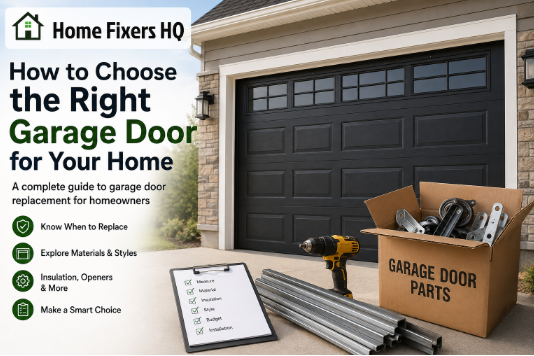
Replacing a garage door is a practical home improvement project that can improve daily convenience, security, appearance, and energy efficiency. If you are unsure whether repair or replacement is the better option, this garage door replacement guide can help you understand the key factors to consider before making a decision. From the condition of your existing door to the style and materials available, a little planning can make the replacement process much easier.
When Should You Replace a Garage Door?
Garage doors can last for many years when they receive proper care, but they do not last forever. Some problems can be fixed with a simple repair, while others indicate that replacement may be the more sensible choice.
Consider replacing your garage door if you notice:
- Frequent breakdowns or repeated repair needs
- Visible rust or serious corrosion
- Cracks, dents, or structural damage
- Difficulty opening or closing the door
- Excessive noise during operation
- Worn-out or damaged hardware
- Poor insulation that affects the temperature inside the garage
- An outdated appearance that no longer suits your home
If several of these issues are present, investing in a new garage door may provide better long-term value than continuing to repair an aging one.
Think About the Door Material
Garage doors are available in several materials, and each option has different benefits. The right choice depends on your budget, climate, maintenance preferences, and the appearance you want.
Steel doors are popular because they are strong, durable, and available in many designs. They can also be insulated to improve comfort inside the garage.
Aluminum doors are lightweight and can work well for homeowners who prefer a modern appearance. They are also less prone to rust, although some aluminum doors may be more vulnerable to dents.
Wood garage doors offer a traditional appearance and can add character to a property. They generally require more maintenance than steel or aluminum, particularly in areas exposed to changing weather conditions.
Composite materials can provide the appearance of wood while requiring less maintenance. They may be worth considering if you want a traditional style without the same level of upkeep.
Choose a Style That Fits Your Home
A garage door can have a noticeable effect on the exterior appearance of a house. Since the garage often occupies a large portion of the front of a property, selecting a suitable design can make the entire exterior look more balanced.
Traditional raised-panel doors work well with many home styles. Carriage-house designs can provide a more classic appearance, while contemporary doors with clean lines and simple windows can complement modern properties.
Think about the existing exterior before choosing a design. Look at the roof, windows, front door, siding, and other visible features. The goal is not necessarily to make the garage door stand out, but to make it feel like a natural part of the home.
Consider Insulation
Insulation is another factor homeowners should consider when replacing a garage door. An insulated door can help reduce temperature changes inside the garage and may make the space more comfortable throughout the year.
This can be particularly useful when the garage is connected directly to the home or used as a workspace, storage area, or utility space. Insulated doors are commonly available with different insulation levels, so compare the specifications before purchasing.
Even if you rarely spend time in the garage, insulation may still be useful when temperature control is a concern.
Check the Door Size and Garage Layout
Before ordering a replacement, make sure the new door is compatible with the existing garage opening. Measure the width and height carefully, and consider the available space around the opening.
The ceiling height and side clearance can also affect which door and opening system will work properly. If the garage has an unusual layout, professional measurements can help prevent ordering the wrong size.
A replacement project is easier when these details are confirmed before installation begins.
Review the Opening System
The garage door opener should also be considered during a replacement. An older opener may not be suitable for a heavier or differently designed door.
Check the opener’s condition, lifting capacity, safety features, and compatibility with the new door. Modern systems may offer features such as automatic lighting, smartphone control, battery backup, and improved safety sensors.
You do not always need to replace the opener at the same time, but checking compatibility before installation can prevent problems later.
Set a Realistic Replacement Budget
The total cost of replacing a garage door depends on several factors, including material, size, insulation, design, hardware, labor, and whether the opener also needs attention.
Instead of choosing solely based on the lowest price, compare what each option includes. A less expensive door may have fewer features or require more maintenance, while a higher-quality option may provide better durability and performance over time.
Ask for a detailed estimate so you understand the cost of the door, installation, hardware, and any additional work required.
Prepare for Professional Installation
Proper installation affects how safely and reliably a garage door operates. Springs, cables, tracks, rollers, and other components need to be installed and adjusted correctly.
Before installation day, clear vehicles, tools, boxes, and other belongings from the garage area. This gives the installer enough room to work and makes the process more efficient.
After installation, test the door several times and check that it opens and closes smoothly. Make sure the safety features operate correctly and ask the installer about basic maintenance requirements.
Make the Replacement Count
A garage door replacement is more than changing an old door for a new one. It is an opportunity to improve how your garage looks, functions, and fits into your home.
Start by identifying the problems with the current door, then compare materials, designs, insulation levels, operating systems, and installation requirements. With those details settled before ordering, you can choose a garage door that suits your property and provides dependable everyday performance for years to come.
