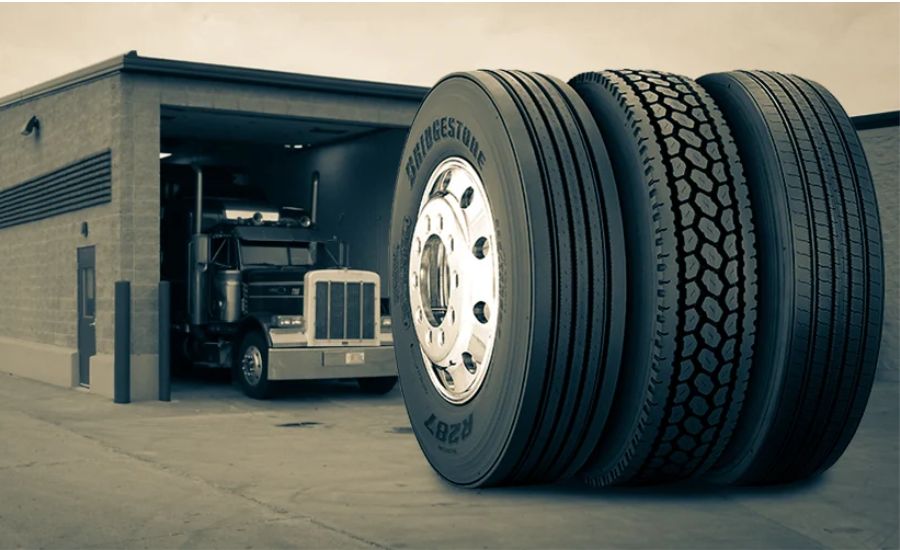
Commercial trailers live a harder life than most tires ever will. They carry serious weight, spend long hours at highway speeds, sit exposed to the weather between jobs, and regularly deal with rough pavement, debris, tight turns, and uneven loading.
That combination explains why choosing a trailer tire isn’t simply a matter of finding the right diameter and calling it done. The tire’s construction, load capacity, inflation, tread design, and condition all affect how reliably it handles demanding work.
Heavy Loads Put the Entire Tire Under Stress
Every tire has a maximum amount of weight it’s designed to support. On a commercial trailer, getting close to that limit puts considerable stress on the casing, sidewalls, tread, and internal structure.
The problem gets worse when the trailer isn’t loaded evenly.
Imagine a trailer carrying equipment that’s noticeably heavier on one side. Even if the total trailer weight falls within the expected range, individual tires may not be sharing that weight equally. One tire can end up working considerably harder than the tire beside it.
That’s why operators need to consider more than the trailer’s total weight. Axle ratings, individual tire capacities, and how cargo is positioned all matter.
For demanding towing applications, an all-steel commercial casing can provide added resistance against the cuts, scrapes, and road abuse trailers encounter. That’s one reason operators looking at Steelpro AST commercial trailer tires may pay particular attention to casing construction as well as the tire’s load specifications.
Underinflation Creates Heat, and Heat Is the Enemy
A commercial trailer tire can look reasonably normal while being underinflated.
That’s dangerous because insufficient pressure causes the tire to flex more as it rolls. Repeated flexing generates heat inside the tire, especially when you’re carrying a substantial load at highway speed.
The combination can be brutal:
More Sidewall Flex
An underinflated tire changes shape more dramatically as it contacts the road. That repeated movement places extra stress on the tire’s structure.
Higher Operating Temperatures
More flex generally means more heat. Add a heavy trailer, hot pavement, and hours of highway driving, and operating temperatures can climb quickly.
Poorer Load Support
Tire pressure plays a direct role in carrying capacity. A tire designed for heavy loads still needs the appropriate inflation pressure for the application.
This is why checking trailer tire pressure before a trip makes far more sense than waiting until something looks wrong. Pressure should be checked when the tires are cold and adjusted according to the trailer and tire manufacturer’s specifications.
Don’t rely on appearance alone. Heavy-duty tires can hide significant pressure loss surprisingly well.
Road Debris Does More Damage Than You Might Expect
Commercial trailers don’t get to choose perfect roads.
Construction entrances, industrial yards, gravel shoulders, loading areas, and poorly maintained highways can expose tires to stones and other sharp debris. Cuts and punctures are obvious concerns, but stone retention can cause problems too.
Small rocks can become trapped in tread grooves. As the tire continues rolling under load, retained stones may be pushed repeatedly against the tread.
Tread designs incorporating stone ejectors can help remove trapped material before it has a chance to remain lodged in the grooves. For trailers that regularly operate around gravel or debris-covered surfaces, it’s a practical feature rather than a cosmetic one.
A quick tread inspection during routine stops is worthwhile as well. Look for embedded objects, unusual cuts, bulges, exposed material, or anything else that wasn’t there before.
Wet Roads Change the Job Completely
A heavily loaded trailer already requires more planning when braking and changing direction. Rain adds another variable.
Water has to escape from underneath the tire’s contact area. If the tread can’t move enough water away effectively, traction can decrease and the risk of hydroplaning rises.
Wide circumferential grooves are commonly used to channel water away from the tread. On a commercial trailer tire, this matters because stable tracking behind the tow vehicle becomes especially important during bad weather.
Drivers still need to adjust for conditions. No tread design cancels out excessive speed, standing water, or insufficient following distance.
Think of wet-weather tread features as another layer of protection, not permission to drive as though the pavement were dry.
Stability Matters at Highway Speed
Trailer tires aren’t steering tires, but their behavior still affects how the trailer feels behind the tow vehicle.
A stable tread footprint helps the trailer track consistently, particularly at highway speeds. Solid center ribs and rib-oriented tread patterns can support lateral stability and predictable handling.
That becomes more noticeable when the trailer is carrying a substantial load.
If a trailer suddenly feels different, starts wandering, or develops unusual vibration, don’t automatically assume it’s the road. Tire pressure, tire damage, wheel problems, cargo movement, suspension issues, and alignment can all contribute.
A change in handling is information. Treat it that way.
Uneven Wear Is Trying to Tell You Something
One of the easiest mistakes is replacing a worn trailer tire without asking why it wore that way.
Normal tread wear happens gradually. Irregular wear deserves investigation.
Wear concentrated on one shoulder may point toward alignment, suspension, inflation, or loading problems. Excessive wear through the center or edges can also indicate that the tire isn’t operating under the right conditions.
Simply installing another tire may restart the clock without fixing the underlying cause.
When inspecting a commercial trailer, compare tires across the same axle. Differences can reveal problems that aren’t obvious when looking at one tire by itself.
Tight Maneuvering Is Tough on Trailer Tires
Highway miles aren’t the only source of wear.
Watch a multi-axle trailer make a sharp turn in a parking lot and you’ll see the tires being dragged slightly sideways. Unlike a steering axle, trailer axles remain fixed while the vehicle changes direction.
That creates lateral scrub across the tread.
Heavy loads make the effect more demanding because additional weight presses the tires harder against the pavement. Frequent maneuvering in warehouses, construction sites, delivery yards, or cramped loading areas can therefore contribute significantly to tread wear.
Some of this is simply part of trailer operation. What matters is using tires built for the application and watching for abnormal wear before it becomes severe.
Don’t Ignore Tires Just Because the Trailer Is Parked
Mileage isn’t the only thing that ages a tire.
Commercial trailers may spend days or weeks sitting outdoors between jobs. During that time, the tires remain exposed to environmental conditions while supporting the trailer’s weight.
Regular inspections should continue even when annual mileage is relatively low. Look closely at the sidewalls and tread for cracking, deformation, cuts, bulges, or other signs of deterioration.
Before putting a trailer back into heavy service after a long period of inactivity, checking pressure and overall tire condition should be part of the pre-trip routine.
A Better Routine Prevents Expensive Surprises
Commercial trailer tire problems rarely happen at a convenient time. A failure on the highway can mean downtime, delayed deliveries, roadside service costs, and potentially damage beyond the tire itself.
A simple routine can reduce those surprises. Check cold inflation pressure regularly, inspect the tread and sidewalls, verify that cargo is distributed correctly, investigate unusual wear, and make sure replacement tires have the appropriate size and load capacity for the trailer.
Most importantly, choose tires according to how the trailer actually works.
A lightly used utility trailer and a commercial trailer hauling heavy loads every week face very different demands. Tire construction should reflect that reality.
For commercial operators, durability isn’t just about squeezing more miles from a set of tires. It’s about keeping the trailer stable, protecting valuable cargo, reducing avoidable downtime, and giving every trip a better chance of ending exactly where it was supposed to.
