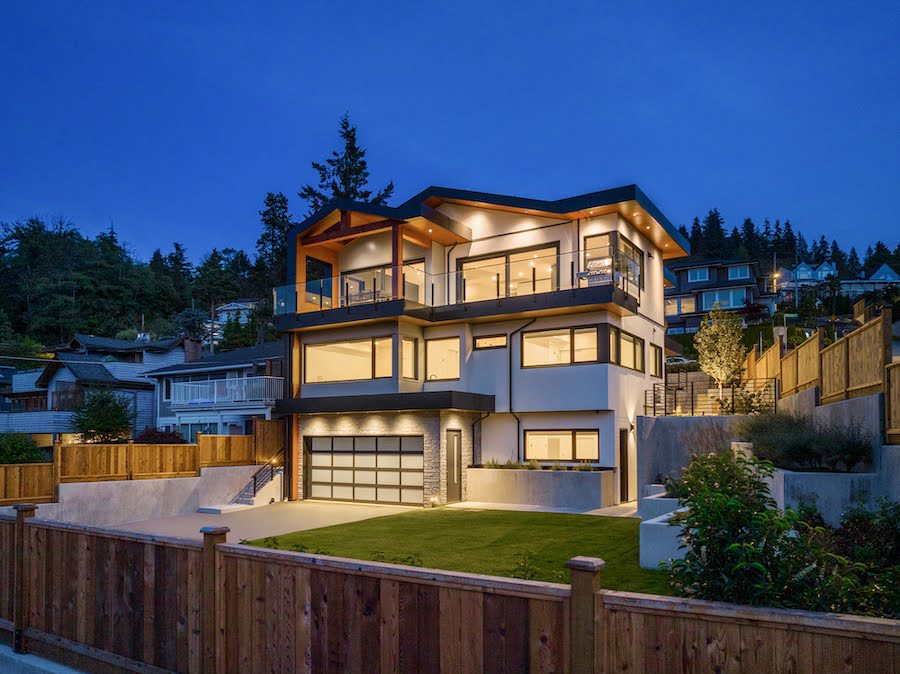
There is a point in every custom home design where the client’s brief will exceed their budget. However, this does not have to mean that the home design has to be then cut back to fit within the budget. It can be more productive to reassess the design brief to rank the items in order of value.
Rank features by reversibility, not by enthusiasm
Finishes are the easiest items for clients to visualize and can consume a large portion of a budget. However, finishes are also the cheapest items to change should the client later desire to make changes to their home.
A test worth applying to every line item
The cost to reverse a design decision in 10 years and what else would have to come out of the budget to achieve the same outcome are worth exploring early in the design development process. Structural components such as openings in the slab, alterations to load bearing walls and re-roofing are best costed and confirmed early in the design process. Medium cost items that can be undone by a single trade within a weekend are best left until later in the design development process.
| Decision category | Cost to change later | Latest sensible commitment point |
| Siting, orientation, floor levels | Prohibitive | Concept design |
| Structural grid and ceiling heights | Very high | Design development |
| Envelope, insulation, glazing performance | High | Before permit documentation |
| Plumbing and drainage locations | High | Before slab pour |
| Cabinetry layout and joinery | Moderate | Before shop drawings |
| Fixtures, tiles, paint, hardware | Low | Late, without risk |
Layout carries more weight than any single room
The greatest contribution to the quality of your plans comes from the relationships between spaces and the paths that people take through a house, not from the number of spaces. Rather than concentrating on the size of individual rooms, test out a plan by tracing out the three most frequently traveled paths through a house (e.g. The path from car to kitchen with shopping, the path from bedroom to bathroom at night, and the path from living areas to outdoor areas).
Where corridor space actually pays
A corridor that only connects between spaces is useless. But a corridor that also stores things, brings light into the space and buffers noise between spaces is very useful. So even a seemingly inevitable long corridor can be better with a little more width and joinery to one side.
Storage should be specified as volume, not discovered later
Storage is one of the most common regrets in new custom homes, and this is not a design failure but a briefing failure. Make a list of all the things your household owns before you start drawing up the plans for your custom home, and then allocate space for storage accordingly.
- Entry storage sized for coats, shoes, bags, and sports equipment, positioned at the door actually used
- A utility zone that can hold cleaning equipment, tools, and bulk goods without occupying the pantry
- Long-span shelving in the garage or basement rated for real weight, not decorative brackets
- Conditioned storage for anything that degrades in heat or damp, including documents and instruments
- Roof or under-stair volume with proper access, hatch size, and a light fitting
Spend on the envelope before the equipment
Insulation, air tightness, thermal performance of parts of the building such as corners, stairs etc, and glazing have the greatest permanent impact on comfort. The mechanical services in a house can be upgraded over a weekend twenty years later but the building’s envelope cannot.
Choosing where to stop
The big tickets in performance spending have diminishing returns. While improving the air tightness of a building is cheap until you reach a decent threshold, improving it further has marginal returns compared to the cost. Shading, the orientation of the glazing, and controlled ventilation are where the rest of the budget should be spent. The southern oriented walls of your house will degrade the insulation of your house faster than you imagine, unless external shading is included.
Kitchens reward function over spectacle
Much kitchen spending is centered around the cost of stone work, appliances and kitchen cabinet fronts. While the components of a kitchen that cost the least to fit out often hold the greatest potential to cause problems, the key elements to ensure the effective operation of an effective kitchen are cheap to fit out and easy to get wrong, sufficient clear counter space either side of a cooktop, adequate drawer space, adequate space between the back of a cabinet or drawer and the adjacent wall to allow for adequate outlet placement, effective task lighting and adequate and effective kitchen exhaust ventilation that vents outside.
However, you have a limited budget for the kitchen. You can go for a lower priced appliance package but maintain a good design for the space and maintain the layout. If you are weighing these trade-offs locally, it helps to walk the model kitchens of a builder of custom homes in Indianapolis, IN before locking in your allowances. The joinery will last longer than the appliances, as they can be replaced twice by the time the kitchen joinery has worn out.
Design for occupancies the client cannot yet describe
Household composition undergoes rapid change prior to the building. Develop homes that incorporate flexibility at low cost to avoid huge expenses down the road.
- Include one ground-floor room with a nearby full bathroom that can serve as a bedroom without renovation.
- Frame door openings and corridors wide enough for later accessibility, and block out walls for grab rails.
- Provide conduit and panel capacity for solar, battery storage, and vehicle charging even if none are installed now.
- Design one flexible room with its own entry point and acoustic separation, suitable for work, guests, or an aging parent.
Protecting the irreversible decisions against the client’s changing wishes and weighing up the cost of irrevocable changes against the cost of alternatives is difficult and goes against human nature. However, it is worth it, as it is the most important aspect of designing homes.
