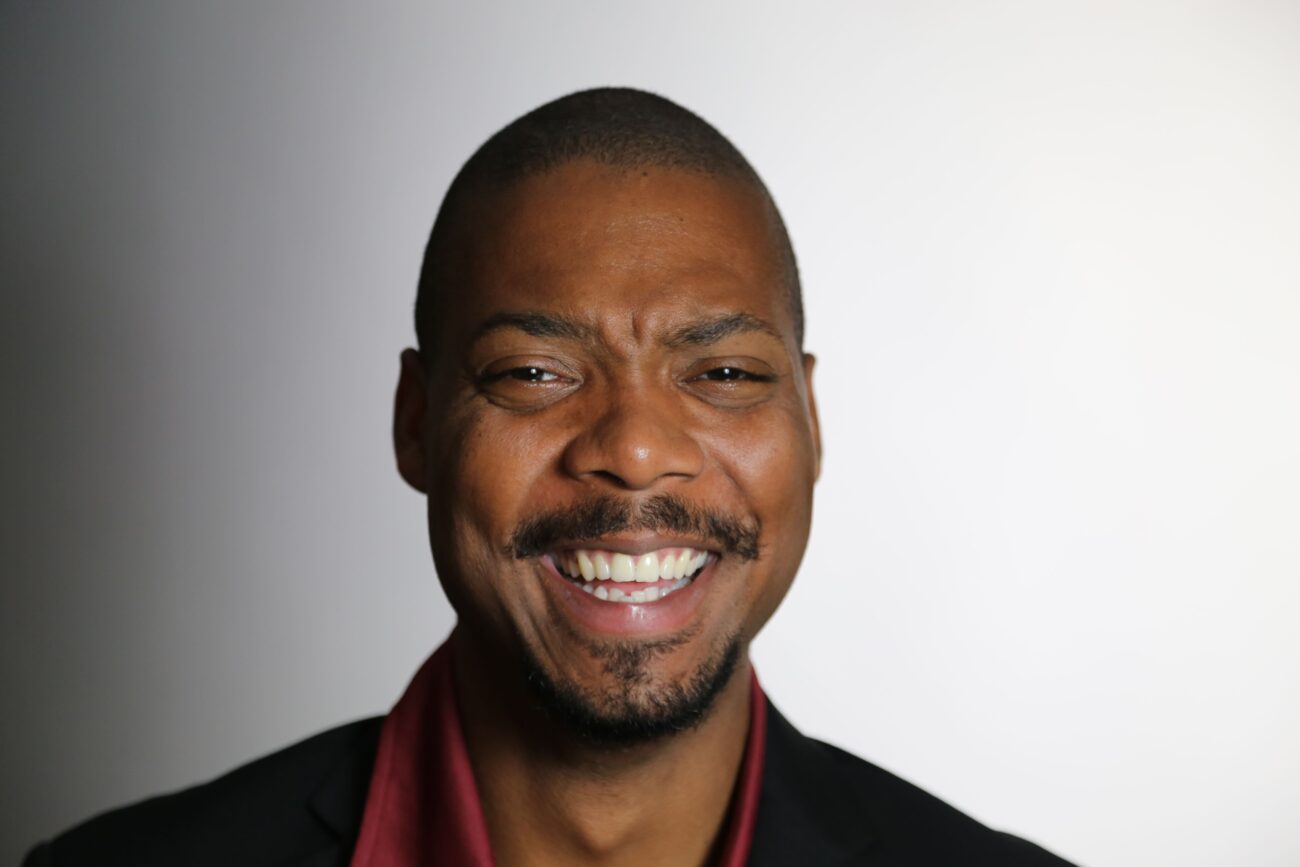
Cuba Gooding Jr. entered millions of homes through movies, but his first national audience saw him moving rather than speaking. In 1984, the 16-year-old performed as a breakdancer during the closing ceremony of the Los Angeles Summer Olympics. He danced with the Majestic Visual Break Dancers as Lionel Richie performed. The moment feels like a neat opening scene for an actor known for physical energy, yet it came years before casting directors treated him as a dramatic performer.
Gooding’s path to that stadium started in New York City. He was born in the Bronx on January 2, 1968, to singers Cuba Gooding Sr. and Shirley Sullivan. His father became the lead vocalist of the soul group the Main Ingredient, best known for the 1972 hit “Everybody Plays the Fool.” The song’s success helped move the family to Los Angeles, placing young Cuba close to the entertainment business without giving him a secure route into it.
Family life changed soon after the move. Gooding Sr. left, and Sullivan raised Cuba and his siblings, April, Omar, and Thomas. The children had inherited a connection to performance, but they also experienced financial and emotional instability. Omar later became an actor and television personality, while Cuba built the most visible career in the family. Fame did not arrive as a simple continuation of their father’s success. It emerged from auditions, minor jobs, dance training, and repeated attempts to be noticed.
Gooding attended four high schools in Southern California: North Hollywood, Tustin, Apple Valley, and John F. Kennedy High School in Granada Hills. Constant movement could have encouraged him to disappear into the background. Instead, he reportedly served as class president at three schools. That detail reveals an early version of the public confidence audiences later saw at award shows and interviews. He knew how to command attention before he knew what kind of performer he would become.
Dance offered his first professional opening. Gooding worked as a backup dancer and has been linked to performances involving Paula Abdul before the Olympics placed him on a much larger stage. Breakdancing demanded timing, control, and the ability to communicate personality without dialogue. Those skills remained visible in his acting. Even in serious scenes, Gooding often used his shoulders, stride, facial tension, and sudden changes in posture to show what a character could not say.
Martial arts provided another unlikely part of his preparation. After high school, Gooding studied Japanese martial arts for three years before focusing fully on acting. The discipline did not lead to a career in action films, but it strengthened his control over movement. His later performances often depended on a contrast between physical confidence and emotional exposure. Rod Tidwell in Jerry Maguire could fill a room with noise, then reveal fear through a pause. Tre Styles in Boyz n the Hood could look composed while panic registered across his face.
Religion also played an early role in Gooding’s identity. He has said that he became a born-again Christian at 13. His beliefs did not define every public decision he made, but they formed part of the personal story behind the exuberant gratitude he often displayed. Long before the Oscar, he had developed a public style built from faith, dance, competition, and a strong need to connect with an audience.
The Serious Actor Hidden in Small Roles
Gooding’s early acting career developed through brief television appearances rather than an instant breakthrough. He appeared on programs including Hill Street Blues, Amen, and MacGyver. These jobs gave him screen experience, but none offered enough space to establish a distinct identity. He was learning how productions worked while competing in an industry that could easily confine a young Black actor to narrow roles.
One early film appearance became interesting only in retrospect. Gooding played a young customer getting a haircut in the 1988 comedy Coming to America. The part was small enough for many viewers to miss, especially beside Eddie Murphy and Arsenio Hall’s elaborate performances. Watching the scene today turns it into a cinematic footnote: a future Oscar winner sitting in a barbershop before anyone knew his name.
Gooding’s first major opportunity arrived with Boyz n the Hood in 1991. John Singleton’s debut followed three young men growing up in South Central Los Angeles, where family choices, policing, violence, friendship, and limited opportunity shaped their futures. Gooding played Tre Styles, the character positioned between Laurence Fishburne’s disciplined father, Furious, and friends pulled toward street conflict. The role demanded more than anger or fear. Tre had to appear observant, uncertain, ambitious, and vulnerable without becoming a passive witness.
The film’s most intense moments exposed Gooding’s ability to move quickly between emotions. After Tre encounters armed police officers, he returns home furious and frightened. He swings at the air and breaks down while Furious holds him. Gooding lets the character’s rage collapse into the terror beneath it. Later, Tre joins Doughboy and the others as they seek revenge, then asks to leave the car. That decision could have looked cowardly in a less careful performance. Gooding makes it feel like the painful result of everything Furious taught his son.
Singleton was only 23 when filming began, and Boyz n the Hood carried the urgency of a director determined to depict a community Hollywood often reduced to headlines. Gooding’s work helped keep the story personal. Tre was neither a symbol of perfect behavior nor a stereotype. He was a teenager trying to survive long enough to become himself. The film earned Singleton Academy Award nominations for directing and original screenplay, and it gave Gooding the credibility to pursue larger projects.
Gooding then entered a run of studio films that tested his range. In A Few Good Men, he played Corporal Carl Hammaker within a cast led by Tom Cruise, Jack Nicholson, and Demi Moore. In Judgment Night, he joined an ensemble trapped in an unfamiliar part of Chicago. Outbreak placed him inside a medical thriller, while Losing Isaiah dealt with adoption, addiction, race, and custody. He also appeared in HBO’s The Tuskegee Airmen, connecting his growing career to a neglected chapter of American military history.
By 1995, Gooding occupied an unusual position. Audiences recognized him, directors trusted him, and studios hired him, yet he had not become a dependable box-office lead. He needed a character who could unite his dramatic skill, humor, athletic movement, and natural volume. Rod Tidwell supplied all four.
The Oscar That Changed the Question
Jerry Maguire gave Gooding the rare supporting role that feels like a co-lead. Rod Tidwell is an Arizona Cardinals wide receiver who believes his talent deserves better money and greater respect. He is funny because he speaks with astonishing directness, but the joke never erases his anxiety. Professional football careers can end with one injury, one roster decision, or one bad season. Rod’s demands come from pride, financial pressure, and the knowledge that his earning window is closing.
Gooding matched Tom Cruise’s intensity instead of retreating from it. Cruise played Jerry as a man frantically rebuilding his career, while Gooding made Rod equally unwilling to surrender control. Their telephone scene produced the command “Show me the money,” but its humor depends on escalating commitment. Rod forces Jerry to shout the words again and again, turning a business demand into a test of loyalty. Gooding’s rhythm made the exchange feel spontaneous even though it depended on exact comic timing.
Rod also gave Gooding quieter material. His marriage to Marcee, played by Regina King, showed that his public bravado served a private goal. He wanted recognition, but he also wanted security for his family. The hospital sequence after Rod suffers a frightening hit shifts the film away from comedy. When he wakes and performs an end-zone dance, the celebration carries relief as well as ego. Gooding made the character loud without making him shallow.
The performance won the Academy Award for Best Supporting Actor in 1997. Gooding’s acceptance speech became nearly as famous as the role. He thanked director Cameron Crowe, Cruise, King, and others with mounting excitement. When the orchestra began signaling that his time had expired, he raised his voice and continued. The audience stood as he shouted his affection for the people who helped him. The speech felt uncontrolled, sincere, and perfectly aligned with the performer viewers thought they knew.
Several strong performances followed. In As Good as It Gets, Gooding played Frank Sachs, the art dealer who protects Greg Kinnear’s injured character and confronts Jack Nicholson’s abrasive novelist. Frank occupies relatively little screen time, yet Gooding makes him firm, intelligent, and funny. What Dreams May Come placed him in a visually ambitious story about death and grief. Men of Honor gave him the demanding lead role of Carl Brashear, the first Black master diver in the United States Navy.
Brashear’s story required physical preparation and emotional restraint. The character faces racist obstruction, dangerous training, injury, and institutional resistance. Gooding played his determination without turning every scene into a speech. His confrontations with Robert De Niro supplied the movie’s dramatic center, and his performance introduced many viewers to Brashear’s achievements.
Gooding also portrayed Doris Miller in Pearl Harbor. Miller, a Navy mess attendant, took control of an antiaircraft gun during the attack despite discriminatory rules that had limited his training. The role was not large, but it continued Gooding’s connection to Black military figures whose contributions received delayed recognition. He moved between historical drama and broad entertainment, appearing in Rat Race, Snow Dogs, and The Fighting Temptations within a short period.
The variety looked useful on paper, but it weakened the identity Hollywood had built around him. Gooding could handle comedy, action, family films, and emotionally intense drama. Studios did not always know how to use that range. A prestigious supporting role might be followed by a lightweight starring vehicle. Award-winning actors often receive scripts designed to capitalize on visibility rather than deepen their craft, and Gooding accepted several offers that produced immediate work but little long-term value.
The Oscar therefore changed the central question around his career. Before Jerry Maguire, the industry asked whether he could become a star. Afterward, critics asked why an Oscar winner chose each disappointing project. That harsher question followed him for more than a decade.
Popular Movies, Critical Damage, and a Return Through Television
Gooding’s post-Oscar decline was not a simple story of commercial failure. Snow Dogs, released in 2002, earned substantial worldwide revenue and reached a family audience that may not have known him from Boyz n the Hood. The comedy gave him a leading role and placed his physical humor at the center. Critics disliked it, but ticket buyers did not treat it as a disaster. The problem came from accumulation. Several broad movies gradually replaced his image as an urgent dramatic actor with that of a star who accepted weak material.
Boat Trip caused greater damage. The 2002 comedy relied on gay stereotypes and received hostile reviews. Radio offered a sincere story and a committed performance, but critics questioned its sentimentality and portrayal of disability. Norbit became another hit associated with poor reviews. Meanwhile, thrillers and direct-to-video releases attracted little attention. The actor who once appeared in major awards conversations became a frequent subject of “what happened?” articles.
Gooding later described this phase as ten years in the wilderness. His comment captured more than a shortage of prestigious roles. Hollywood continued hiring him, yet quantity did not restore his standing. A crowded filmography can conceal professional isolation when the projects no longer create conversations with directors, critics, or awards voters.
Gooding found stronger material by returning to supporting roles and historical stories. He appeared as civil rights attorney Fred Gray in Selma and joined the ensemble of Lee Daniels’ The Butler. Television then supplied the comeback that theatrical films had not. In 2016, he played O.J. Simpson in FX’s The People v. O.J. Simpson: American Crime Story.
The casting drew immediate debate because Gooding did not closely resemble Simpson or reproduce his imposing physical presence. He instead emphasized panic, vanity, isolation, and shifting self-control. His Simpson could appear emotionally overwhelmed in one scene and calculating in another. Some reviewers considered the performance miscast, while others argued that its emotional instability suited the series. The Television Academy nominated Gooding for an Emmy, returning him to a major awards ceremony nearly two decades after his Oscar.
The role also created a strange cultural loop. Gooding had reached his career peak during the years when Simpson’s criminal trial dominated American television. He then portrayed Simpson in a drama that reconsidered celebrity, race, policing, media, and domestic violence. The part asked viewers to separate physical imitation from psychological interpretation, and disagreement over his choices kept the performance in public discussion.
The theater offered another route back to demanding work. Gooding made his Broadway debut in the 2013 revival of Horton Foote’s The Trip to Bountiful, appearing with Cicely Tyson and Vanessa Williams. He later played lawyer Billy Flynn in Chicago in London’s West End and on Broadway. The musical drew on the skills he had developed before acting: rhythm, movement, timing, and direct contact with an audience. A performer who once danced in an Olympic stadium had returned to live choreography, now carrying decades of screen history onto the stage.
Gooding also tried directing. His 2018 feature Bayou Caviar, in which he acted alongside Famke Janssen and Richard Dreyfuss, marked his directorial debut. The film did not transform his career, but it showed a desire to move beyond waiting for roles. Directing requires decisions about tone, actors, camera placement, and even practical details such as whether a room needs commercial bar furniture or a more intimate visual design. For Gooding, the project represented an attempt to control the story rather than simply enter someone else’s production.
A Legacy That Cannot Stay on the Screen
Gooding’s public enthusiasm long encouraged audiences to treat him as an uncomplicated figure. His Oscar speech, talk-show appearances, and willingness to dance suggested constant openness. Private life followed a less cheerful course. He married his high school sweetheart, Sara Kapfer, in 1994, and they had three children: Spencer, Mason, and Piper. Kapfer filed for legal separation in 2014, and Gooding filed for divorce in 2017 after more than two decades of marriage.
The family connection to acting continued through Mason Gooding. Mason built his own screen career with projects including Booksmart and the modern Scream films. His emergence created another chapter in a family story that began with Cuba Gooding Sr.’s music. Three generations became associated with entertainment, although each entered through a different route: soul music, dance and dramatic acting, then contemporary film and television.
Gooding also used his visibility for health advocacy. The American Academy of Neurology honored him in 2006 for public leadership connected to multiple-sclerosis awareness. This work received less attention than his movies, but it formed part of his public record during the years when entertainment coverage concentrated on career missteps.
Serious legal cases later changed how the public viewed Gooding. In 2019, New York prosecutors charged him after allegations of unwanted sexual contact. Additional women came forward, and prosecutors eventually identified multiple alleged incidents. Gooding denied several accusations. Any accurate account must separate allegations from admitted conduct, since the cases did not all reach the same outcome.
Gooding pleaded guilty in April 2022 to forcibly touching a woman at a New York nightclub in 2018. In court, he acknowledged kissing a waitress on the lips without her consent. Under the plea agreement, he completed alcohol and behavior counseling, withdrew the misdemeanor plea, and entered a plea to a noncriminal harassment violation. The arrangement spared him jail time, but it did not erase the conduct he admitted.
A separate civil lawsuit accused Gooding of raping a woman in a Manhattan hotel in 2013. His attorneys maintained that the encounter was consensual. The parties reached a settlement in June 2023 shortly before the trial was scheduled to begin, and the terms remained undisclosed. A settlement does not establish the allegations as proven, nor does it resolve the underlying facts for the public. It ended that civil case without a jury verdict.
Gooding was also named as a defendant in a civil complaint amended in March 2024 by music producer Rodney Jones, who accused him of unwanted sexual contact aboard a yacht. That claim was an allegation in civil litigation, not a criminal conviction. Clear wording matters because collapsing accusations, pleas, settlements, and verdicts into one category would misrepresent the record.
These events cannot be treated as a brief detour after a discussion of movies. They affect employment, reputation, and the way audiences encounter earlier performances. Viewers may still value Boyz n the Hood, Jerry Maguire, or Men of Honor while judging the actor’s conduct separately. Others may find that the allegations and admitted behavior permanently alter their response to his work. A biography does not need to dictate either reaction, but it must supply the facts required to understand them.
His strongest work depended on emotional contradictions. Tre Styles wanted to appear brave while trying to escape violence. Rod Tidwell performed confidence while fearing professional abandonment. Carl Brashear maintained discipline while confronting humiliation. Gooding understood characters whose volume concealed uncertainty, perhaps because his own public identity relied so heavily on visible energy.
The enduring image will remain his Oscar speech: a young actor refusing to leave the stage while the music grew louder. That moment captured real joy and the hunger of someone who had spent years in minor roles. It should not become a shield against later facts, just as later controversy does not change who performed those earlier scenes. Cuba Gooding Jr.’s story holds achievement, poor choices, persistence, family history, artistic instinct, and serious misconduct in the same frame. The tension among those elements makes his biography harder to celebrate, easier to debate, and more revealing than the catchphrase attached to his name.
