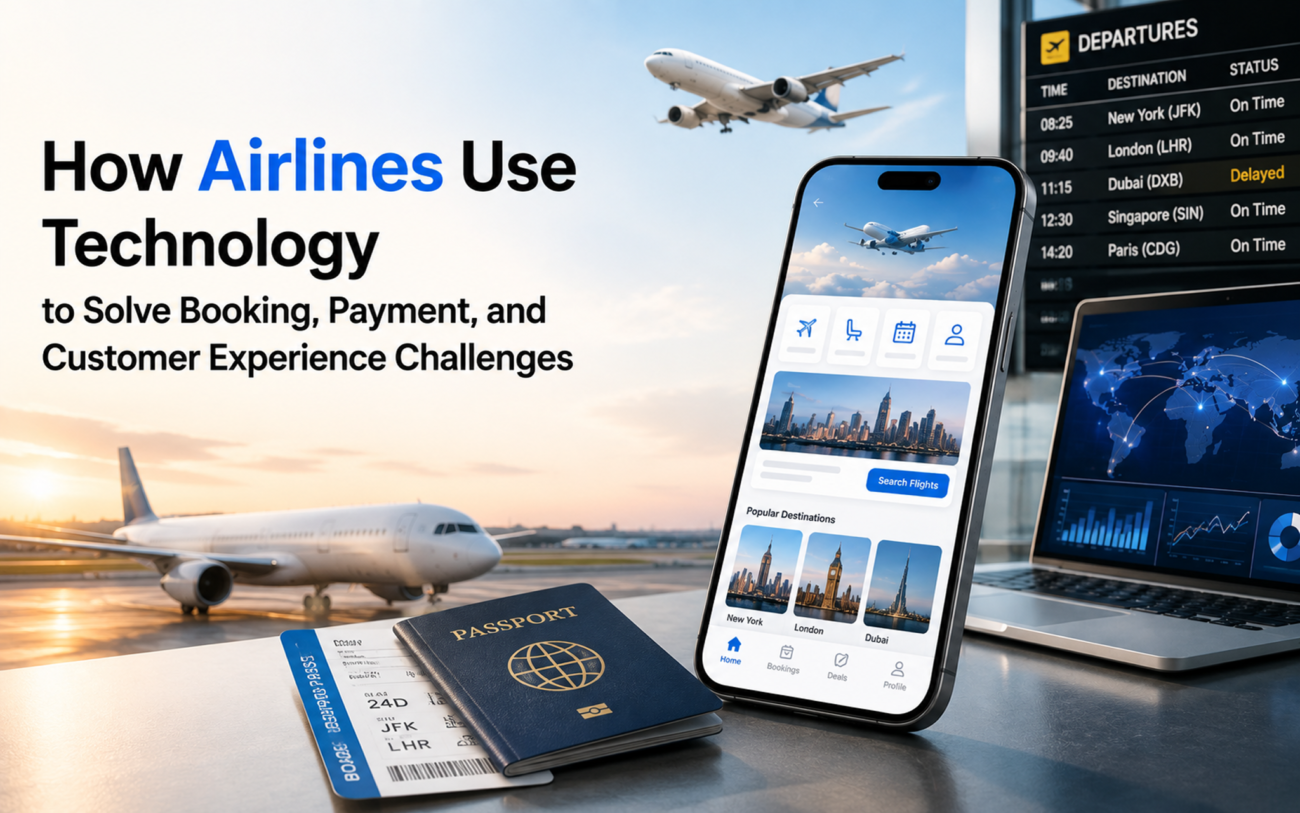
Booking a flight takes about two minutes on your phone these days. What you don’t see is everything happening beneath that screen: seat maps, fare rules, payment checks, loyalty data, all syncing in the background at once. The second one of those pieces lags even a little, it’s the passenger staring at an error message, not some engineer somewhere fixing it quietly. That’s basically why airline digital transformation stopped being optional a while back. Carriers that ignore it don’t crash overnight; they just lose bookings slowly, one annoyed traveler at a time.
Where Booking Systems Still Break
A lot of carriers are still running platforms that were patched together over the years, never really built for the traffic airlines deal with now.
- Seat inventory doesn’t always update the same way across the website, the app, and third-party sellers, so an airline booking system ends up double-booking seats it really shouldn’t
- These airline booking challenges rarely show up as one dramatic failure. It’s usually small glitches piling up until people just stop trusting the checkout page
- A properly built airline reservation system connects straight into GDS networks and internal inventory, so there’s no gap between what’s shown and what’s actually available
- An online flight booking system done right updates fares and seats the same second across every channel, not five minutes later when it’s too late
Payment Is Where Trust Gets Won or Lost
Mess up payment once and most people just won’t come back. Three things tend to decide whether it works or not.
Speed matters more than airlines admit. Solid airline payment solutions clear a transaction in a couple seconds, and anything slower usually means someone’s closed the tab and gone somewhere else. Coverage matters too. Good airline payment gateway integration supports whatever people in that region actually use, local wallets, cards, split-pay, without bolting on extra steps at checkout. And then there’s security. Airline fraud prevention technology that flags weird patterns before a transaction clears isn’t some optional extra anymore, it’s just part of how serious airline software development gets done now.
What Actually Keeps Passengers Coming Back
Getting someone to book is one problem. Getting them to book again is a completely different one, and it’s usually solved after the flight, not during it.
- Airline customer experience improves more from smart automation behind the scenes than from a prettier homepage
- Contactless airline services shorten check-in lines, which matters more than people give it credit for
- An AI chatbot for airline customer service handles the boring repetitive questions so human agents can actually deal with the messy ones
- AI in aviation tools quietly look at what someone’s booked before and tailor offers around it instead of blasting the same discount to everyone on the list
- Airline self-service solutions let someone rebook or ask for a refund from their phone instead of standing at a counter for twenty minutes
- Airline CRM solutions keep loyalty history and old complaints in one place, so agents aren’t asking the same questions on every single call
Cloud and AI Are Doing the Heavy Lifting Now
A lot of what’s changed recently really comes down to two things working together.
- Demand used to break systems. Holiday rush, a storm delaying half the schedule, and on-premise servers just couldn’t keep up. That’s mostly sorted now with cloud-based airline reservation systems, which just stretch instead of crashing
- Cancellations used to be something passengers found out about at the gate. Now an AI-powered airline booking system can catch the warning signs early and start rebooking people before anyone’s even called support
- None of this really works if the software’s borrowed from some other industry. Generic travel technology solutions built for hotels don’t hold up under airline-specific pressure the same way
- Pricing’s the other piece nobody talks about enough; airline revenue management only works if it’s reacting to actual demand in the moment, not some template from last season
- All of it really falls under aviation technology that’s built for airlines specifically, not something stretched to fit after the fact
Picking a Development Partner Who Gets Aviation
Here’s the thing about airline software development company options out there, most of them have never actually dealt with the regulatory headaches that come with aviation specifically. Building a food delivery app and building something that talks to a GDS network are not the same skill set, even though both get pitched as “custom software development.” So before signing anyone, ask about their actual track record, not their pitch deck. GDS connections they’ve handled before. Whether their payment flows are PCI-compliant out of the box or something they’ll “figure out.” And how they handle the kind of sensitive passenger data airlines are legally required to protect.
Kuchoriya TechSofthas been in this exact space, building out booking, payment, and customer experience systems for aviation clients specifically. If you want to see what a real scope looks like, their page on airline booking software breaks it down better than most agency pitch decks do.
The Bottom Line
A lot of airlines still treat booking, payments, and customer service like three departments that don’t talk to each other. That’s the pattern losing them customers. The ones actually pulling ahead right now aren’t necessarily spending more, they’re just running one connected system instead of three separate ones duct-taped together.
FAQs
Q: Why do airline bookings fail so often?
A: Honestly, it’s rarely one big dramatic bug. Nine times out of ten it’s inventory syncing too slowly, so by the time someone hits checkout, the seat they picked two minutes ago is already gone.
Q: Does AI actually reduce complaints, or is that just a sales pitch at this point?
A: It’s not just marketing. The real value is catching problems before the passenger notices them, a flight delay gets flagged and rebooking starts automatically, instead of someone finding out at the gate and calling support furious.
Q: Is cloud safe enough for something as sensitive as airline bookings?
A: Yes, assuming it’s actually built right. Encryption, PCI compliance, proper access controls, that’s the baseline. Skip any of that and sure, it’s risky. But that’s true of on-premise systems too, arguably more so.
Q: Should airlines bother with airline-specific software, or is a general travel platform fine?
A: Depends how big the operation is, but for most carriers, airline-specific wins out. General platforms just weren’t designed around GDS integration or aviation compliance, and that gap tends to become a real problem down the line, not a theoretical one.
