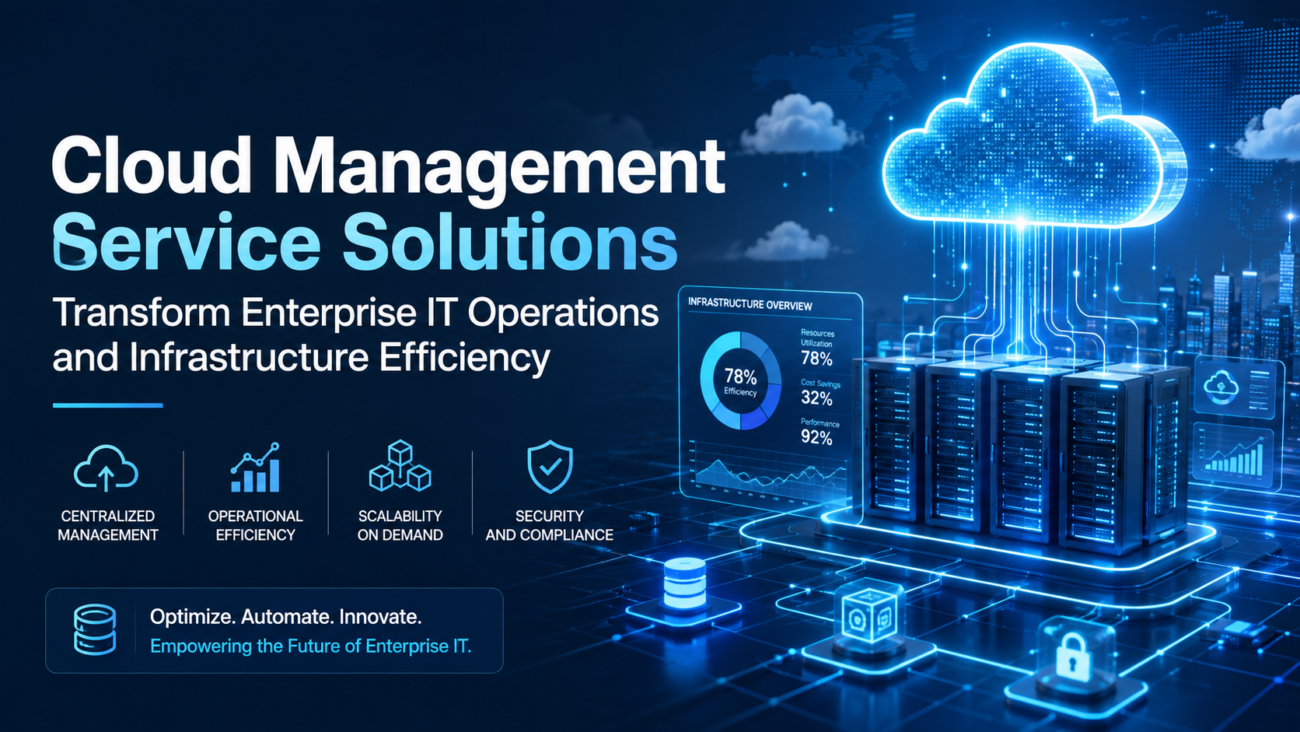
Enterprise IT operations face mounting pressure to deliver faster, scale smarter, and cut costs without sacrificing performance. Malaysian businesses are no exception. As companies migrate workloads to the cloud, managing multi-cloud environments becomes exponentially more complex. This is where cloud management service solutions step in to transform how organizations handle their infrastructure.
The traditional approach of manual oversight simply cannot keep pace with modern cloud demands. Organizations need automated, intelligent systems that optimize resources, ensure security, and maintain compliance across diverse platforms. Cloud management service solutions provide exactly that.
What Makes Cloud Management Service Solutions Essential
Cloud environments spread across multiple providers create visibility gaps. Teams struggle to track spending, monitor performance, and maintain security standards. A proper cloud management service bridges these gaps by centralizing control.
These platforms offer unified dashboards that display everything from AWS to Azure to Google Cloud in one view. IT teams gain instant insight into resource utilization, cost allocation, and potential vulnerabilities. The difference is night and day compared to juggling multiple consoles and manual spreadsheets.
Malaysian enterprises particularly benefit from cloud management service solutions because they face unique challenges. Data sovereignty requirements, regional compliance standards, and budget constraints demand precise control. The right management platform addresses all three simultaneously.
Core Components of Effective Cloud Management
Every robust cloud management service includes several critical elements. Cost optimization tools automatically identify waste like orphaned storage volumes or oversized instances. These features alone can slash cloud bills by 30% or more.
Security monitoring forms another pillar. Continuous scanning detects misconfigurations, unauthorized access attempts, and policy violations. Alerts trigger immediately when something looks off, preventing small issues from becoming major breaches.
Automation capabilities handle repetitive tasks without human intervention. Scaling resources up during peak hours and down during quiet periods happens automatically. Backups run on schedule. Patches deploy consistently across all environments.
How Cloud Management Service Transforms IT Operations
The operational transformation begins with time savings. Tasks that previously consumed hours or days now complete in minutes. Provisioning new environments, adjusting capacity, or generating compliance reports all happen at the click of a button.
Teams redirect their energy from firefighting to innovation. Instead of manually tracking resource usage or chasing down cost anomalies, IT professionals focus on strategic projects that drive business value. This shift fundamentally changes the role of IT within organizations.
Performance improvements become measurable and consistent. Cloud management service platforms enforce best practices automatically. They ensure workloads run on appropriate instance types, databases use optimal configurations, and networks route traffic efficiently.
Real Impact on Infrastructure Efficiency
Infrastructure efficiency gains manifest in multiple ways. Server utilization rates jump from typical levels of 20-30% to 70-80%. Storage costs drop as systems automatically move cold data to cheaper tiers. Network expenses decrease through intelligent traffic routing.
Malaysian companies operating across ASEAN markets particularly appreciate the geographic optimization features. Cloud management service solutions can automatically place workloads closer to end users, reducing latency while maintaining redundancy. A customer in Singapore gets faster response times than one served from a distant data center.
Disaster recovery planning becomes simpler and more reliable. Automated replication ensures copies of critical data exist in multiple regions. Recovery time objectives shrink from hours to minutes because failover processes activate automatically when issues arise.
Selecting the Right Cloud Management Service Provider
Not all cloud management service solutions deliver equal value. Organizations should evaluate several key factors before committing to a platform.
Multi-cloud support ranks high on the priority list. The best solutions work seamlessly across major providers plus private cloud infrastructure. Vendor lock-in becomes a non-issue when management tools span the entire environment.
Integration capabilities determine how well the platform fits existing workflows. APIs should connect easily with monitoring tools, ticketing systems, and business intelligence platforms. Data flows freely between systems without manual exports and imports.
Considerations for Malaysian Enterprises
Local support matters more than many realize. Time zone differences can delay problem resolution when vendors operate solely from distant regions. Providers with Malaysian presence or dedicated ASEAN support teams respond faster and understand regional requirements better.
Compliance certifications verify that cloud management service platforms meet local standards. Look for adherence to Malaysian regulations around data protection and industry-specific requirements like those governing financial services or healthcare.
Pricing models should align with actual usage patterns. Some platforms charge per managed resource while others use consumption-based billing. Malaysian businesses often prefer predictable monthly costs over variable expenses that fluctuate with cloud spending.
Implementation Best Practices for Maximum ROI
Successful cloud management service deployment follows a structured approach. Starting with a pilot project in one department or application reduces risk while demonstrating value. Quick wins build momentum for broader rollout.
Establishing clear governance policies before implementation prevents confusion later. Define who approves new resources, how budgets get allocated across teams, and what security standards apply universally. The management platform then enforces these policies automatically.
Training teams on the new tools ensures adoption and maximizes benefits. Even the most powerful cloud management service delivers limited value if nobody uses its advanced features. Hands-on workshops beat documentation every time.
Measuring Success and Continuous Improvement
Track specific metrics to quantify the impact of cloud management service solutions. Monthly cloud spending per workload shows cost optimization progress. Mean time to resolution for incidents demonstrates operational improvements. Resource utilization percentages reveal efficiency gains.
Regular reviews identify new optimization opportunities. Cloud environments evolve constantly with new services, pricing models, and architectural patterns. What worked six months ago might not be optimal today. Continuous refinement keeps infrastructure running at peak efficiency.
Benchmarking against industry standards provides context for performance. A Malaysian manufacturing company can compare its cloud efficiency metrics against similar organizations to spot gaps or validate strong performance.
The Future of Enterprise Cloud Management
Artificial intelligence and machine learning are already reshaping cloud management service capabilities. Predictive analytics forecast future resource needs based on historical patterns. Anomaly detection spots unusual behavior that might indicate problems or opportunities.
FinOps practices continue gaining traction as cloud spending becomes a larger portion of IT budgets. Cloud management service platforms evolve to support these methodologies with better cost allocation, chargeback capabilities, and spending forecasts.
Sustainability features emerge as organizations prioritize environmental impact. Modern management tools can optimize workload placement based on data center carbon intensity, helping companies meet sustainability goals while maintaining performance.
Malaysian enterprises embracing comprehensive cloud management service solutions position themselves for sustained competitive advantage. The operational efficiencies, cost savings, and strategic capabilities these platforms deliver compound over time. Organizations that delay adoption fall further behind as cloud complexity grows.
Ready to transform your enterprise IT operations with intelligent cloud management? Contact the Zchwantech team at sales@zchwantech.com to discuss how cloud management service solutions can optimize your infrastructure and drive measurable business results.
