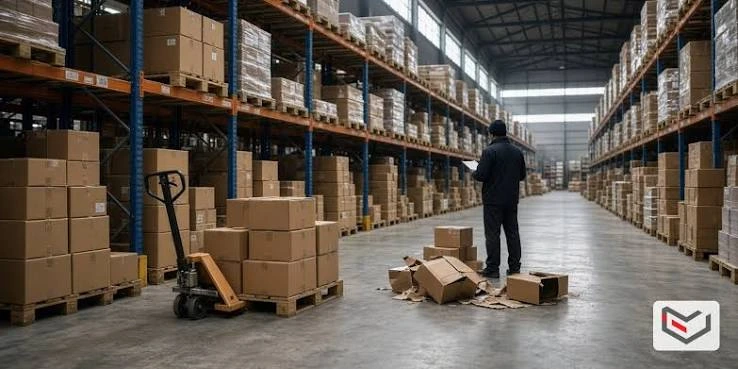
A small online store can be doing everything right on the front end: strong product photos, good reviews, and steady traffic from ads. Then the monthly numbers come in, and margins are thinner than expected. Often the leak is not in marketing or pricing at all. It is in the stockroom, where small, repeated mistakes add up to real money.
The good news is that most of these mistakes are fixable once you can see them. Many growing sellers only spot these problems after moving from spreadsheets to a mobile-friendly warehouse management system and seeing, for the first time, where time and stock are actually going.
Why Warehouse Costs Hide So Well
For small e-commerce businesses, the warehouse is often a spare room, a garage, or a modest rented unit. Because it does not feel like a “warehouse” in the industrial sense, it rarely gets the same attention as advertising spend or supplier costs.
But every order passes through it. Each extra minute spent picking, every wrong item shipped, and every product that sits unsold on a shelf has a cost. Those costs rarely appear as a single line in the accounts. They are spread across wages, refunds, shipping, and lost sales.
Small warehouse mistakes rarely look expensive on the day. They look expensive at the end of the quarter.
Mistake 1: Trusting Stock Counts That Are Out of Date
Many small sellers track inventory in a spreadsheet that is updated by hand, sometimes daily and sometimes only when someone remembers. As a result, stock counts drift away from reality.
When the numbers are wrong, two things happen. Products show as available online when they are actually sold out, leading to canceled orders and unhappy customers. Or items are reordered too early because nobody realized there were boxes of them on a back shelf. Both cost money, either in refunds and lost trust or in cash tied up in surplus stock.
Mistake 2: Storing Products Where They Fit, Not Where They Belong
In the early days, products go wherever there is space. Over time, that turns into a layout that makes sense to one person and confuses everyone else. Best-sellers end up on high shelves at the back, while slow movers take up the most accessible spots.
Every order then involves extra walking, searching, and stretching. A few seconds per order doesn’t sound like much, but across hundreds of orders a week, it becomes hours of wasted labor.
Mistake 3: Picking Without a System
When orders are picked from memory or from a printed list with no locations, errors creep in. Similar products get mixed up, sizes and colors are swapped, and the wrong item goes out.
Each mis-pick costs far more than the item itself. Return shipping, replacement shipping, time spent handling the complaint, and the risk of a negative review add up.
| Without a System | With Structured Picking |
| Staff rely on memory to find items | Each item has a recorded bin or shelf location |
| Similar products easily confused | Barcode scanning confirms the right item |
| New staff take weeks to get up to speed | New staff follow clear pick lists from day one |
| Errors discovered by customers | Errors caught before the parcel is sealed |
| No data on picking speed or accuracy | Clear figures on time per order and error rates |
Mistake 4: Ignoring Slow-Moving Stock
Slow-moving products are easy to overlook because they don’t cause obvious problems. They simply sit there. But they take up shelf space, tie up cash, and sometimes lose value as seasons change or newer versions launch.
Without clear data on how quickly each product sells, it is hard to know which items to discount, bundle, or stop reordering. Many small businesses only discover their dead stock during an annual count, long after the best chance to clear it has passed.
Inventory that does not move is not an asset. It is cash sitting on a shelf.
Mistake 5: Treating Returns as an Afterthought
Returns are part of e-commerce, but many small sellers handle them informally. Returned items get set aside “to deal with later,” sometimes for weeks. Meanwhile, they are not back in stock, not available to sell, and not being checked for damage.
A clear returns process, where each item is logged, inspected, and either restocked or written off, recovers value that would otherwise be lost. It also reveals patterns, such as a product returned far more often than others, which may point to a sizing issue or a misleading listing.
Fixing the Basics Before Scaling Up
None of these mistakes requires a huge warehouse or a large team to fix. They require accurate, up-to-date information about where stock is, how fast it moves, and what happens to every order.
Small businesses that address these basics early tend to scale more smoothly. Adding new products, hiring extra staff, or moving to a larger space is far easier when the processes behind them are already clear and reliable.
Protecting Margin From the Inside Out
Most small e-commerce sellers spend a lot of time trying to grow revenue, and far less time looking at what happens after an order is placed. Yet the warehouse is often where margin is quietly won or lost. Accurate stock counts, sensible storage, structured picking, active management of slow movers, and a proper returns process each recover a little value. Together, they can make the difference between a business that grows profitably and one that grows busier without getting any healthier.
