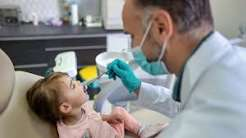
You may have noticed it during a routine visit, a school photo, or a moment when your child’s friends seemed to be losing and growing teeth on a different timeline. Then came the question that sits in your chest for a while: why does my child have fewer teeth than expected? That worry is real. Parents often jump ahead to speech, eating, appearance, future treatment, and cost, all at once. Seeking quality dental care for children in Ontario, CA can help you get clear answers and a plan for what comes next.
When a child is missing some teeth from birth, the issue is often called congenitally missing teeth or hypodontia, depending on how many teeth never formed. A pediatric dentist looks at more than the number of teeth on an X ray. They track jaw growth, bite development, speech habits, nutrition, and your child’s comfort, then build a plan that fits the child you have now and the adult smile that is still forming.
Pediatric dentists evaluate missing teeth with growth in mind
Children born with fewer teeth than expected do not all need the same treatment. Some are missing one or two permanent teeth and function well for years with monitoring. Others have several missing teeth, delayed eruption, or shape differences in the teeth that did develop. In some cases, missing teeth can be linked to conditions such as hypodontia or genetic syndromes including ectodermal dysplasia.
The first step is usually a careful exam and dental imaging. A pediatric dentist checks whether the teeth are truly absent or simply delayed. Children develop at different rates, but there is a point where a missing tooth bud on an X ray changes the conversation. That is when the plan shifts from waiting to active management.
This matters because missing teeth can change how the rest of the mouth develops. Nearby teeth may drift into empty spaces. Opposing teeth can over-erupt. The bite can become uneven, which may affect chewing and later orthodontic treatment. If front teeth are missing, a child may become self-conscious long before any adult treatment is possible. You can see why families feel pressed for answers even when the best next step is careful observation.
Managing congenital missing teeth often means staged care
Managing congenital missing teeth is rarely one procedure. It is a sequence. Pediatric dentists often coordinate care with orthodontists, speech professionals, and sometimes genetic or medical specialists. If a pattern of missing teeth suggests a broader condition, your child may need a medical workup. The clinical overview in this NCBI resource on hypodontia reflects that wider approach.
In early childhood, the focus is function and comfort. Can your child chew well? Is speech developing clearly? Are baby teeth healthy enough to preserve space? If primary teeth are present, a pediatric dentist usually tries to protect them as long as possible. A baby tooth sitting where no adult tooth will replace it can be very useful. It holds bone and space, and that can make later treatment simpler.
As children grow, the plan may include space maintenance, orthodontic guidance, cosmetic reshaping of small teeth, or removable appliances when appearance and function need support. Dental implants are often discussed early by parents, but they are usually delayed until growth is much farther along. Placing an implant too soon can create problems as the jaw continues to change.
This is where children missing permanent teeth treatment can feel frustrating. You want a fixed answer, but growth changes the timing. Good care is not slow because nothing is happening. It is paced to avoid locking a child into treatment that will not age well.
Different treatment paths solve different problems
| Approach | When Pediatric Dentists Consider It | Main Benefit | Main Limitation |
|---|---|---|---|
| Monitoring with regular X rays and exams | When missing teeth are confirmed but bite and function are stable | Avoids unnecessary treatment during growth | Requires patience and close follow up |
| Preserving baby teeth | When primary teeth are healthy and no adult replacement exists | Maintains space and bone for longer | Baby teeth may wear out or loosen over time |
| Space maintainers or partial appliances | When gaps affect chewing, speech, or appearance | Supports function and confidence | Needs adjustments as the child grows |
| Orthodontic space closure or space opening | When the bite needs correction or future replacement is planned | Creates a cleaner long term setup | Treatment timing is critical |
| Bonding, crowns, or reshaping small teeth | When teeth are present but undersized or misshapen | Improves appearance and function | May need updates with age |
| Implants or fixed adult replacement | Usually after jaw growth is near complete | Long term replacement option | Not suitable for most young children |
The right path depends on how many teeth are missing, which teeth are involved, and how your child is coping day to day. Missing a lower incisor creates a different set of problems than missing several premolars or front teeth. A skilled pediatric dental team plans around those details instead of offering one standard fix.
Steps you can take right now
Schedule imaging at the right age. If your child seems delayed in getting permanent teeth or has unusual gaps, ask for a full pediatric dental evaluation. An exam without imaging may not answer whether teeth are absent or simply late.
Protect every existing baby tooth. Keep up with cleanings, fluoride, and cavity prevention. A healthy baby tooth may serve your child for years if no permanent tooth is coming behind it.
Ask for a long term roadmap. You need more than a diagnosis. Ask what the next one, three, and five years may look like. That helps you prepare for orthodontics, cosmetic options, referrals, and likely costs without guessing.
Early planning gives children born with fewer teeth better options
When a child is born with fewer teeth than expected, the goal is not to rush into treatment. The goal is to protect growth, function, and confidence so future options stay open. That often means steady follow up, preserving what is healthy, and stepping in at the right time instead of the fastest time.
If your child’s smile seems off schedule, trust that your concern is enough reason to get answers. A pediatric dentist can map out what is happening and what comes next, one stage at a time.
