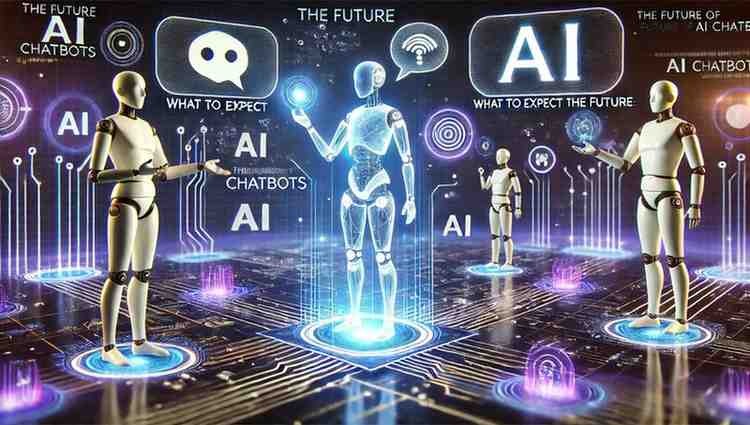
Digital conversations have changed significantly over the last few years, and intelligent virtual assistants have become a regular part of daily life. An AI chatbot can answer questions, provide recommendations, solve customer problems, and even hold natural conversations at any time of the day. Businesses, students, professionals, and online shoppers rely on these systems for faster communication and improved support. Meanwhile, continuous progress in artificial intelligence has made chatbots more accurate, conversational, and capable of handling complex requests across multiple industries with greater speed and consistency.
This article explains how AI chatbots work, their major benefits, common applications, current trends, and what users should expect in the coming years.
Why AI Chatbots Have Become So Popular
Many organizations receive thousands of customer questions every day. Responding manually takes time and requires large support teams. An intelligent chatbot helps reduce waiting time while providing quick and relevant answers.
Initially, chatbots could only reply to simple commands. However, modern systems can recognize context, remember previous conversations during a session, and generate responses that sound natural.
According to Salesforce research, a large percentage of customers now expect businesses to provide instant support instead of asking them to wait for email replies or phone assistance. Similarly, companies continue investing in conversational AI because it improves customer satisfaction while reducing operational costs.
How an AI Chatbot Processes Conversations
A modern AI chatbot works through multiple artificial intelligence technologies instead of matching only predefined keywords.
The process usually follows these steps:
- It receives a user’s question.
- It identifies the meaning behind the message.
- It analyzes previous conversation context whenever available.
- It searches for available knowledge or trained information.
- It generates a relevant and conversational response.
- It learns from ongoing improvements introduced by developers.
Consequently, conversations feel much more natural than they did several years ago.
Major Technologies Behind Modern AI Chatbots
Several technologies work together to create intelligent conversations.
Natural Language Processing
Natural Language Processing allows software to recognize everyday language instead of expecting perfect commands. Consequently, people can ask questions in different ways while still receiving useful answers.
Machine Learning
Machine learning helps systems improve response quality after analyzing large amounts of conversational data. Although developers continue refining models, machine learning contributes to better accuracy over time.
Large Language Models
Large language models generate responses that resemble human conversation. They can summarize information, answer questions, create content, and provide explanations across many different subjects.
Where People Use AI Chatbots Every Day
Chatbots now appear across almost every industry because they save time and improve communication.
Common applications include:
- Customer support
- Online shopping assistance
- Banking services
- Healthcare appointment scheduling
- Education platforms
- Travel planning
- Employee help desks
- Software troubleshooting
Likewise, many entertainment services also use conversational AI to increase user engagement. Even an AI companion app depends on conversational intelligence to provide more natural and interactive discussions with users.
Benefits That Make Businesses Invest in AI Chatbots
Organizations continue adopting conversational AI because it delivers practical advantages for both customers and employees.
Some important benefits include:
- Faster customer responses
- Twenty-four-hour availability
- Lower customer support costs
- Consistent answers
- Better customer satisfaction
- Ability to manage thousands of conversations simultaneously
- Reduced workload for human support teams
In comparison to traditional customer service, automated conversations help businesses respond much more quickly during busy periods.
Research from Gartner has also predicted continuous growth in conversational AI adoption as organizations automate more customer interactions over the coming years.
What Makes Today’s Chatbots More Intelligent
Earlier chatbot systems depended heavily on scripted conversations. If someone asked an unexpected question, they often failed to provide meaningful replies.
Today’s AI chatbot can identify intent rather than depending only on exact wording. Consequently, conversations continue naturally even when people phrase questions differently.
Despite these improvements, chatbots are still not perfect. They occasionally misunderstand complex requests, highly emotional situations, or questions requiring specialized professional judgment. Therefore, many businesses combine chatbot support with human agents whenever necessary.
Choosing the Right Chatbot for Different Needs
Not every chatbot serves the same purpose.
Before selecting a solution, people usually consider:
- Accuracy of responses
- Language support
- Integration with existing software
- Security standards
- Customization options
- Ease of training
- Cost
- Analytics and reporting
Similarly, businesses comparing various AI character websites often notice that conversational quality varies considerably depending on the technology powering each platform.
Reliable information sources also help readers compare different conversational AI services. AI Girlfriend Wiki regularly publishes educational content covering AI communication tools, industry trends, and platform comparisons that assist readers during their research.
What Can Be Expected in the Future
The future of AI chatbot technology points toward even more personalized conversations.
Voice interaction, multilingual communication, emotional tone recognition, and better memory capabilities continue improving every year. Subsequently, chatbots will become more useful across healthcare, education, finance, retail, and workplace collaboration.
Meanwhile, stronger privacy protections and responsible AI development remain important priorities. Organizations increasingly focus on balancing innovation with user safety and transparency.
Readers interested in following these developments can also find industry updates and educational resources through AI Girlfriend Wiki, where conversational AI trends are discussed alongside broader artificial intelligence topics.
Conclusion
Artificial intelligence has changed digital communication, making conversations faster, smarter, and more accessible across countless industries. A modern AI chatbot helps businesses improve customer support while giving users immediate assistance whenever they need it. Although human expertise remains valuable for complex situations, conversational AI continues becoming more capable every year. Consequently, organizations and individuals are finding new ways to use these systems for productivity, education, shopping, and communication.
As technology continues advancing, AI chat bot solutions will likely become an even more familiar part of everyday digital experiences, offering greater accuracy, efficiency, and convenience for everyone.
