Decisive changes are underway in the Gulf and the broader Middle East that are changing how cities grow and how economies compete. Long associated with power exports, nations are pouring assets into factories, logistics parks, and improved manufacturing facilities. Free zones grow, new industrial land is established on a large scale, and international business responds with confidence. What quickly appeared to be slow diversification has multiplied completely into a concerted local effort aimed at creating sustainable non-oil capacity. The industrial oddity that emerges is more connected, extra agile, and more adventurous than it was possible a few years ago. This movement is already transforming the skyline, supply chain, and definition of business opportunities in the region.
Diversification strategies transforming regional growth.
The most visible shift is a postponed pivot away from carbon dependence. The government has set clear production goals by promoting land allocation, monetary incentives, and a fast-track permitting system. A Construction Company in Oman operates in locations such as Duqm or Sohar, which now operates within a larger neighborhood network instead of an individual neighborhood firm.
- Special funds tend to attract capital at home and abroad with the help of well-equipped infrastructure and the presentation of long-term tax benefits.
- Downstream industries related to metals, chemicals, and electricity will receive priority assistance to extend value chains.
- Cross-border logistics processes have been upgraded to allow materials and finished goods to move more efficiently between ports and domestic production groups.
These measures are reflected in the already increasing commercial production rates and the continued growth of licensed factories in many Gulf markets. Consciousness has moved past easy mobilization towards high-value activities that create commercial industrial employment and reduce dependence on imports. Commercial developers are responding with the design of larger, extra-flexible commercial lots that can accommodate traditional manufacturing and more modern technology-driven operations.
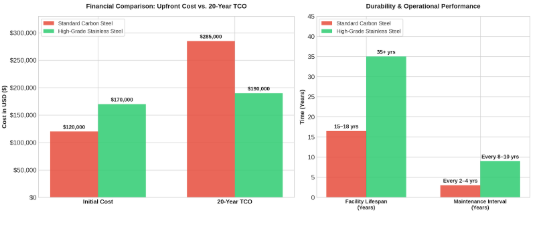
| Material Specification Criteria | Standard Carbon Steel Structural Framing | High-Grade Corrosion-Resistant Stainless Steel Alloys | Financial & Operational Savings |
| Initial Material & Fabrication Cost | $120,000 baseline per unit | $170,000 (+41% upfront investment) | Higher initial capital expenditure |
| Maintenance / Anti-Corrosion Needs | Refurbish every 2–4 years | Inspection only every 8–10 years | 65% reduction in recurring maintenance expenditure |
| Facility Structural Lifespan | 15–18 years in a saline environment | 35+ years under extreme heat/salinity | Double the operational asset lifespan |
| 20-Year Total Cost of Ownership (TCO) | $285,000 (Repairs & downtime losses) | $190,000 (Low upkeep overhead) | Net savings of ~$95,000 per facility frame |
Material and Infrastructure Supporting Scale
As industrial ventures grow, the demand for reliable, high-performance materials has increased dramatically. Developers and plant managers are increasingly relying on Stainless Steel Manufacturers to deliver components that can withstand coastal humidity, infertile zone temperatures, and long bearing life as well as assembly and stringent durability requirements.
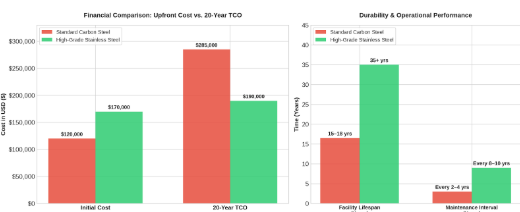
| Material Specification Criteria | Standard Carbon Steel Structural Framing | High-Grade Corrosion-Resistant Stainless Steel Alloys | Financial & Operational Savings |
| Initial Material & Fabrication Cost | $120,000 baseline per unit | $170,000 (+41% upfront investment) | Higher initial capital expenditure |
| Maintenance / Anti-Corrosion Needs | Refurbish every 2–4 years | Inspection only every 8–10 years | 65% reduction in recurring maintenance expenditure |
| Facility Structural Lifespan | 15–18 years in saline environment | 35+ years under extreme heat/salinity | Double the operational asset lifespan |
| 20-Year Total Cost of Ownership (TCO) | $285,000 (Repairs & downtime losses) | $190,000 (Low upkeep overhead) | Net savings of ~$95,000 per facility frame |
- Corrosion-resistant alloys are finding widespread applications in food processing, pharmaceutical manufacturing, water purification, and suitable strengthening installations.
- New storage photovoltaic buildings are detailed with more finished floors, more powerful ground weights, and improved electrical performance.
- Local manufacturing capabilities of strong point metals have been expanded to make lead instances smaller and reduce split-chain risks.
Coordination and Delivery in Complex Programs
This change in clothing choice is not cosmetic. This reflects the region’s turnover of older long-term assets that reduce lifetime renewal value and align with national commitments to reduce environmental impacts. At the same time, the business parks themselves are being rethought with better utilities, digital connectivity, and joint offerings, making them attractive to international tenants.
Large-scale industrial applications require careful orchestration across public companies, private investors, and multiple contractors. Construction Management Companies have adapted by embedding virtual tools that show progress, charges, and compliance in real time, helping to keep multiphase projects on track.
- Build fact modeling and predictive analytics to identify capacity bottlenecks early.
- Partnership contracts that share threats between public and private partners have additional commonalities.
- Desires for workforce localization encourage companies to invest in programs that build sustainable technical capacity within the sector.
The result is a more professional mission-delivery framework. Delays once considered unavoidable are becoming less common, and transparency between regulators and industry has improved. This commercialization results in an aggressive advantage for the markets themselves, which can reveal trustworthy execution.
Logistics and manufacturing move closer together
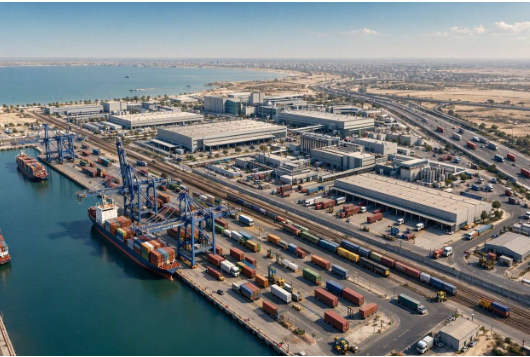
Ports, recreational areas, and inland industrial parks were not treated as separate areas. Integrated hubs now combine storage, optical assembly, and distribution under unified management. This convergence shortens the distribution chain and supports the just-in-time models that international manufacturers have. It maintains competitive energy tariffs to give those competing for international contracts a closer edge. Meanwhile, data centers and AI-related facilities are popping up alongside traditional factories, developing mixed-use commercial premises that attract a wider range of tenants and raise certain land value.
- Flexible master plans now accommodate every heavy industry and smaller generation-wide application in the same network.
- Shared power, cooling, and most likely virtual connectivity are critical for tenants.
- Business designers should prioritize websites that can evolve as business and logistics needs change over the years.
Sustainability and digital tools as standard practice
Every significant commercial captive program now has renewable energy, water recycling, and reduced carbon goals from the start. Solar systems and early green hydrogen pilots sit alongside conventional manufacturing footprints. Digital twins of entire parks allow operators to optimize energy use and maintenance schedules before issues persist. These features are not optional extras; they determine whether or not a development can attract international tenants and meet national climate obligations. Markets that treat durability and time as moderate design standards rather than afterthoughts position themselves for the following wave of capital.
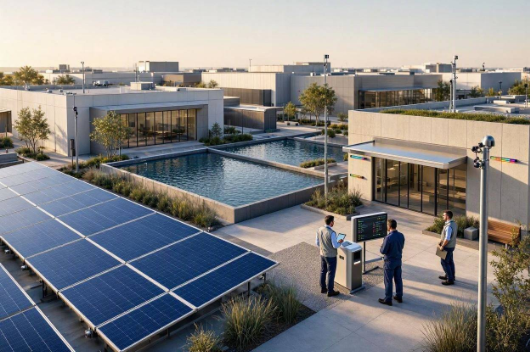
- Permanent electrical integration and water recycling structures are now widespread requirements in new commercial parks.
- Digital couplings and real-time monitoring tools help businesses reduce waste and increase long-term efficiency.
- Developments that embed those practices early will benefit from a net gain by attracting global traders and tenants.
Final Thoughts
Industrial growth currently transforming the Middle East has outpaced manufacturing growth. It represents a structural shift in the proximity of business enterprises, capital allocation, and economic priorities. Open areas and cities, especially in the region, compete when their industrial ecosystem is large, their logistics reliability, and their transportation sophistication. Trends visible today—deliberate variety, areas of expertise, products, industrial business management, logistics-manufacturing integrations, and annual improvements—are evident. Those who adopt One Shift and adapt quickly write the following goals of near-term growth and take chances on it.
FAQs
What is the consulting push on the back of intra-Middle East trade growth?
National monetary visions designed to reduce oil dependence, along with competitive electricity costs, accelerated open sector capacity, and strong foreign financing, are the primary drivers.
How do businesses and experts grow in unenclosed areas?
They will provide tailored infrastructure, tax breaks, and simplified policies that allow manufacturers and logistics companies to set up and scale faster than traditional stations.
Why is the decision about specialty metals heterogeneous?
Harsh climates, long-term asset livability requirements, and growth in sectors that include food processing, pharmaceutical prescriptions, renewable energy, and infrastructure all require long-lasting, corrosion-resistant materials.
What role does technology play in new business ventures?
Digital tools, including production forecasting, real-time monitoring systems, and energy management platforms, increase transportation speed, cost management, and long-term operational performance.
Is this commercial momentum predicted to be sustained?
Most national technologies are expected to grow handsomely in the 2030s and are supported by continuous spending on infrastructure, localization policies, and the ambition of the region to emerge as a global manufacturing and logistics hub.
