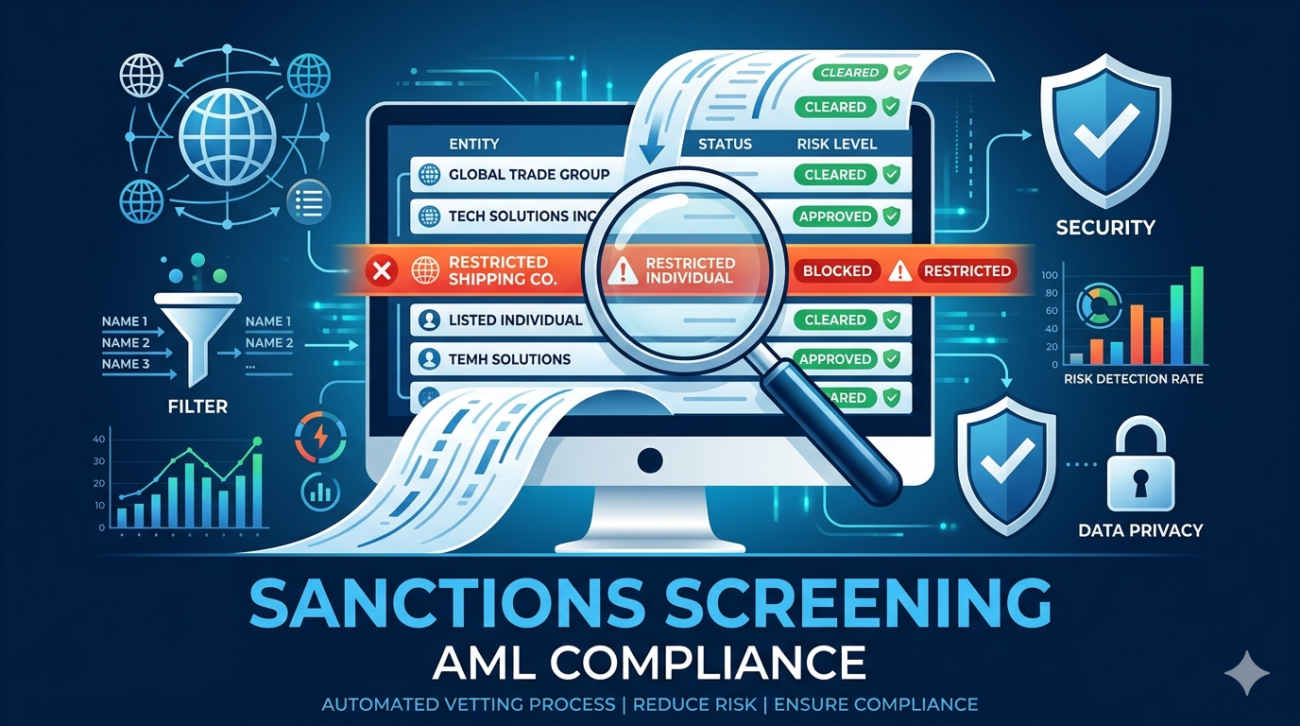
In today’s interconnected financial environment, organizations conduct transactions with customers, partners, and businesses from different regions and linguistic backgrounds. As regulatory requirements continue to evolve, identifying sanctioned individuals and entities across multiple languages has become a critical component of compliance programs. Modern Sanctions Screening technology helps institutions navigate these complexities while reducing the risk of regulatory violations.
A robust Sanction Screening system is designed to analyze names, addresses, and other identifying information regardless of language variations. This capability enables organizations to detect potential matches efficiently and maintain compliance with global sanctions regulations.
The Growing Complexity of Global Sanctions Compliance
Financial institutions, fintech companies, and multinational corporations frequently interact with customers whose names may be written in different scripts or transliterated into multiple formats. A sanctioned individual listed in Arabic, Chinese, Cyrillic, or other writing systems may appear differently when translated into English.
This challenge becomes even more significant when organizations must screen against multiple watchlists, including the OFAC Sanctions list and other international sanctions databases. Without advanced screening technology, institutions may overlook potential matches or generate excessive false positives that slow operational processes.
As regulatory bodies continue to expand sanctions programs and introduce Secondary Sanctions, businesses must ensure their compliance frameworks can accurately identify high-risk entities regardless of language differences.
How Modern Screening Systems Handle Multiple Languages
Advanced screening platforms use sophisticated matching technologies to identify sanctioned entities across various languages and character sets. Rather than relying solely on exact name matches, these systems analyze linguistic patterns, phonetic similarities, and alternative spellings.
Key capabilities often include:
- Transliteration matching across different alphabets and scripts
- Fuzzy matching to identify spelling variations
- Multilingual database support for global sanctions lists
- Real-time updates from regulatory authorities
- Risk-based scoring to prioritize potential matches
These features help compliance teams improve detection accuracy while minimizing unnecessary investigations.
The Role of Transliteration and Fuzzy Matching
One of the biggest challenges in AML Sanctions Screening involves transliteration. A name originally written in Arabic, Russian, or Chinese may have several acceptable English spellings. Traditional screening methods that rely on exact matches often fail to identify these variations.
Modern Sanctions Screening solutions address this issue by applying intelligent algorithms that recognize phonetic similarities and alternative spellings. For example, a sanctioned individual’s name may appear differently across various documents, yet the system can still identify the potential match based on linguistic analysis.
Fuzzy matching further enhances detection capabilities by identifying names that contain minor spelling differences, typographical errors, or formatting inconsistencies.
Managing Global Watchlists Effectively
Organizations must screen against numerous sanctions databases issued by government agencies and international bodies. These lists are frequently updated to reflect changing geopolitical developments and regulatory actions.
Leading Sanctions Screening providers continuously update their databases to ensure customers have access to the latest information. Automated updates help compliance teams remain aligned with evolving regulations while reducing manual workload.
A reliable sanction screening tool can consolidate multiple watchlists into a centralized screening environment, enabling organizations to conduct comprehensive checks through a single platform.
Reducing False Positives Without Missing Risks
One of the most common challenges in sanctions compliance is balancing detection accuracy with operational efficiency. Excessive false positives can overwhelm compliance teams and increase investigation costs.
Advanced screening technologies use contextual analysis, risk scoring, and machine learning capabilities to improve match quality. Instead of flagging every similar name, the system evaluates additional data points such as date of birth, nationality, location, and business affiliations.
This approach allows organizations to focus resources on genuinely high-risk cases while maintaining strong compliance standards.
Why Technology Matters for Modern Compliance Programs
As sanctions regulations become more complex, organizations need solutions that can scale across multiple jurisdictions and languages. Manual review processes are no longer sufficient for businesses handling large transaction volumes or operating internationally.
Many sanction screening providers now offer intelligent platforms that combine automation, real-time monitoring, and multilingual screening capabilities. These technologies help institutions identify potential risks faster and respond to regulatory requirements more effectively.
Companies seeking comprehensive compliance support often evaluate trusted providers such as AML Watcher, which offers advanced screening capabilities designed to address modern sanctions compliance challenges.
Conclusion
Detecting sanctioned entities across multiple languages requires more than simple name matching. Organizations must account for transliterations, spelling variations, different writing systems, and continuously changing sanctions regulations. Modern Sanctions Screening solutions use advanced matching technologies, multilingual databases, and automated updates to improve detection accuracy while reducing false positives.
As global regulatory expectations continue to grow, implementing an effective screening framework is essential for maintaining compliance, managing risk, and supporting secure international business operations. By leveraging a sophisticated Sanction Screening system, organizations can strengthen their compliance programs and confidently navigate today’s complex sanctions landscape.
Bless Insight is dedicated to exploring the lives, journeys, and achievements of influential people, offering readers inspiration and valuable life lessons.
