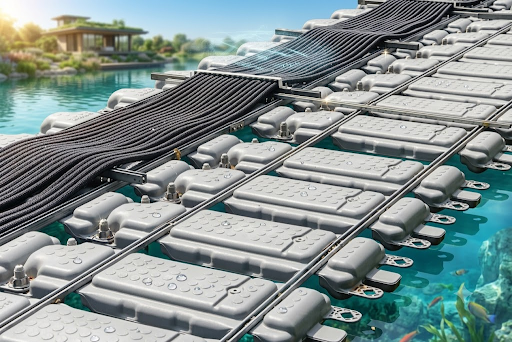
Urban populations are expanding at unprecedented rates, pushing coastal and riverine cities to their geographical limits. As developable land becomes increasingly scarce, urban planners are looking toward adjacent water bodies to accommodate public and commercial spaces. The concept of waterfront revitalization has shifted from mere aesthetic improvements to functional spatial expansion. Engineering modern floating infrastructure now demands rigorous structural analysis, strict regulatory compliance, and advanced material science.
The Urban Shift Towards the Water: Overcoming Land Scarcity
Modern urban expansion strategies are undergoing a structural paradigm shift. Planners must evaluate expansion methodologies based on financial viability, ecological preservation, and long-term utility.
| Expansion Method | CapEx (Initial Cost) | Environmental Impact | Timeline | Adaptability to Water Level Changes |
| Land Reclamation | Extremely High | Severe (Habitat Destruction) | Years | None |
| Fixed Piling Structures | High | Moderate (Seabed disruption) | Months | None (Vulnerable to tides) |
| Modular Floating Platforms | Low to Moderate | Minimal (Zero leaching) | Days/Weeks | Absolute (Rises with tide) |
The Limitations of Land Reclamation and Fixed Structures
Historically, cities relied heavily on land reclamation to generate new commercial districts. This process requires transporting massive volumes of fill material, resulting in extraordinary capital expenditures.
Furthermore, land reclamation permanently obliterates local marine habitats and alters essential hydrodynamic flows. Environmental assessments frequently highlight the irreversible ecological damage caused by suffocating seabed ecosystems.
Fixed piling structures present a different set of challenges. Driving concrete or steel piles into the ocean floor creates significant acoustic pollution and disrupts benthic zones.
Additionally, static structures cannot adapt to tidal fluctuations or anticipated sea-level rises. This rigidity makes fixed infrastructure highly susceptible to storm surges and varying water levels, ultimately limiting its long-term viability in dynamic coastal environments.
Engineering Versatility: Modular Floating Systems in Urban Design
When designing high-traffic public walkways and commercial waterfront event spaces, precise structural buoyancy and dynamic load distribution are non-negotiable. Modern urban planning relies heavily on engineered thermoplastic polymers. Technical specifications from global infrastructure suppliers, such as Hiseadock, reveal that standardized high-molecular-weight polyethylene pontoon arrays can safely sustain continuous dynamic loads exceeding 350 kg/m² while absorbing localized pedestrian impact forces without structural deformation.
Bearing Capacity and Spatial Adaptability for Commercial Use
The deployment of High-Molecular-Weight High-Density Polyethylene (HMWHDPE) has revolutionized commercial floating space development. These modular units are engineered to support heavy, fluctuating loads common in public squares, floating markets, and aquatic stages.
To ensure safety in commercial applications, engineers rely on specific performance parameters:
- Dynamic Load Bearing: Safely supports constant dynamic loads exceeding 350 kg/m², accommodating dense crowds during public events.
- Thermal Resilience: Maintains structural integrity across extreme temperature ranges from -30°C to 70°C without warping or brittleness.
- Point Load Distribution: Dissipates localized stress from heavy commercial equipment (such as kiosks or stage trussing) across interconnected modular arrays.
- Buoyancy Redundancy: Utilizes cellular air-trapping configurations to prevent catastrophic sinking even if individual units are compromised.
This adaptability allows civic planners to reconfigure waterborne assets based on seasonal demands. A floating pedestrian bridge utilized in the summer can be detached and reorganized into a marina breakwater during the winter.
Material Durability in High-Traffic Waterfronts
Public infrastructure must endure relentless physical stress. High-traffic waterfronts subject materials to constant pedestrian footfall, varied weather conditions, and continuous wave action.
Material degradation in these environments usually stems from ultraviolet (UV) radiation, chemical corrosion from saltwater, and physical abrasion. Engineering infrastructure that can withstand these combined forces is critical for minimizing municipal maintenance budgets.
Mitigating Wear, Tear, and Vandalism
HMWHDPE addresses the primary vulnerabilities of traditional maritime materials. Unlike wood, it does not splinter or rot, and unlike steel, it is entirely immune to galvanic corrosion.
- UV and Chemical Resistance: Formulated with advanced UV inhibitors to prevent photodegradation and surface chalking over decades of sun exposure.
- Impact Resistance: High tensile strength and elasticity allow the polymer to absorb blunt impacts from docking vessels or floating debris without fracturing.
- Surface Friction Specifications: Engineered with integrated anti-skid surfaces to maintain high coefficients of friction, preventing pedestrian slippage even under continuous water exposure.
Furthermore, safety-centric engineering dictates specific physical forms for public use. Seamless splicing mechanisms eliminate trip hazards between individual modules.
Additionally, chamfered edges and rounded corners are mandated to mitigate severe injuries in the event of accidental falls, ensuring a secure environment for high-density public gatherings.
Key Takeaways
| Area | Key Takeaway | Impact/Data |
| Deployment | Prioritize modular platforms | Days/weeks vs. years |
| Structural Load | Utilize HMWHDPE arrays | Sustains >350 kg/m² |
| Climate Risk | Avoid fixed structures | Absolute tidal adaptability |
| Eco-Compliance | Mandate inert materials | Zero leaching; 100% recyclable |
Environmental and Regulatory Compliance for Urban Waterways
As cities integrate their infrastructure with local waterways, maintaining ecological balance becomes a primary engineering constraint. Water quality degradation is a severe risk when introducing foreign materials into sensitive marine or riverine ecosystems.
Municipalities are now bound by strict environmental policies that dictate the chemical stability of any submerged or semi-submerged infrastructure.
Zero-Leaching Materials and Water Quality Preservation
Regulatory frameworks for urban waterfronts globally strictly prohibit the installation of materials that may contaminate sensitive local aquatic ecosystems. Unlike chemically treated timber or oxidizing metals, high-density polyethylene is biologically inert, releasing zero micro-toxins or heavy metals into the water column. This aligns seamlessly with stringent international guidelines, such as those outlined in the EPA regulations on coastal and urban water quality, which mandate sustainable material sourcing to prevent the long-term degradation of urban marine habitats.
The inert nature of HMWHDPE ensures that neither plasticizers nor chemical stabilizers leach into the surrounding water. This characteristic is paramount for preserving local micro-biomes and ensuring compliance with stringent municipal environmental audits.
Finally, the end-of-life lifecycle of HMWHDPE aligns with modern circular economy principles. The material is 100% recyclable, ensuring that decommissioned floating infrastructure does not contribute to global landfill accumulation.
