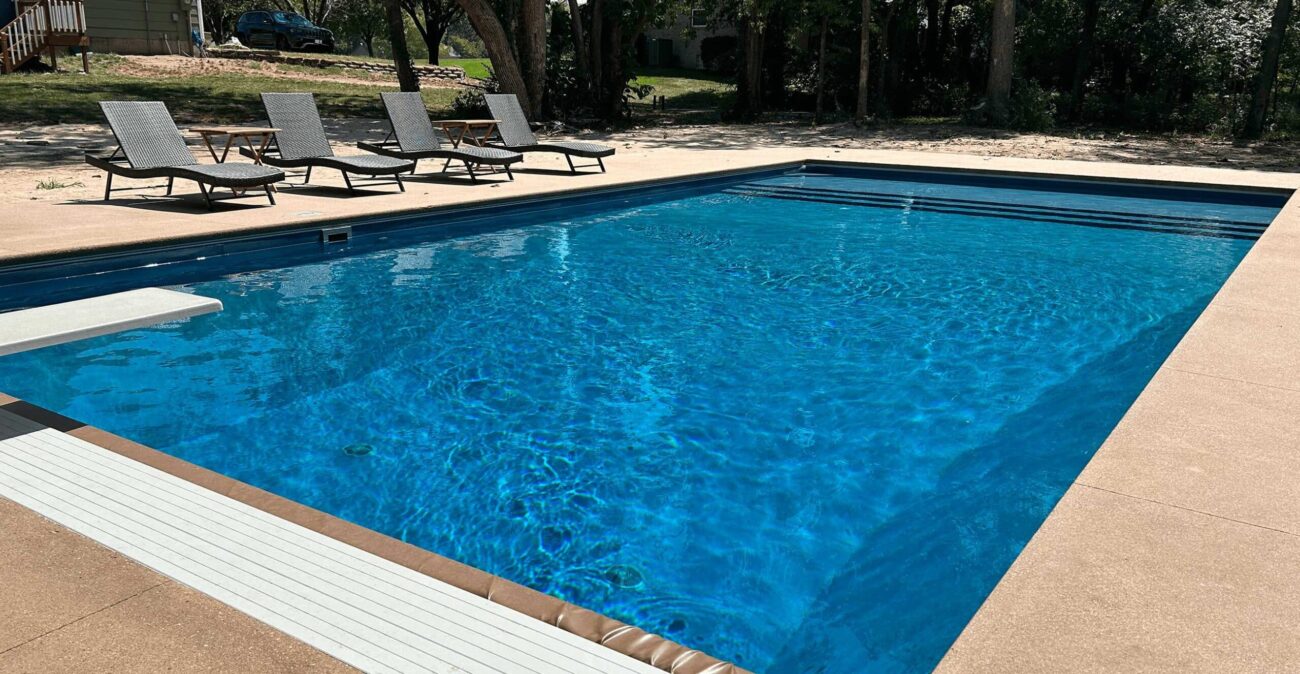
Choosing an interior finish might seem like one of the simpler decisions in pool design. Pick a color you like, approve the sample, and expect the water to take on roughly the same shade. In reality, the finished result is much less predictable. Water, sunlight, depth, texture, and everything surrounding the pool can change how that color appears once the pool is filled.
That is why finish selection deserves early attention in new swimming pool builds. The surface is not merely a background beneath the water. It becomes part of a larger visual system, influencing whether the pool appears bright and airy, deep and dramatic, naturally blue-green, or somewhere in between.
The Finish Sets the Starting Point
The interior surface establishes the foundation for the water’s appearance, but it does not determine the final color by itself. A pale finish generally creates a brighter impression because the underlying surface remains more visible through the water. Deeper blues, grays, and other darker finishes tend to create a stronger sense of depth and a more saturated appearance.
Even subtle differences matter. Two finishes that look nearly identical when viewed as small samples can create noticeably different results across an entire pool. Undertones that seem insignificant on a sample board become more apparent once they cover a much larger area and interact with thousands of gallons of water.
This is also why there is no universally “best” pool color. A light, clear-looking pool may complement one outdoor design beautifully, while a richer, darker appearance may suit another. The better question is what kind of atmosphere the pool is supposed to create.
Depth Changes the Color More Than You Might Expect
One of the most interesting things about pool finishes is that a single surface can appear to create several different water colors at once. The reason is depth.
In shallow areas, the bottom is easier to see, making the finish itself more noticeable. These sections often appear lighter, and small variations in the surface may be easier to distinguish. As the water becomes deeper, the finish is viewed through a greater volume of water, changing the intensity and character of the color.
That means steps, tanning ledges, shallow entries, and deeper swimming areas may not look identical even though they use exactly the same material. Instead of treating that variation as a flaw, it can become one of the most attractive parts of the design, adding natural visual dimension to the pool.
Texture, Light, and the Space Around the Pool
Color gets most of the attention, but texture has its own effect on appearance. A smooth surface tends to create a cleaner, more uniform visual impression, while finishes containing visible aggregate or small stones produce greater variation beneath the water. Light catches those surfaces differently throughout the day, making the pool appear more active and dimensional.
The surrounding environment matters too. Bright paving, darker coping, greenery, walls, structures, and other nearby elements may all be reflected on the surface. A pool surrounded by lush planting can develop a subtle green cast at certain angles, while pale hardscaping may make the water look brighter. Even the same pool can shift considerably between strong midday sunlight, softer evening light, and overcast conditions.
These interactions are especially worth considering when an existing pool is being updated, since changing the interior finish may alter how established tile, coping, landscaping, and lighting work together visually. Homeowners planning broader upgrades with pool construction experts may therefore benefit from comparing finish options alongside the materials that will remain around the pool. Looking at the entire setting usually gives a more useful picture than judging the interior surface on its own.
Why Samples Only Tell Part of the Story
Finish samples are valuable, but they have limitations. A small piece of material viewed dry and indoors cannot perfectly reproduce what that surface will look like underwater, across a large area, and in changing natural light.
Photos have similar limitations. Camera settings, editing, weather, screen brightness, pool depth, and surrounding materials can all influence the image. A photograph can provide inspiration and help narrow down preferences, but expecting an exact color match may lead to disappointment.
A more practical approach is to think in terms of a general visual direction. Instead of trying to reproduce one precise shade from a photograph, decide whether the goal is bright and refreshing, rich and dramatic, soft and natural, or calm and understated. That makes it easier to evaluate finishes without expecting a level of color consistency that water and light simply cannot provide.
Choosing a Look That Works Beyond Day One
Appearance is important, but the most striking finish is not automatically the right one for every pool. The surface should make sense alongside the architecture, outdoor materials, landscape, and way the space will actually be used.
It is also worth thinking about how strongly you want the pool to define the surrounding area. A vivid or dark finish may become a major visual focal point, while a lighter or more neutral surface can allow landscaping, decking, furniture, and architectural elements to share more attention.
Personal preference matters here more than trends. Pool finishes are relatively permanent design choices, so selecting something simply because it is currently popular may not be as satisfying as choosing a look that suits the property and the people using it.
The Best Water Color Comes From the Whole Design
Interior finish plays a major role in pool water color, but it never works alone. Depth, texture, natural light, reflections, nearby surfaces, and the overall design all contribute to what people eventually see.
That unpredictability is part of what makes pool design interesting. Water color is not a flat paint choice that remains identical from morning to evening. It changes with the environment, sometimes subtly and sometimes dramatically.
Rather than searching for a finish guaranteed to produce one exact shade, it is more useful to consider the mood the entire pool area should create. When the surface, surroundings, and overall style support one another, the water color becomes part of a cohesive space instead of a decision made in isolation.
