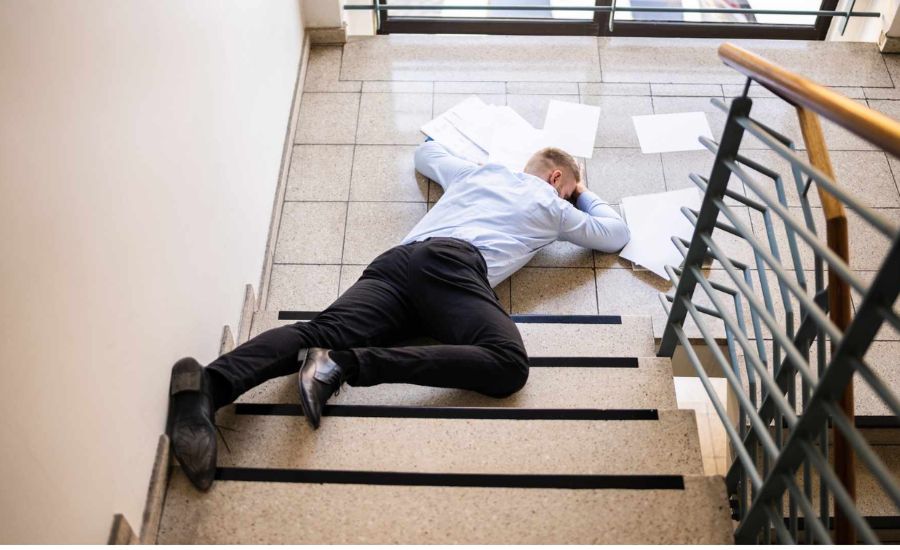
Falls remain a source of injuries in the United States. The CDC reported in 2025 that more than 41,000 adults aged 65 or older died from unintentional falls in 2023, at a rate of 69.9 deaths per 100,000 older adults.
The figure mentioned above only covers fatalities. Falls also send millions of Americans to the emergency room every year, making them one of the most common causes of ER visits in the country, after car accidents.
These accidents often start with wet floors. They can also come from bumps or cracks in the ground. Dim lighting may play a role as well. Trash, boxes, or other items left in the path can add risk. Stairs that are not maintained can also lead to falls.
A fall can lead to different outcomes. Sometimes, it only causes a bruise. In other cases, the injured person can sustain bone fractures. There is also the risk of a head injury. Some injuries can last for a long time. A look at slip and fall accident statistics makes this point clear. They provide details on the common injuries related to such an incident and the common causes of it.
Let’s look at how these accidents start. Think about the kinds of injuries they can cause. Also consider when unsafe conditions can lead to legal blame.
The Scale of the Problem Is Larger Than Most People Assume
The National Floor Safety Institute reports that falls account for more than 8 million emergency room visits in the U.S. each year, making them one of the leading causes of ER visits.
Older age groups experience slip and fall incidents more than any other age group. These people do not make up a significant portion of the overall U.S. population, but they do account for a large percentage of hospital stays for people who have fallen. After a fall, older people take more time to go back to their regular daily activities than younger adults. For many, a slip and fall accident can permanently alter the dynamics of daily activities.
What Actually Causes Most Falls
Property conditions drive the majority of slip and fall incidents. It’s difficult to notice newly mopped floors. If the signs that provide relevant warnings are missing, people can’t avoid slipping and falling. Loose rugs and small mats can also cause a slip before anyone has time to react.
Falls can happen for a few reasons. Uneven or cracked floors can trip people. Bad light in stairwells or in parking areas can hide steps or edges. Clutter on walkways can block your path. Loose extension cords left across the ground can also lead to slips. Most of the time, these hazards can be spotted ahead of time and be stopped with simple maintenance of the place.
Weather adds another layer entirely, particularly in regions that see real winter conditions. Falls from ice and snow, which are not removed on time or are only partially removed and allowed to refreeze, make up a significant number of outside accidents.
In areas with warmer climates, unexpected rainfall on smooth surfaces such as tiled entrances and parking ramp entrances increases the potential for falls.
Proving Fault Requires More Than Just Falling
A fall alone doesn’t establish a legal claim. To establish fault, there must be proof that shows the property owner knew, or reasonably should have known, about the dangerous condition and failed to fix it or warn about it.
There are two kinds of knowledge here. Actual knowledge is when the owner knew about the hazard. Constructive knowledge is when the hazard existed long enough that the owner should have known, even if they didn’t.
Proving either one usually depends on records the property owner controls, inspection logs, maintenance schedules, and prior complaints, not anything the injured person can access on their own. Tampa slip and fall lawyer Ronald Bone believes that working people cannot compete fairly against insurance companies without help, since the property owner and its insurer are the ones holding most of the evidence that would prove what they knew and when.
These cases are built around the same four elements every negligence claim requires. These elements are a duty of care the property owner owed, a breach of that duty, a direct causal link between the breach and the fall, and real, documented damages that followed.
Missing even one of these four elements can compromise the case and weaken a claim, no matter how strong the argument or evidence at hand.
Why the First Few Minutes After a Fall Matter So Much
Evidence of a dangerous condition tends to disappear fast. For example, a spill may get mopped up a few minutes later. A maintenance crew or janitor may fix a loose rug. Security footage gets overwritten within days at many properties. People who fall should immediately take pictures of the danger right after so they can serve as evidence for their claim.
Victims of slip and fall cases must tell the owner or the manager what happened right away. Doing this action produces a written record that is tough to dispute later.
Seeking medical evaluation right away, even for injuries that don’t feel severe in the moment, does the same thing for the medical aspect of the case.
Adrenaline can effectively conceal pain right after falling. An injury that appears to be minor initially may later become serious once the swelling drops.
None of these factors means every fall on someone else’s property automatically supports a claim. Many fall cases occur even when nobody did anything wrong. The main question is whether the owner saw the risk in time or whether the danger was unavoidable. The answer to this issue will decide the outcome of a slip and fall accident.
