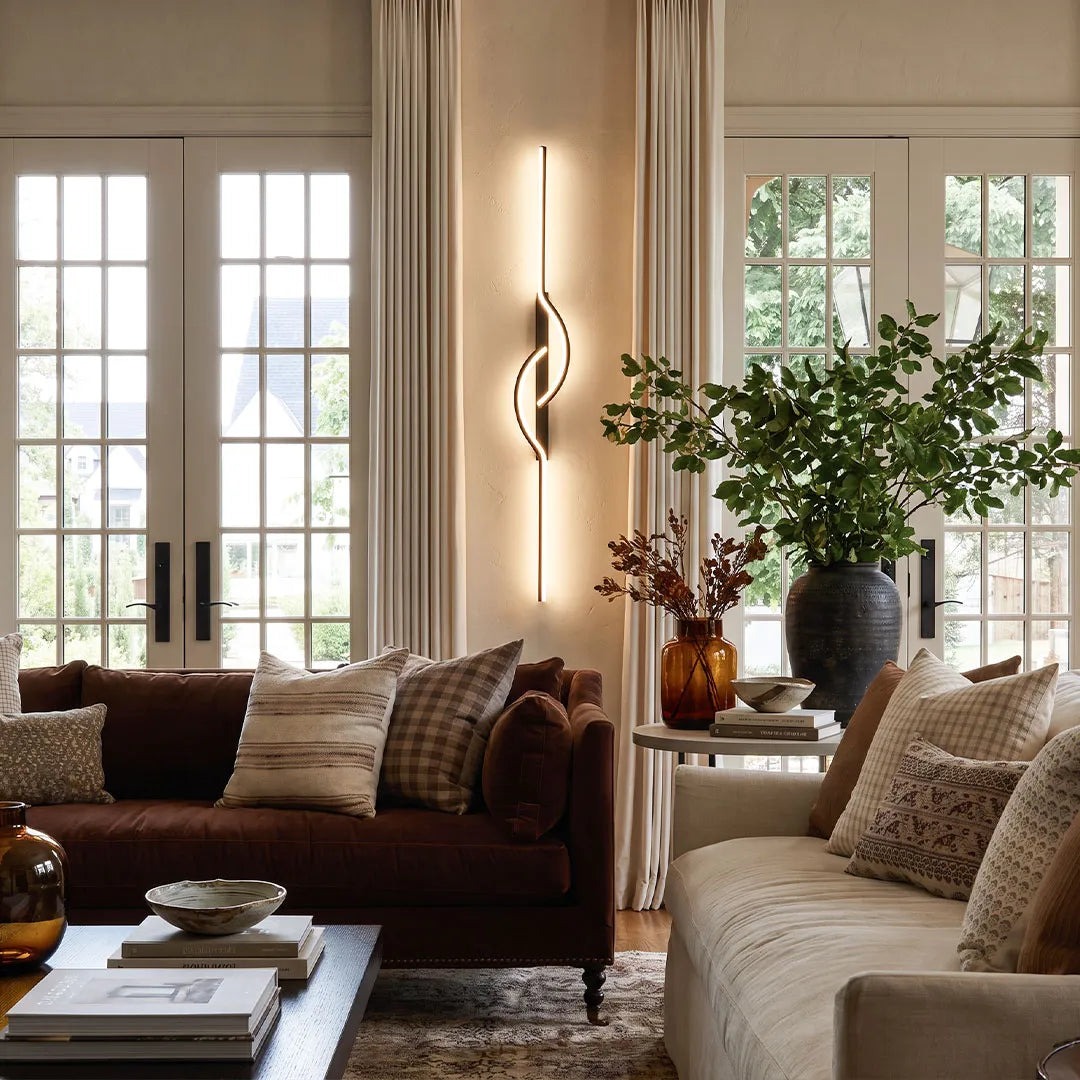
A friend once asked me to look at her living room because it never felt finished. She had already changed the rug, moved the sofa twice and bought a larger piece of art for the wall. None of it solved the problem. The room looked pleasant during the day, but after sunset the ceiling light flattened everything into one bright, rather unforgiving space.
We switched off the overhead fixture and temporarily placed two small lamps near the walls. The difference was immediate. The furniture had not changed, yet the room suddenly had depth. The dark corners were softer, the artwork looked more deliberate and the sofa felt like somewhere to sit rather than something displayed under a spotlight.
This is the quiet advantage of wall lighting. It brings light down from the ceiling and closer to the parts of a room people actually notice: books, pictures, textured walls and the faces of the people sitting there.
Start With the Awkward Part of the Room
Before shopping for a fixture, walk through the room in the evening with the main light turned off. Where do you instinctively want more light? It may be beside a chair where someone reads, at the end of a long hallway or on either side of a fireplace that disappears after dark. That location tells you more than a decorating trend ever will.
A broad selection of wall sconces includes everything from slim architectural lights to shaded reading lamps. The useful question is not simply which one looks best on a product page. Ask what the light needs to do once it is on the wall. A fixed diffused fixture can soften a gloomy corner, while an adjustable arm makes more sense beside a reading chair or bed.
Light placed near eye level gives a seating area more depth after dark.
Projection matters, particularly in small rooms. A deep shade may look modest from the front but become an obstacle in a narrow hallway. Mark the proposed width, height and projection with painter’s tape, then walk past it several times. Open nearby doors and cupboards too. This slightly awkward five-minute exercise is much easier than discovering the problem after installation.
Use Pairs When the Room Needs Structure
A pair of sconces can make an ordinary wall feel composed. They work naturally around a fireplace, mirror, sideboard or large artwork because they establish clear boundaries. The object in the middle gains importance without needing to become larger or more colorful.
Symmetry is useful, but it should not become a rule applied without thought. Two lights squeezed too tightly around a small picture will look crowded. Move them outward so the group has room to breathe, and consider what else sits below. The fixtures should relate to the full arrangement—not just the frame, mantel or mirror directly between them.

A matching pair can turn a sideboard and artwork into one intentional composition. Single sconces have their place as well. One light beside a small desk, reading nook or console often feels less formal and more relaxed. It can also solve a practical problem without demanding that the opposite side of the room match. Homes usually feel more natural when some areas are balanced and others are allowed to be slightly irregular.
Let an Older Style Interrupt a Newer Room
One of the easiest ways to make a newly decorated room feel less showroom-perfect is to introduce something with an older silhouette. That does not require an actual antique. New vintage wall sconces can borrow details such as aged-looking metal, ribbed glass, curved arms or fabric shades while fitting into a contemporary lighting plan.
The trick is restraint. A vintage-style fixture does not need vintage wallpaper, vintage furniture and a collection of old trunks around it. In fact, it often looks more convincing beside plain plaster, simple cabinetry or a modern sofa. Let the shape or finish provide the historical note, then leave the surrounding pieces relatively quiet.
Do not rely on the word “vintage” to tell you what a fixture is made from. A brass-colored finish is not automatically solid brass, and a distressed surface does not make a new light an antique. Check the listed materials, dimensions, bulb requirements and mounting details. If you are considering a genuine old fixture, have its wiring and fittings assessed before it is installed.
Turn an Unused Corner Into a Place
Many homes have a corner that contains a chair but never becomes a place anyone chooses to sit. Often, the missing element is not another cushion or side table; it is light. A wall-mounted reading lamp gives the chair a purpose while keeping the floor clear. It also avoids the loose cord and wide base of a floor lamp, which can be useful in compact rooms.
 A focused wall light can transform a forgotten chair into a usable reading corner.
Position the light according to the person who will use the chair, not according to the center of the wall. Sit down with a book and have someone hold a lamp or flashlight near the proposed location. Check whether your head blocks the beam and whether the bulb would be visible from your normal sitting position. If several people use the chair, an adjustable fixture offers more flexibility.
Look at the Bulb From Every Seat
A fixture can appear beautifully soft while you are standing and become painfully bright when viewed from the sofa. This is common with exposed bulbs, clear glass and shallow shades. Before installation, consider the usual sightlines from beds, chairs and dining seats. Frosted glass, fabric shades or deeper metal shades can reduce glare when the light sits close to eye level.
Brightness should also relate to the fixture’s purpose. A decorative wall wash does not need to light the whole room, while a reading light must put enough illumination on the page. Wall lights work best as one layer in the room rather than as reluctant replacements for every ceiling and table lamp.
The Best Change May Be a Small One
Wall lighting does not demand a full renovation. One thoughtfully positioned fixture can rescue a dark corner, and a pair can give structure to a wall that has always felt unfinished. Measure carefully, think about how the room is used after sunset and choose the job before choosing the style.
That living room I mentioned still has the same sofa, rug and artwork. What changed was the evening view. Now the eye moves naturally around the room instead of stopping beneath a single ceiling light. Sometimes a space does not need more decorating at all. It simply needs light in the place everyone forgot to look.
