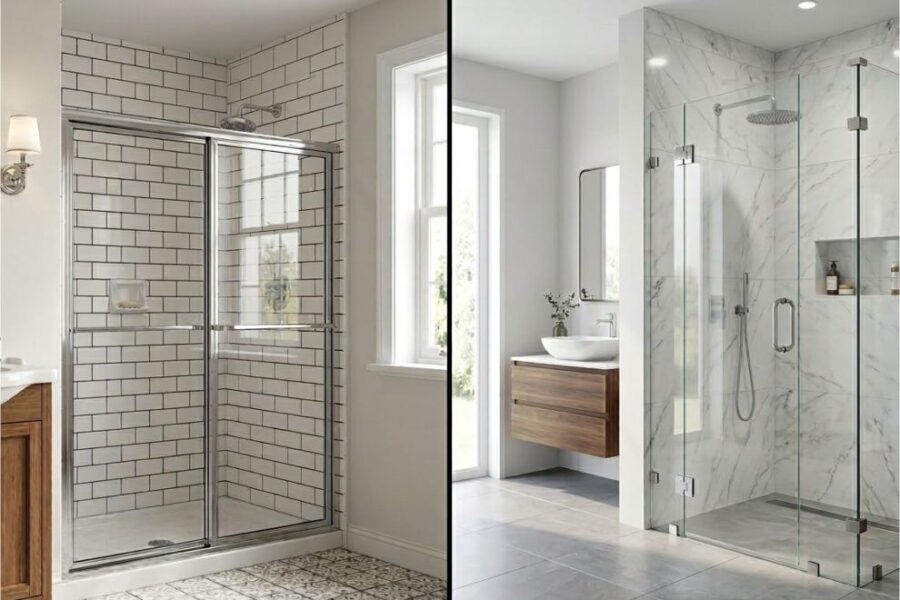
A shower enclosure takes up a surprising amount of visual space, so the glass around it can shape the character of an entire bathroom. Frameless designs often stand out because they look open and minimal, while framed enclosures remain a practical choice for homeowners who value dependable function and a more controlled budget. The decision is less about following a trend and more about understanding how each option works in the room.
It also helps to look beyond the glass itself. Shower doors work alongside waterproofing, fixtures, ventilation, flooring, and durable bathroom walls, so the enclosure should support the wider renovation. A beautiful door that does not suit the layout, cleaning routine, or budget can quickly become frustrating.
More Than a Style Decision
Framed enclosures use metal around the glass panels and door edges for structural support. Frameless versions rely on thicker tempered glass and smaller pieces of hardware, creating a cleaner outline with fewer visible borders.
That affects more than appearance. The amount of hardware changes how the shower is installed, where residue may collect, and how water is contained. It also influences cost, since frameless systems generally involve thicker glass and more custom fabrication.
The room itself matters too. Shower dimensions, door swing, nearby fixtures, benches, and wall conditions can make one system more practical than another. Choosing the enclosure early helps the rest of the design work around it.
Why Frameless Glass Has So Much Appeal
The strongest argument for frameless glass is visual. Without a heavy perimeter of metal, sight lines continue through the enclosure, which can make the bathroom feel more open. Decorative tile, stone, niches, and other details also remain more visible.
There are practical advantages as well. Fewer tracks and frame edges mean fewer tight areas where soap residue and moisture can collect. That does not make a frameless enclosure maintenance-free, but the simpler structure may make routine cleaning less tedious.
The tradeoff is that precision matters. Because the glass depends on carefully placed hinges, brackets, and seals rather than a full supporting frame, measurements and installation need to be accurate. Frameless systems also tend to cost more, so the upgrade has to fit comfortably within the wider renovation budget.
Why Framed Enclosures Still Earn Their Place
Framed shower glass may look more traditional, but it remains a sensible option in many bathrooms. The surrounding metal supports the glass and often makes the enclosure more affordable than a fully frameless design.
Framing can also help with water containment. More extensive seals and channels create a defined barrier around the shower, which may be useful where controlling splashes is a priority. Frame finishes can also coordinate with faucets, handles, mirrors, and lighting, making the metal feel intentional rather than simply functional.
The primary drawback is the additional maintenance required for the extra hardware, as tracks, frame edges, and corners tend to trap soap scum and mineral deposits. For those exploring comprehensive remodeling solutions, visiting becinnovations.com can help in balancing these ongoing upkeep requirements with the lower upfront costs. Ultimately, determining the right option comes down to how the space will be used on a daily basis.
Cleaning Is Not as Simple as “Frameless Is Easier”
Both enclosure types require regular care. Glass can show water spots, mineral deposits, and soap residue regardless of whether a metal frame surrounds it.
Frameless showers remove some of the tracks and joints that can be annoying to scrub, yet their large glass surfaces still need attention. Framed showers introduce more edges, but consistent wiping and good ventilation can keep buildup under control.
Rather than asking which option requires less work in theory, consider which cleaning routine feels realistic. Someone who dislikes scrubbing narrow tracks may prefer fewer frame components, while another homeowner may accept that tradeoff for a lower upfront price.
Cost Should Be Considered Across the Whole Project
Shower glass is only one part of a renovation, and spending more on the enclosure may affect the budget for flooring, lighting, storage, fixtures, or other surfaces. Frameless glass usually costs more because of thicker material, custom sizing, specialized hardware, and more precise installation.
That premium can be worthwhile when the shower is meant to become a focal point. In a bathroom with striking tile or carefully selected finishes, minimizing visible framing allows those details to remain prominent rather than breaking up the view.
Framed glass may be the smarter choice when the goal is straightforward function without stretching the budget. Saving on the enclosure can leave more room for improvements that have a greater effect on comfort or everyday use.
The Best Choice Is the One That Fits the Room
Frameless glass offers a light, open appearance and puts more attention on the materials inside the shower. Framed glass offers reliable function, stronger visual boundaries, and often a more approachable price. Neither option wins in every bathroom.
The best choice comes from looking at the enclosure as part of the complete design. Consider the room’s proportions, water containment, the surfaces you want to highlight, the maintenance you are comfortable with, and where the glass fits within the total budget.
A shower door should feel like it belongs in the room rather than like a feature selected in isolation. When appearance, function, installation, and cost all point in the same direction, the finished bathroom tends to feel more coherent and intentional.
