
Introduction: Experience Everest Without Spending a Week on the Trek
Not everyone who wants to see Mount Everest has two weeks to spare, or the physical readiness for a demanding high-altitude trek. That’s the gap an Everest Base Camp helicopter tour fills. Instead of walking through the Khumbu for ten to twelve days, travelers can cover the same aerial distance in a matter of hours, catching close-up views of the world’s highest peak from a helicopter cabin rather than a mountain trail.
This is a fundamentally different kind of trip. Trekking to Base Camp is a gradual process — days of walking, overnight stops in mountain villages, and slow acclimatization to altitude. A helicopter tour compresses that journey into a short, weather-dependent flight. You get an aerial perspective and a fast introduction to the Himalayas, but you don’t get the accumulated experience of moving through the region on foot, meeting people along the trail, or adjusting to altitude over several days.
This guide is built around the questions travelers actually ask before booking: which tour is right for them, how the flight is structured, where helicopters typically fly and land, how long the experience takes, what determines cost, how weather and safety fit into the picture, and what separates a reliable operator from a risky one. It won’t promise a fixed itinerary or price, because those details vary by operator, season, and flight conditions — but it will explain what to expect and how to evaluate your options with realistic expectations.
Everest Helicopter Tour at a Glance
| Detail | What to Explain |
| Main departure point | Kathmandu |
| Main destination | Everest/Khumbu region |
| Typical experience | Scenic mountain flight with optional landing |
| Key viewing areas | Everest, Lhotse, Nuptse and surrounding peaks |
| Possible landing/viewpoint | Kala Patthar area, subject to operational/weather conditions |
| Typical overall duration | Varies by itinerary, route and operator |
| Physical demand | Low compared with trekking |
| Main limitation | Weather and aviation/landing restrictions |
| Best suited to | Travelers with limited time or limited interest in trekking |
| Booking type | Shared or private options may be available |
In practical terms, an Everest helicopter tour is a round-trip flight from Kathmandu into the Khumbu region that gives passengers close aerial views of Everest and its neighboring peaks, often including a short stop at a high-altitude viewpoint. The exact route, landing location, and duration depend on the operator, weather on the day of the flight, and the specific package booked.
What Makes an Everest Helicopter Tour Different From Trekking?
The core difference isn’t just speed — it’s the nature of the experience itself. A trek to Everest Base Camp involves gradual altitude gain spread across many days, walking through Sherpa villages like Namche Bazaar and Khumjung, and a rest-and-acclimatize rhythm designed to let the body adjust safely to thin air. A helicopter tour skips all of that. It takes travelers directly into high-altitude terrain within hours, without the intermediate stages of a walking itinerary.
What travelers gain is time efficiency, a genuinely different visual perspective on the mountains, and far less physical exertion. What they don’t get is the cultural and landscape experience that unfolds gradually when walking through the Khumbu — the changing terrain, the interactions in teahouses and villages, and the sense of the region building up mountain by mountain.
A helicopter tour tends to suit a specific kind of traveler: those on a short visit to Nepal who still want to see Everest, people who aren’t able to undertake a physically demanding multi-day trek, families or older travelers who prefer a shorter excursion, photographers looking for aerial Himalayan perspectives that a ground-level trek can’t offer, and travelers who want to add Everest to a broader Nepal itinerary without dedicating most of their trip to it.
How an Everest Helicopter Tour Usually Works
Kathmandu Departure and Flight Preparation
Most Everest helicopter tours depart early in the morning, when mountain visibility tends to be at its clearest before daytime cloud buildup begins. Before departure, operators typically check current weather and flying conditions in both Kathmandu and the Khumbu region, since a clear sky in the valley doesn’t guarantee clear conditions near the mountains. Passengers usually receive a short briefing covering seating, luggage limits, and safety procedures before boarding.
Flying Toward the Everest Region
After leaving the Kathmandu Valley, the helicopter transitions into increasingly mountainous terrain, passing over the mid-hills before entering the Khumbu region near Lukla. From there, the route generally follows the Dudh Koshi valley toward Namche Bazaar and the higher Sagarmatha region. Visibility in this environment can change quickly — a valley that’s clear one moment can cloud over within minutes, which is why pilots continuously assess conditions rather than following a fixed, unchangeable path.
Everest Viewing and Landing Experience
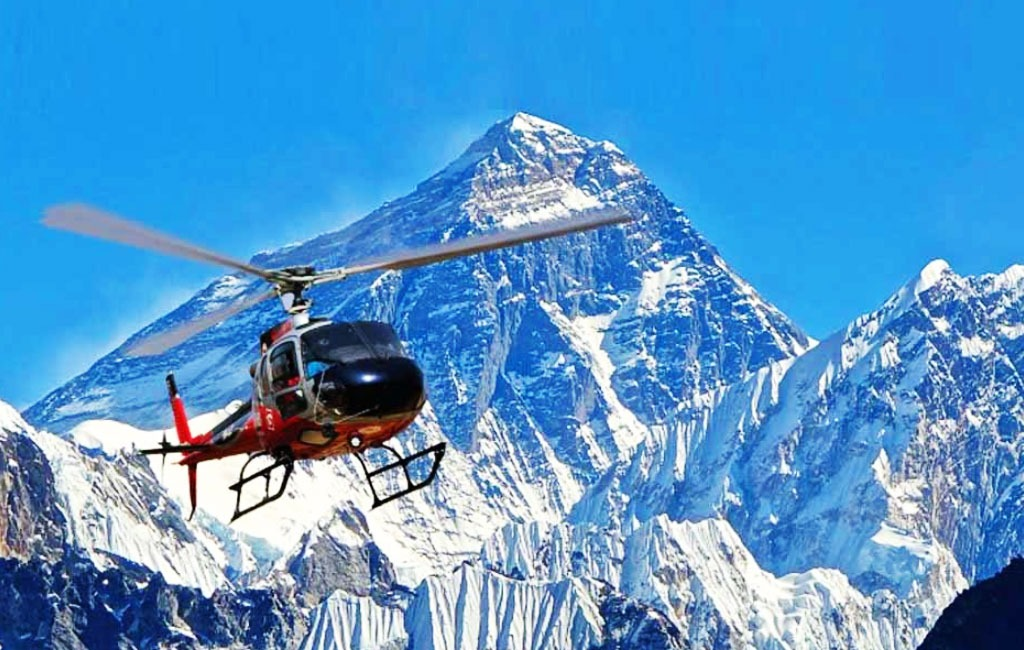
Once in the higher Khumbu, passengers typically get close aerial views of Everest and its surrounding peaks. Many itineraries include a stop near the Kala Patthar area or another high-altitude viewpoint, allowing a short period outside the aircraft. The exact landing location, and how long the stop lasts, should never be assumed to be identical from one flight to the next — operational conditions, aviation regulations, and weather on the day all influence what’s possible. Some flights may not land at all if conditions aren’t suitable, and this should be understood as a normal part of high-altitude helicopter operations rather than a service failure.
Return to Kathmandu
The return leg generally retraces a similar route back toward Kathmandu. Total flight timing can shift depending on weather, air traffic in the region, and how the outbound leg went. Because mountain weather tends to deteriorate later in the day, most operators aim to complete the round trip in the morning hours.
What Can You See From the Helicopter?
From the air, passengers typically get views of Mount Everest itself, along with neighboring giants like Lhotse and Nuptse, and the distinctive pyramid-shaped Ama Dablam further along the range. The broader Khumbu landscape — glaciers, high valleys, and scattered mountain settlements — is visible for much of the flight, along with the Everest Base Camp area where flight paths and conditions allow.
It’s worth understanding the difference between seeing Everest from the air and standing at or near Everest Base Camp itself. A helicopter flight offers a wide, elevated perspective of the mountain and its surroundings in a short window of time. Being physically present at Base Camp or the Kala Patthar viewpoint, by contrast, comes after a multi-day trek and involves standing at altitude in the landscape rather than viewing it from a moving aircraft. Both offer meaningful ways to experience the region, but they are not interchangeable.
Best Time for an Everest Helicopter Tour
What is the best time for an Everest helicopter tour? There isn’t a single best month — visibility on any given day matters more than the calendar date, though spring and autumn generally offer more consistent flying conditions than the monsoon.
Spring (roughly March to May) is a popular window, with generally favorable mountain visibility, though conditions can still shift day to day as the season warms. Autumn (roughly September to November) is commonly regarded as offering some of the clearest Himalayan views of the year, following the monsoon’s clearing effect on the atmosphere. Winter months bring colder temperatures but can produce excellent visibility on stable days, since cold air often holds less moisture. The monsoon season (roughly June to August) tends to bring the greatest operational uncertainty, with clouds and rain frequently reducing visibility and increasing the chance of delays or cancellations.
Ultimately, weather on the specific flight day matters more than which season it falls in. Cloud cover, wind, and changing visibility in the mountains can affect departure timing, the route taken, whether a landing happens, and how the return leg is scheduled. The final call on whether to fly always rests with the operator and pilot, who make that decision based on applicable aviation and safety standards rather than a traveler’s preference or schedule.
Everest Helicopter Tour Cost: What Actually Determines the Price?
Prices for Everest helicopter tours vary significantly between operators, seasons, and itineraries, so this guide won’t attach a fixed figure that could quickly become outdated or misleading. Instead, it’s more useful to understand what actually drives the cost up or down.
| Cost Factor | Why It Changes the Price |
| Shared flight | Cost is distributed among several passengers |
| Private charter | The aircraft is reserved exclusively for one group |
| Landing itinerary | Landing stops can affect flight planning and duration |
| Season | Demand and operating conditions can influence pricing |
| Group size | Changes the per-person cost significantly |
| Included services | Airport transfers, meals or extras may be bundled into the price |
A shared flight, where costs are split among unrelated passengers booked onto the same helicopter, is typically the more budget-friendly option. A private charter reserves the aircraft for one group, which raises the total cost but offers more control over timing and itinerary. Beyond that, whether a landing stop is included, what season the flight takes place in, and what extras — like ground transfers — are bundled into the package all shift the final price.
It’s worth being cautious about choosing purely on the lowest advertised figure. An unusually cheap quote can sometimes mean fewer inclusions, a less transparent cancellation policy, or ambiguity about what “Everest tour” actually includes in terms of route and landing. Comparing what’s included, not just the headline price, gives a clearer picture of value.
Shared vs Private Everest Helicopter Tour: Which Should You Choose?
| Feature | Shared Tour | Private Charter |
| Cost per person | Usually lower | Usually higher |
| Flexibility | More limited | Greater |
| Group composition | Shared with other travelers | Your own group |
| Schedule control | Operator-dependent | More flexible within operational limits |
| Best for | Budget-conscious travelers | Families, groups or travelers seeking privacy |
A shared tour groups travelers together to fill a helicopter, which lowers the per-person cost but means less say over departure timing or fellow passengers. A private charter reserves the aircraft for a single group, giving more flexibility around scheduling and itinerary preferences within what’s operationally possible. It’s important to be clear that booking a private charter doesn’t override weather conditions or aviation regulations — a private flight is still subject to the same safety-based decisions about whether and where to fly.
Helicopter Tour in Nepal: Everest Is Only One Option
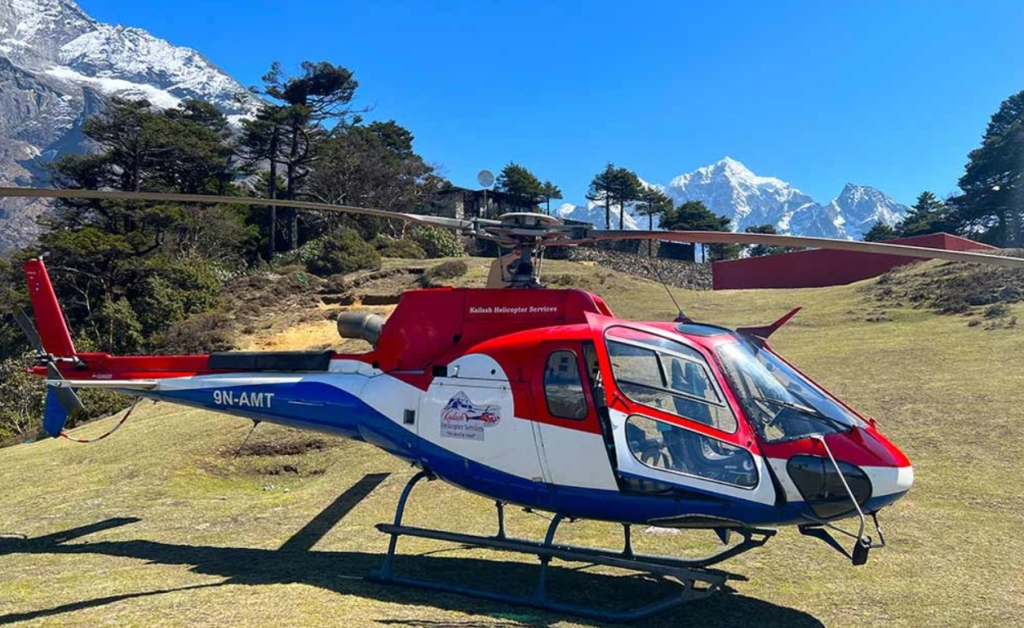
While Everest tends to dominate the conversation, a Helicopter Tour in Nepal can serve several different purposes beyond Everest sightseeing. Operators also run mountain-view flights over other Himalayan ranges, use helicopters to reach remote areas with limited road access, offer shorter scenic excursions closer to Kathmandu or Pokhara, and in some cases provide transport support for trekkers where legally and operationally applicable.
Everest flights remain particularly popular within this broader category because they combine two things many travelers want at once: a short time commitment and direct access to one of the most recognizable landscapes in the world. For travelers exploring helicopter options more broadly, it’s worth looking into a general Nepal helicopter tours overview or a wider Nepal travel guide before narrowing down to a specific region or route.
Choosing a Reliable Nepal Helicopter Service
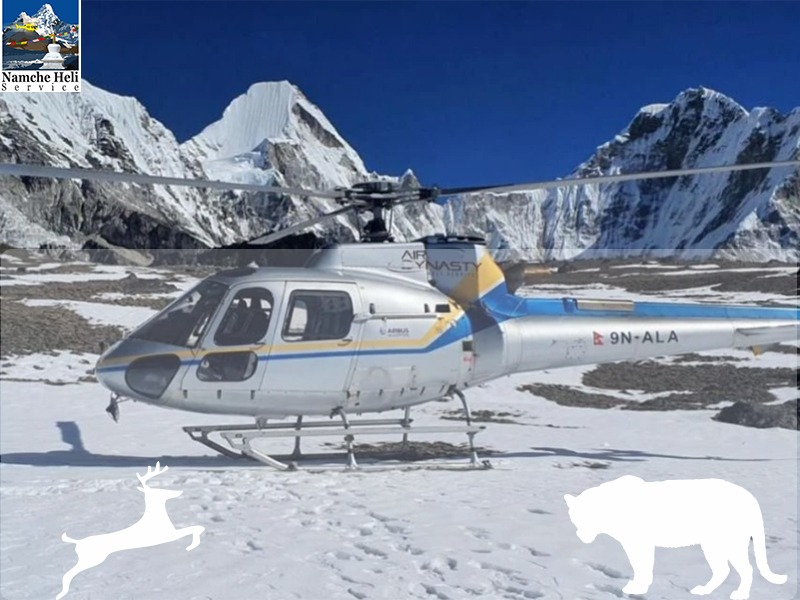
Selecting a trustworthy Nepal helicopter service matters as much as choosing the right itinerary. Before booking, it’s worth checking a few things directly with the operator. Confirm the operator’s identity and legitimacy, and ask for a clear, written itinerary rather than a vague description. Where possible, ask about the aircraft and passenger capacity involved. Look for transparency around what’s included and excluded in the quoted price, and read the weather cancellation policy carefully, since high-altitude flights are inherently weather-dependent. Ask about refund or rescheduling terms if a flight is delayed or cancelled, whether airport transfers are part of the package, how landing arrangements are structured, and what emergency or operational procedures are in place. Clear, responsive communication before departure is often one of the simplest indicators of a well-run service.
Travelers researching helicopter options in Nepal will come across a range of operators and booking platforms during this process — services such as Namcheheli are among the names that appear in this space — and the same evaluation criteria above should be applied regardless of which service is being considered. The goal isn’t to find the operator with the most attractive marketing, but the one that’s clearest about what the flight actually includes and how it handles weather-related changes.
Safety, Weather and Altitude Considerations
Helicopter operations in the Himalayas are highly weather-dependent, and conditions in the mountains can change faster than in the Kathmandu Valley. Cloud cover, wind, and visibility can shift within minutes near high peaks, which is why pilots continually reassess conditions rather than committing to a fixed plan regardless of what’s happening in the sky. Landing at high altitude, in particular, requires careful operational judgment, since thinner air affects how an aircraft performs.
Travelers should follow pilot and crew instructions at all times and should never pressure an operator to fly or land when conditions are deemed unsuitable — that judgment exists for genuine safety reasons, not as a formality. Anyone with relevant medical concerns, particularly those related to altitude, should seek appropriate professional medical advice before high-altitude travel. It’s also sensible to keep essential documents and any personally required medication accessible rather than packed away in checked luggage.
Can an Everest helicopter tour be cancelled because of weather? Yes. Weather-related cancellations and rescheduling are a normal part of high-altitude helicopter operations, which is exactly why checking an operator’s cancellation and rescheduling policy before booking matters as much as checking the itinerary itself.
What to Bring for an Everest Helicopter Flight
Since this is a flight rather than a multi-day trek, packing needs are modest. A passport or other required identification is generally necessary, along with warm layers, since temperatures near the mountains and at any landing point are considerably colder than in Kathmandu. Sunglasses and sunscreen help with strong high-altitude sun, and comfortable shoes are useful for any time spent outside the aircraft. Bring water, a camera or phone with sufficient battery for photos, and any personally required medication. Because aircraft space is limited, keep luggage small and manageable rather than packing as though for a longer trip.
How to Book an Everest Helicopter Tour Without Unpleasant Surprises
- Decide whether a shared or private flight fits your budget and group.
- Check the exact itinerary rather than a general description.
- Confirm whether landing is included or subject to weather and operational conditions.
- Ask precisely what the quoted price includes.
- Read the weather cancellation and rescheduling terms before paying.
- Confirm passenger number and luggage requirements.
- Verify departure timing and where you’ll meet the operator.
- Choose a service with clear communication and transparent terms over one with the lowest price alone.
Booking well isn’t about finding the cheapest listing — it’s about understanding exactly what you’re paying for and how the operator handles the parts of the experience that are genuinely outside anyone’s control, like weather.
Final Takeaway: Is an Everest Helicopter Tour Right for You?
An Everest helicopter tour works best for travelers who want genuine access to Everest without committing to a long trek, and it’s a strong option when time is limited or a multi-day trek isn’t physically practical. It’s less suited to those specifically seeking the walking, village life, and gradual acclimatization that define the classic Everest Base Camp Trek — no flight can replicate that. Weather flexibility should be built into any travel plan involving high-altitude helicopter flights, since delays and rescheduling are a normal part of the process rather than an exception. Before booking, prioritize a transparent itinerary, realistic expectations about landing and duration, clear safety procedures, and straightforward cancellation terms over the lowest advertised price. Comparing a few operators on those specific points is worth the extra time before committing to a flight.
Frequently Asked Questions About Everest Helicopter Tours
Is an Everest helicopter tour worth it if I do not have time for trekking? For travelers with limited time, it offers a practical way to see Everest and the surrounding peaks up close without committing to a multi-day trek — though it’s worth going in with realistic expectations about what a short flight can and can’t replicate from the trekking experience.
How long does an Everest helicopter tour take? Total duration depends on the specific route, weather conditions, whether a landing is included, and the operator’s itinerary, so it’s best to confirm exact timing directly with the operator rather than assuming a fixed length.
Can a helicopter land at Everest Base Camp? Some itineraries involve the Everest Base Camp area or nearby high-altitude viewpoints such as Kala Patthar, but the exact landing location is subject to operational, weather, and aviation conditions on the day, and shouldn’t be assumed guaranteed.
Is an Everest helicopter tour safe? Safety depends on the aviation standards and practices of the operator, current weather conditions, the aircraft involved, and passengers following crew instructions throughout the flight.
Can I take an Everest helicopter tour in Nepal during the monsoon? Flights may still operate when conditions allow, but monsoon-season cloud cover and rain can significantly affect visibility and increase the likelihood of delays or cancellations compared with drier seasons.
What is the difference between an Everest helicopter tour and a Nepal helicopter service? An Everest helicopter tour refers to a specific travel experience focused on the Everest region, while a Nepal helicopter service is the broader aviation and booking category that can cover multiple routes, regions, and purposes beyond Everest sightseeing.
Contact Details
Namche Heli Service
Namche Bazzar, Solukhumbu, Nepal
(Branch Office :Kathmandu Naya Bazar)
Phone +977-985-2850192 (WhatsApp)
Email: info@namcheheli.com
URL: www.namcheheli.com
