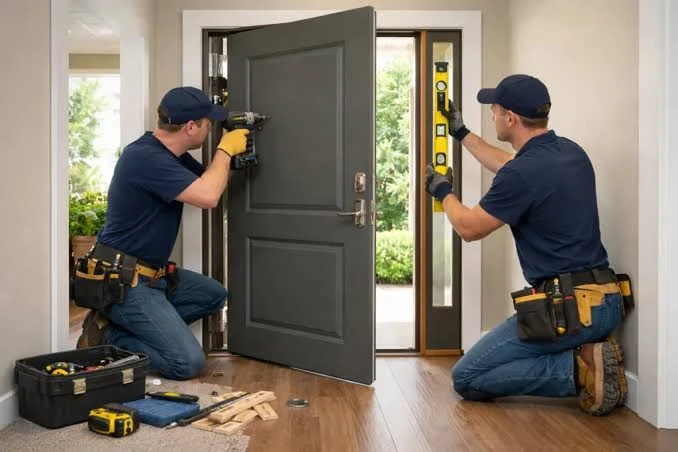
Buying a strong safety door seems straightforward. Pick a sturdy model, choose a lock, get it installed, and you’re done. But there’s a detail that’s easy to underestimate: a safety door can only perform as well as the opening it’s fitted into.
A solid door attached to a weak frame, fitted with inadequate fixings, or installed slightly out of alignment may not give you the protection you expected. That’s why choosing the door itself is only half the job. The measurement, frame condition, hardware, and installation all deserve just as much attention.
A Strong Door Still Needs a Strong Foundation
Think about what happens when someone tries to force a door. The pressure isn’t necessarily concentrated on the centre of the door. It can be directed at the lock, hinges, frame, or fixing points.
That means you need to look at the entrance as a complete system.
A heavy-duty door fitted to a deteriorating timber frame, for example, may still have a vulnerable point. The door itself might withstand considerable force, while the screws or surrounding material give way first.
Before installation, the existing opening should be inspected carefully. Cracks, rot, loose sections, previous repairs, and uneven surfaces can all affect how securely a new door can be mounted.
This is one reason accurate assessment before installation matters. Sometimes the existing frame is perfectly suitable. Other times, repairs or reinforcement make sense before the new door goes anywhere near it.
Accurate Measurements Aren’t Just About Appearance
Nobody wants a new door that looks crooked, but precise measurements serve a more important purpose than aesthetics.
The door needs to sit correctly within the opening so that its hinges, locks, and closing mechanisms work as intended. Large or inconsistent gaps can create potential weak points. Poor alignment can also cause the door to drag, stick, or become difficult to lock.
Small measurement errors can become surprisingly annoying once you start using the door every day.
A properly measured opening allows the installer to account for the width, height, squareness, threshold, and surrounding frame. It’s particularly useful with older properties, where an opening that looks perfectly square may have shifted slightly over the years.
Installation Quality Affects Everyday Use
Security might be the main reason you’re installing a safety door, but you’ll probably open and close it thousands of times.
That makes everyday operation important too.
A well-fitted door should open smoothly, close correctly, and engage its locking system without requiring you to pull, lift, or push the door into position. If you find yourself having to slam the door or jiggle the handle to lock it, something isn’t right.
Professional quality safety door installation should consider both the protective purpose of the door and how reliably it operates during normal use.
Alignment is particularly important around hinges and locking points. Even relatively small positioning problems can put unnecessary stress on hardware over time.
Don’t Judge a Door by Weight Alone
There’s a natural temptation to associate weight with security. A heavy door certainly feels reassuring, but weight by itself doesn’t tell you how well an entrance will resist forced access.
Look at the whole construction instead.
The frame, mesh or grille, hinges, locking points, fasteners, and connection to the building all contribute to the finished result. One weak component can reduce the effectiveness of otherwise strong materials.
The locking arrangement deserves particular attention. A good lock should work with the structure of the door rather than being treated as a standalone feature.
Ask what you’re actually getting before making a decision. A clear explanation of the door construction, hardware, installation method, and intended level of protection is much more useful than vague claims about how tough a product looks.
The Existing Door Frame Can Change the Job
Newer homes often provide relatively predictable openings. Older homes can be another story.
Timber can deteriorate. Previous owners may have made repairs. Frames can shift slightly as a building settles. Layers of paint can hide damage that isn’t obvious until someone takes a closer look.
This doesn’t automatically mean major work is required. It simply means the installer should assess what’s actually there rather than assuming every doorway is the same.
A safety door needs secure fixing points. If the surrounding structure isn’t suitable, dealing with that issue first gives the new installation a better foundation.
It’s similar to hanging a heavy shelf. Buying stronger brackets won’t help much if they’re attached to a weak surface.
Hinges and Locks Need to Work Together
People naturally pay attention to locks because they’re the part of the door they interact with most. Hinges don’t get nearly as much attention, despite being just as necessary to the structure.
Both sides of the door matter.
Hinges need to support the door’s weight while maintaining alignment through repeated use. The locking side needs to meet the frame correctly so the locking points engage as designed.
If the door begins to sag, even a good locking system can become frustrating to operate. You may notice the latch rubbing, the bottom of the door catching, or the key becoming harder to turn.
Those aren’t merely cosmetic annoyances. They’re signs that the door isn’t operating exactly as intended.
What Should You Check After Installation?
You don’t need specialist knowledge to perform a few simple checks.
Open and close the door several times. It should move smoothly without scraping the floor or frame. Lock and unlock it from both sides where applicable, paying attention to whether the mechanism engages cleanly.
Take a look around the edges as well. The spacing should appear consistent, and the door shouldn’t look noticeably tilted within the opening.
You can also ask the installer to explain how the locking system works and what basic maintenance it requires. That’s especially helpful with hardware you haven’t used before.
Don’t be afraid to mention something that doesn’t feel right. A newly installed door shouldn’t require a special technique just to close properly.
Maintenance Helps Preserve a Good Installation
Even a correctly installed safety door isn’t completely maintenance-free.
Doors are moving structures exposed to regular use, dust, moisture, and changing weather conditions. Over time, hinges and locking hardware can collect debris or show signs of wear.
Keep tracks and moving areas clean where relevant, and pay attention to changes in operation. A door becoming noticeably harder to close is worth investigating rather than simply applying more force every time.
Check the condition of the frame and hardware occasionally too. Coastal environments and exposed entrances can be particularly demanding on metal components, so the appropriate care may depend on where the door is installed.
Follow the maintenance recommendations provided for the specific door and hardware rather than experimenting with lubricants or cleaning products that may not be suitable.
The Best Door Is the One That Works as Intended
It’s easy to spend most of your time comparing materials, designs, and locks when shopping for a safety door. Those choices matter, but they shouldn’t overshadow installation.
A quality product needs accurate measurements, suitable fixing points, correct alignment, and properly fitted hardware to do its job.
So when you’re comparing options, don’t ask only, “How strong is this door?” Ask how it will be measured, fitted, secured, and checked after installation.
That’s the difference between simply putting a new door in an opening and creating an entrance that feels solid, operates properly, and continues doing its job every day.
