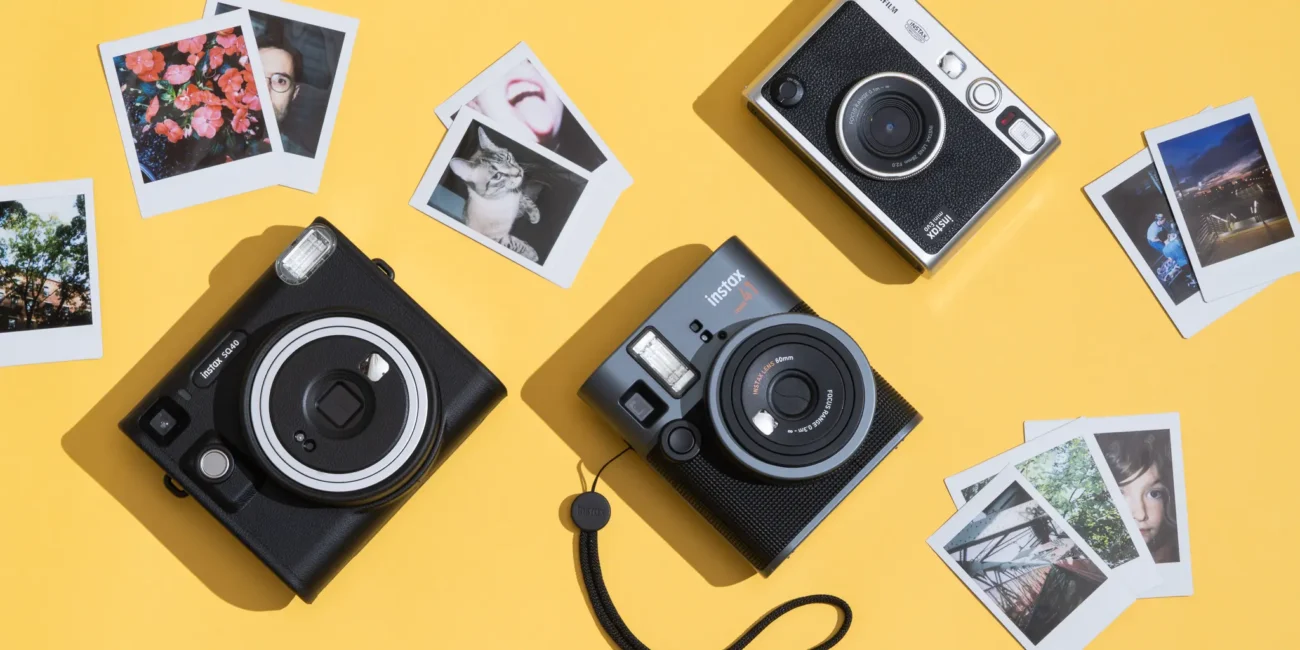
There is something about holding a physical photograph seconds after taking it that no digital format has managed to replicate. The anticipation as the image slowly emerges, the slightly imperfect colour rendering, the unmistakable border that frames the shot — instant photography has maintained a devoted following precisely because it offers something fundamentally different from the infinite, invisible images stored on a phone or memory card.
Polaroid remains the most recognisable name in instant photography, and the range of film types and formats available today is broader than many people realise. Choosing the right film for your camera and your creative intentions makes a significant difference to the results you get, and understanding what each format offers is the starting point for getting more out of every shot.
Why Film Format Matters More Than Most People Expect
Instant photography is not a forgiving medium. Unlike digital capture, where you can adjust exposure, colour, and composition in post-production, what comes out of a Polaroid camera is essentially fixed at the moment of exposure. The film you choose shapes the colour palette, the contrast, the sensitivity to light conditions, and the overall aesthetic of your images before you have even raised the camera.
Film format also determines camera compatibility. Polaroid produces film in several distinct formats that are not interchangeable between camera types. Using the wrong film is not a matter of reduced performance. It is simply not possible. Getting the format right is the most fundamental decision in any instant photography setup.
The i-Type Format
i-Type film is the format designed for Polaroid’s current generation of cameras, including the Now, Now+, and Go cameras. It is the format most new instant photographers will encounter first, and it is the one Polaroid has invested most heavily in developing across its current product lineup.
The defining characteristic of i-Type film is that it does not contain a battery. Older Polaroid formats included a battery in the film pack to power the camera’s electronics, but current Polaroid cameras have their own internal rechargeable batteries, making the in-pack battery unnecessary. This allows i-Type film to be produced at a slightly lower cost than battery-equipped formats, and the difference is meaningful given that instant film is a recurring expense rather than a one-off investment.
i-Type is available in colour and black and white versions, with colour options ranging from the standard warm palette to special edition films that shift the colour rendering toward specific aesthetics. For photographers who want to experiment with the look of their images without changing cameras, working through different i-Type film options is one of the most accessible ways to do it.
The 600 Format
600 film was the format that defined the Polaroid experience for most people who grew up with the brand in the 1980s and 1990s. The cameras that used it, boxy, colourful, and instantly recognisable, are still widely available and remain one of the most popular entry points into instant photography for people drawn to the vintage aesthetic.
600 film is rated at ISO 640, which made it practical for the flash-equipped cameras it was designed for. The higher ISO means it handles indoor and low-light conditions reasonably well, though the fixed-lens cameras that use it do not offer the exposure control that would allow you to fully take advantage of this sensitivity.
Critically, 600 film contains a battery in each pack, which powers the electronics of compatible cameras. This means it cannot be substituted with i-Type film even though the physical dimensions are similar. If you are shooting with a vintage 600 series polaroid camera, 600 format film is what you need.
The SX-70 Format
SX-70 film serves the iconic folding SLR cameras that Polaroid produced in the 1970s, cameras that are still considered among the finest instant cameras ever made and are actively sought by collectors and serious instant photographers. The SX-70 camera’s manual focus capability and optical viewfinder gave photographers a level of control that most instant cameras of the era did not offer, and the format retains a dedicated following as a result.
SX-70 film is rated at ISO 160, considerably slower than 600 film, which means it performs best in bright outdoor conditions. For indoor or lower-light shooting with an SX-70 camera, a flash bar or neutral density filter is often necessary to get correct exposures.
The tonal quality of SX-70 film has a distinctive character that many photographers find preferable to other formats, with a softness and colour rendering that suits the aesthetic of the cameras it was designed for.
Choosing Between Colour and Black and White
Across all Polaroid formats, the choice between colour and black and white film is one of the most significant creative decisions available to instant photographers. Colour polaroid film produces the warm, slightly unpredictable palette that most people associate with the medium. Skin tones render with a particular quality that flatters portraits, and outdoor scenes take on a softness that distinguishes instant photographs from the clinical accuracy of digital capture.
Black and white instant film produces results that feel closer to a fine art photographic tradition. The contrast is typically stronger, the tonal range more dramatic, and the absence of colour shifts attention entirely to light, form, and composition. For photographers interested in portraiture, architecture, or street photography, black and white instant film often produces more compelling results than colour.
The practical difference between the two is also worth noting. Black and white instant film tends to be somewhat more forgiving of challenging light conditions than colour, and the development process is slightly faster in cold temperatures, which matters given that instant film development is sensitive to ambient temperature in ways that digital capture is not.
Practical Considerations for Getting the Best Results
Instant film is sensitive to temperature, light exposure during development, and physical pressure on the developing image. Keeping film packs at room temperature before use, shielding the ejected photograph from direct sunlight during the first few minutes of development, and avoiding bending or pressing on the developing image all contribute meaningfully to the quality of the final result.
Storage matters too. Unused film packs should be kept in a cool, dry environment away from direct light. Polaroid film has an expiration date, and while expired film can produce interesting artistic effects, it is not reliable for photographers who want consistent results.
Diamonds Camera stocks the full range of Polaroid film formats and camera options, making it straightforward to find exactly what your camera requires and to explore the different film types that suit your creative direction.
The Medium Rewards Intention
Instant photography is at its best when approached with a degree of intentionality that the unlimited nature of digital capture does not encourage. Each shot has a tangible cost, which changes the relationship between photographer and subject in a way that produces more considered, often more rewarding images. Understanding your film format and its characteristics is the foundation of bringing that intentionality to your instant photography practice.
