
The pump box often sits unopened while the rest of the nursery comes together. Open it, and you may still be staring at flanges, valves, and tubing with no obvious starting point. Touching the kit once or twice before birth can spare some of the assembly stress that hits during the first busy week at home. From here, the rhythm, the parts worth checking, cleaning habits, and the point where a lactation consultant helps more than another dial turn.
Table of Contents
• How a Breast Milk Pump Works Before You Ever Use It
• What Pump Parts Do and What You Should Check Before Birth
• How to Prepare a Breast Pump Before Baby Arrives
• How to Choose a Pump That Fits Your Daily Routine
• When to Ask a Lactation Consultant Instead of Deciding Alone
• Conclusion
How a Breast Milk Pump Works Before You Ever Use It
A breast milk pump is not a stronger-and-stronger tug. It follows the up-and-down rhythm of nursing. At the start of a session, faster, lighter pulls often get let-down going. Once milk starts moving, slower, deeper cycles usually take over.
That matters later, when you are tired and tempted to turn everything up. Sometimes more intensity helps. Often it just makes the session feel sharp. Milk flow is tied to comfort, alignment, timing, and whether your body settles into the rhythm. Tension can work against you.
Most electric pumps use two broad phases.
| Phase | What it tries to do | How to think about it |
| Stimulation | Uses quicker cycles to encourage let-down | Useful at the start or when flow slows |
| Expression | Uses slower, stronger pulls after milk starts flowing | Should feel effective without pain |
The table above is mainly for reference before your first real session. Settings will likely need tweaking once milk comes in, and comfort often matters as much as suction strength.
What Pump Parts Do and What You Should Check Before Birth
Unbox the pump before the due date if you can, even for ten minutes. Nobody learns every piece in one sitting. What helps is knowing where the manual is when you assemble this half asleep. Motors, flanges, valves, diaphragms, and bottles show up in most kits. Tubing shows up on some. Wearable models hide most of that inside the cup. Traditional pumps often spread the setup across bottles, tubes, and a separate motor.
The flange is worth slowing down for. It sits flush against the breast and channels the nipple into the tunnel. The wrong size and a strong motor can still feel misaligned. Rubbing, tugging, leaking, or pinching are signals to adjust fit, not push through.
Closed system designs help keep milk from entering the motor or tubing path. That does not replace cleaning, but it does make the cleaning routine more manageable. CDC hygiene guidance covers anything milk touches. Wash soon after each session, rinse when your routine calls for it, air dry fully, then store. Towel drying adds bacteria you do not want. Dry parts belong off the sink edge and away from sponges and dish racks. Knowing that now helps you choose a drying spot before birth, not after the first long day of pumping.
Before you buy extras, sort the parts by job.
• Milk contact parts are the pieces you wash and dry most often.
• Seal and valve parts are small, easy to misplace, and important for suction.
• Flange and insert sizes can change comfort more than the pump motor does.
• Storage containers need labels, clean handling, and actual fridge or freezer space.
If you are still comparing styles, eufy breast pumps list wearables, suction ranges, warming features, and accessories in one place, so you are not jumping between product pages.
How to Prepare a Breast Pump Before Baby Arrives
A plastic bin or shallow drawer by the kitchen sink works for most homes. That is where the pump, washed parts, storage bags, and manual can stay without getting buried under burp cloths and unopened mail.
Do the first wash in the third trimester. Run milk-contact parts through the manual’s cleaning steps, dry them fully, and tuck the kit into a clean container while you can still read the instructions at your own pace. Assembly gets harder when the house is running on broken sleep.
Quick Pre-Birth Checklist
Run through this before your due date as setup work, not as a reason to start pumping early.
• Unbox once and read the manual so valve placement is not brand new after delivery.
• Wash and air dry all milk-contact parts the way the manual describes.
• Pick a drying area clear of sink spray, sponges, and counter clutter.
• Stash soap, a brush, storage bags, labels, and spare valves with the pump kit.
• Confirm flange size notes and which inserts you may need to test later.
• Note replacement part numbers from eufy breast pump accessories if you want extras before a busy week.
Starting before birth is not something to decide on your own. Some providers OK antenatal expression; others say hold off until after birth. When timing is unclear, or pregnancy complications or feeding plans are involved, check with your OB/GYN, midwife, or IBCLC.
How to Choose a Pump That Fits Your Daily Routine
Parts in hand, map pumping to real slots in your week rather than the longest spec sheet. Someone pumping occasionally may need a different setup from someone planning workday sessions or shared night feeds.
Picture the moments where pumping may actually happen.
• Middle of the night calls for quiet operation and easy alignment.
• Work breaks make privacy, quick cleanup, and simple adjustments more valuable.
• Busy mornings reward fewer parts and a case that keeps pieces together.
• Daily use makes comfort and seal stability more important than a big suction number alone.
For parents planning work breaks or on-the-go sessions, the eufy Wearable Breast Pump S2 Pro is one wearable worth comparing during pre-birth setup. HeatFlow™ 2.0 delivers 360-degree wrap-around warmth across 7 settings and reaches working temperature in about 15 seconds, giving you a way to support let-down alongside the pump’s 300 mmHg suction without raising intensity first. VibraPump™ adds vibration massage during pumping through a 12 mm head. When breasts feel engorged, or ducts feel clogged, the two features are meant to add comfort and help you empty without relying only on higher suction (Data based on internal laboratory testing. Actual performance may vary.). At 46 dB, it can fit a work break or night session when you need to keep noise low.
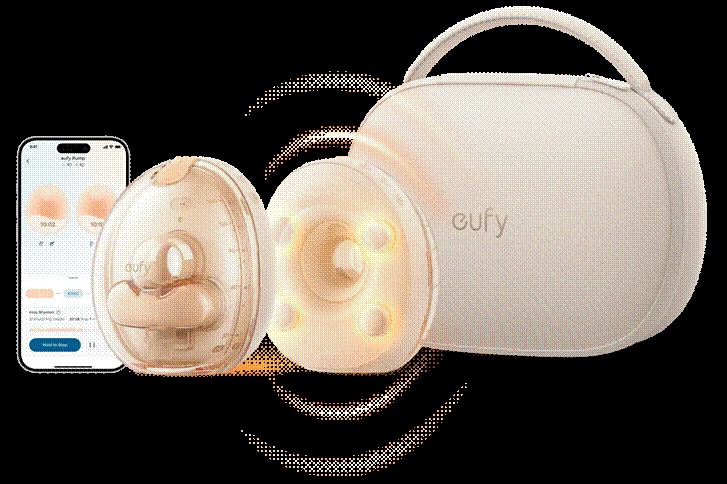
eufy Wearable Breast Pump S2 Pro
When to Ask a Lactation Consultant Instead of Deciding Alone
A pump helps with sessions. It does not replace an IBCLC or your healthcare provider. This article is general information, not medical advice. Pain during pumping, supply worries, latch trouble, mastitis symptoms, nipple damage, fever, or a sudden output drop are reasons to call for professional input rather than another round of dial adjustments.
Before baby arrives, note who you would call for feeding pain, unclear milk transfer, or pumping pain after fit adjustments, and keep that number in your phone contacts.
You also do not need to decide on a pumping schedule alone before birth. Your provider or lactation consultant can help you think through medical history, feeding goals, return to work plans, and whether early expression is appropriate. The pump can support that plan without replacing professional guidance.
Conclusion
No two feeding weeks look the same, and you do not need a perfect pre-birth pump setup. Unboxing, washing the parts, and picking a storage spot early can still make the equipment feel less foreign once daily routines pile up. The rest often takes shape week by week.
