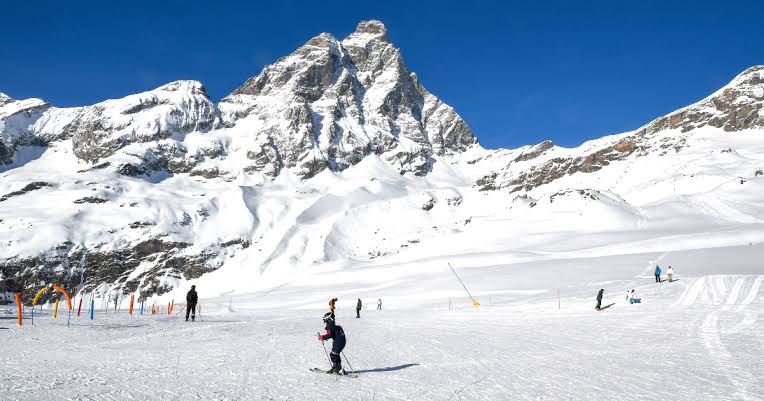
Skiing changes the way a meal is experienced. After hours in cold air, subtle appetite gives way to something more immediate: warmth, melted cheese, bread, polenta and dishes substantial enough to make ski boots feel temporarily irrelevant. In the Aosta Valley, this post-piste hunger meets a cuisine shaped by the mountains themselves. Italy’s smallest region developed its food traditions around ingredients that made sense at altitude and through long winters, from dairy products and rye to preserved meats and wine. Fontina may be its most recognisable product, but it belongs to a much broader culinary landscape. Eating here is one of the easiest ways to understand how Alpine geography influenced everyday life, particularly when a day on the slopes is followed by an evening devoted to the table.
Why does Aosta Valley cuisine taste different from other Italian regional cooking?
Italy is often associated internationally with olive oil, tomatoes and pasta. In the Aosta Valley, the traditional pantry tells another story.
The region sits high in the northwestern Alps, bordering France and Switzerland. Mountain conditions historically favoured livestock, dairy production, hardy grains and foods that could be stored through winter. Butter and cheese consequently play a prominent role, while rye appears in traditional breads and preserved meat has long been important.
The regional cuisine also reflects its position at a cultural crossroads. Names and recipes can sound as Alpine as they do conventionally Italian, giving the local table a character distinct from regions farther south.
This is food built around climate and practicality rather than an abstract idea of “Italian cuisine.”
Why is Fontina so important in the Aosta Valley?
Few ingredients explain the region as efficiently as Fontina PDO.
Produced from cow’s milk, it has become central to some of the valley’s most familiar dishes. Melted, it provides the richness of fonduta valdostana. It also appears with polenta and in traditional baked preparations. Italian tourism sources describe it as the emblematic cheese of the region and place it at the centre of local food culture.
Yet tasting Fontina on its own is equally worthwhile. A cheese board makes it possible to compare it with other regional varieties without hiding their individual flavours beneath a larger dish.
For travellers, cheese is more than an après-ski indulgence here. It offers a direct connection with the farming landscape visible beyond the resort.
What should you order for lunch during a ski day?
A piste-side lunch needs to solve a small problem: it should feel satisfying without making the first afternoon descent seem impossible.
Polenta is an obvious place to begin. Across the valley, it appears with different accompaniments, from meat dishes to melted cheese. Polenta concia takes the richer route, combining cornmeal with Fontina and butter.
A plate of local cured meats and cheeses offers a lighter alternative when several hours of skiing remain. Motzetta, a seasoned dried meat, is one of the regional specialities commonly found alongside cheeses and other preserved products.
Lunch on the mountain is also about setting. A simple dish eaten with snowy peaks outside can be more memorable than something unnecessarily elaborate.
Save the longest meal for after the lifts close.
Which traditional dishes are worth trying after skiing?
Evening is when Aosta Valley cuisine can become more generous.
Carbonada is a good example. The regional preparation combines beef with wine, onions and spices, producing exactly the kind of slow-cooked dish that belongs naturally to a winter evening.
Another distinctive speciality comes from Valpelline. Seupa à la valpellenentse uses layers of bread and Fontina moistened with broth, with cabbage contributing to the traditional preparation. It began as a practical way of making use of valuable bread rather than wasting it once stale.
These recipes reveal something important about mountain cooking. Their richness was functional before it became gastronomic. Ingredients were combined to create filling meals suited to cold conditions and demanding physical lives.
How can Cervinia become a base for discovering regional food?
Breuil-Cervinia is naturally associated with skiing and the unmistakable profile of the Matterhorn, but meals provide another way to experience the region once the day’s skiing ends.
Local menus make it possible to encounter Fontina, fondue, polenta, cured meats and game without building a separate gastronomic itinerary. Italian tourism guidance for Cervinia specifically points visitors towards traditional high-altitude cooking, including Fontina-based fondue and polenta served with cheese or meat.
For travellers staying at a luxury ski hotel in Cervinia, the easiest approach is not to chase a different speciality at every meal. Instead, use several days to explore the cuisine gradually: cheese at lunch, a traditional stew in the evening and perhaps a local dessert after the next day’s skiing.
Food becomes part of the ski week rather than another checklist.
What should you drink with Aosta Valley mountain food?
Wine production in such steep terrain is one of the more surprising elements of the region’s food culture.
Vineyards occupy mountain slopes where cultivation requires considerable effort, and local wines provide a natural partner for cheese, charcuterie and substantial winter dishes. The region produces both red and white styles, so pairing does not need to follow a single formula.
The more unusual conclusion to dinner is caffè alla valdostana. Traditionally associated with the coppa dell’amicizia, a multi-spouted vessel designed for sharing, the drink combines coffee with ingredients including grappa and citrus peel.
It is as much a social ritual as a final drink, fitting neatly into the convivial character of a long Alpine dinner.
Are there lighter sides to the regional cuisine?
Mountain food has a reputation for heaviness, but visitors do not need to eat fondue twice a day to experience local flavours.
Cheese can be tasted in smaller portions. Cured meats work well as an antipasto, while simple dishes allow regional ingredients to appear without turning every meal into an endurance event.
The best strategy during a ski holiday is variation. A substantial lunch may call for a simpler dinner; an evening built around fondue makes a lighter piste-side meal appealing the following day.
Dessert offers another route into local tradition. Tegole are thin biscuits made with nuts, while crema di Cogne provides a softer, spoonable finish associated with the town of Cogne. Both appear among the region’s recognised traditional recipes.
What does mountain cuisine reveal about the Aosta Valley?
The most interesting regional food rarely feels separate from its surroundings.
Fontina points towards Alpine dairy farming. Rye recalls a landscape where hardier cereals mattered. Preserved meats reflect the historical need to make food last, while warming soups and polenta belong naturally to a climate in which winter shaped everyday routines.
Modern restaurants can refine these ingredients considerably, but their origins remain visible.
That connection gives meals a particular importance during a ski trip. The mountain is experienced physically during the day—through altitude, snow and cold—and then encountered again at dinner through ingredients developed in response to the same environment.
Why does food become part of the skiing experience?
A ski holiday has a natural daily rhythm that few other trips reproduce so clearly.
Morning begins with anticipation. Lunch provides a pause without fully leaving the mountain. Late afternoon brings tired legs and the relief of removing ski boots. Dinner then becomes the moment when the day slows completely.
Aosta Valley cooking fits this rhythm remarkably well because it was never designed to feel detached from mountain life. Cheese, bread, polenta, meat and wine offer warmth and substance after hours outdoors.
The lasting memory may be a spectacular descent beneath the Matterhorn. It may equally be the first forkful of hot polenta afterwards.
In the Aosta Valley, the route from piste to table is not a departure from the mountain experience. It is its natural second half.
