Choosing a preschool in Mountain View involves more than comparing tuition, schedules, and distance from home. Families are also deciding what early learning should look like: how much time children spend exploring independently, how teachers introduce academic concepts, and how a classroom responds when a child struggles with a new task. These everyday decisions shape a young learner’s experience long before formal schooling begins.
The most useful way to evaluate a preschool is to look past its educational philosophy on paper and examine how that philosophy influences the classroom. A program should support curiosity, build relationships, and help children develop skills at a pace suited to their individual needs.
Understand the Teaching Approach
Preschools often describe themselves as play-based, academic, Montessori-inspired, or inquiry-driven. These labels can provide a starting point, but they do not tell the whole story. Two programs using the same terminology may differ considerably in teacher involvement, classroom structure, and expectations for children.
Play-Based Learning
In a play-based classroom, children develop concepts through activities such as building, storytelling, pretend play, and outdoor exploration. A teacher might introduce measurement by inviting children to compare the lengths of block towers or explore which containers hold more water.
The strength of this approach is that academic concepts emerge through meaningful experiences. Children also practice collaboration, persistence, and flexible thinking. However, play-based learning works best when educators plan activities intentionally and recognize opportunities to extend a child’s understanding. Simply providing toys without thoughtful guidance is not the same as a well-designed curriculum.
Structured and Academic Instruction
Some programs place greater emphasis on early literacy, number recognition, handwriting readiness, and teacher-led lessons. This structure can help children become familiar with classroom routines and foundational academic concepts.
Parents should consider how instruction is delivered. Short, engaging lessons that incorporate movement and hands-on materials can suit young learners. Long periods of seated work, frequent drills, or expectations that children master skills at identical rates may be less appropriate for preschool development.
Montessori and Inquiry-Based Approaches
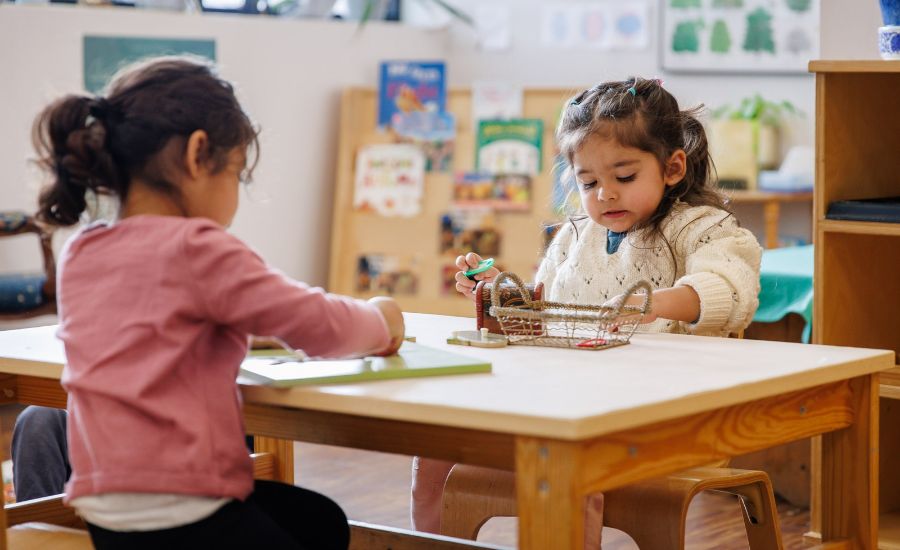
Montessori-inspired environments often emphasize purposeful materials, independence, and opportunities for children to choose activities within established limits. Inquiry-based learning encourages children to ask questions, investigate patterns, and develop explanations through observation.
Neither approach guarantees quality by itself. Ask how teachers introduce new skills, monitor progress, and support children who need additional guidance. The daily practice matters more than the label.
What to Observe During a Preschool Visit
A classroom visit offers information that a website or brochure cannot. If you are comparing options for the Best Preschool in Mountain View CA, observe how the environment functions during an ordinary school day.
Watch Teacher-Child Interactions
Notice whether teachers listen carefully, answer questions, and speak respectfully when children make mistakes. Strong educators set clear boundaries without relying on humiliation or constant correction. When two children argue over a toy, for example, a teacher might help them describe the problem, consider alternatives, and agree on a solution.
These interactions reveal how the program approaches emotional development alongside academic learning.
Look at the Learning Environment
Materials should be accessible, age-appropriate, and used for meaningful activities. Look for books, art supplies, construction materials, pretend-play areas, and opportunities for movement. Children’s work should reflect genuine participation rather than only polished displays created by adults.
Ask how outdoor play, rest, meals, and transitions fit into the schedule. Young children need a balance of active exploration and quieter periods, with routines that provide predictability without becoming unnecessarily rigid.
Evaluate Safety, Communication, and Individual Support
A sound curriculum cannot compensate for inadequate supervision or unclear safety procedures. Parents should ask about staff qualifications, background checks, emergency planning, illness policies, and arrival and dismissal procedures. Licensing requirements vary by setting, so families should also verify the program’s applicable licensing status.
Communication deserves equal attention. Find out how teachers share developmental observations, discuss behavioral concerns, and involve families in supporting a child’s progress. Ask whether the program accommodates different learning styles, languages, temperaments, and developmental timelines.
No classroom can meet every child’s needs in exactly the same way. What matters is whether educators notice differences and respond thoughtfully rather than expecting all children to follow an identical path.
Questions Parents Should Ask
Use a preschool visit to ask specific questions, such as:
- How do teachers balance child-directed play with planned instruction?
- How is progress in language, early mathematics, and social development observed?
- What happens when a child has difficulty separating from a parent?
- How are conflicts handled, and how do teachers guide behavior?
- What training do educators receive, and how does the school communicate with families?
Request examples of a typical day instead of relying on broad descriptions of the curriculum.
Frequently Asked Questions
Is an academically focused preschool better for kindergarten preparation?
Not necessarily. Early literacy and numeracy matter, but kindergarten readiness also includes communication, independence, emotional regulation, and the ability to participate in group activities.
How important is the teacher-to-child ratio?
It is an important consideration because it affects supervision and opportunities for individual attention. Compare the program’s staffing with applicable licensing requirements and ask how coverage works during breaks and transitions.
Should parents prioritize convenience or teaching philosophy?
Both matter. A strong educational approach is valuable, but a manageable commute, suitable schedule, and reliable family communication can make attendance more sustainable.
Making a Thoughtful Decision
The right preschool combines a clear educational purpose with responsive teaching, safe routines, and respect for children’s developmental differences. Mountain View parents can make a more informed choice by visiting classrooms, asking practical questions, and observing how stated teaching principles appear in everyday interactions. Action Day Schools is one option families may include in their research as they compare local programs and decide which environment best fits their child.
