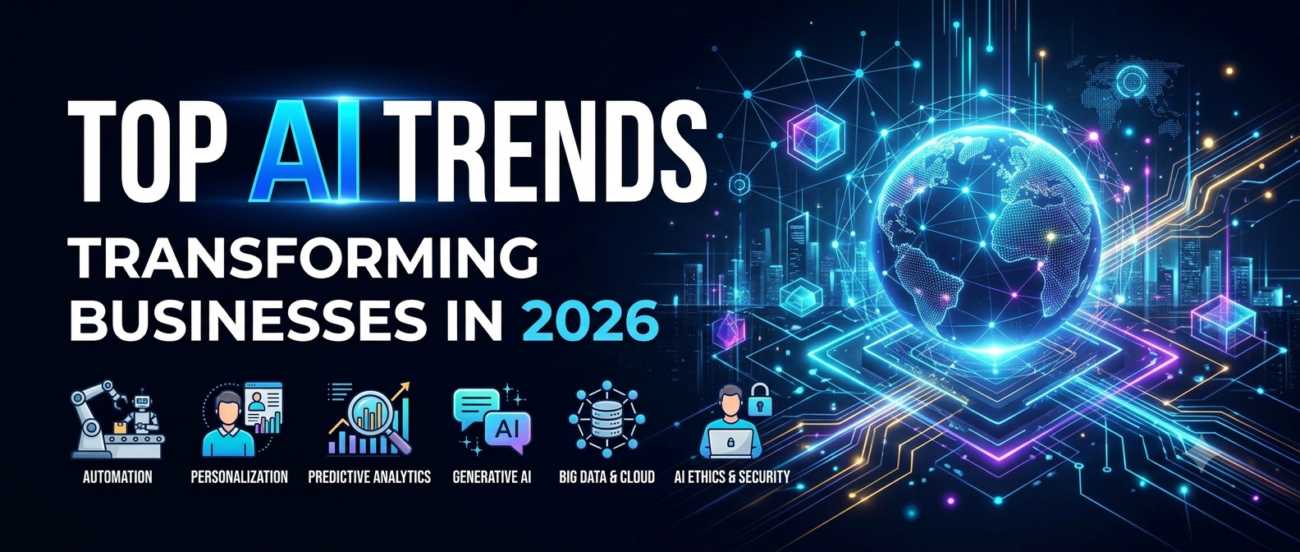
Artificial intelligence continues to reshape the way organizations operate, compete, and serve customers. In 2026, businesses across healthcare, finance, manufacturing, retail, education, and marketing are investing in smarter AI solutions to improve decision-making, automate repetitive tasks, and create more personalized customer experiences. Recent industry reports also indicate that AI adoption is increasing as organizations seek greater productivity and long-term growth. At the same time, responsible AI practices, data security, and transparency remain important priorities. These developments are encouraging companies of every size to evaluate how intelligent technologies can support daily operations while preparing for future opportunities.
This article highlights the latest business innovations, emerging technologies, research findings, practical applications, and future opportunities shaping artificial intelligence throughout 2026.
Why Businesses Continue Investing in Artificial Intelligence
Artificial intelligence is no longer limited to large technology companies. Businesses of all sizes are adopting AI to improve customer service, automate workflows, reduce operational costs, and generate meaningful business insights. Recent trends in artificial intelligence indicate that companies are moving beyond experimentation and integrating AI into everyday business processes.
According to industry research, a growing percentage of organizations now report measurable returns from AI investments. Generative AI adoption has accelerated across customer support, software development, marketing, and business analytics, reflecting continued confidence in AI-driven solutions.
Smarter Automation Is Changing Daily Operations
Automation has become one of the most practical business applications of AI. Instead of replacing employees, modern AI systems often assist teams by reducing repetitive workloads and allowing more time for strategic tasks.
Common business applications include:
- Automated customer support
- Intelligent document processing
- Invoice and financial management
- Supply chain forecasting
- Predictive equipment maintenance
- Email categorization
- Meeting summaries
- Workflow optimization
These improvements demonstrate how AI insights & trends continue influencing productivity across multiple industries.
Generative AI Is Becoming a Core Business Tool
Generative AI has expanded well beyond content creation. Businesses now rely on AI to prepare reports, summarize research, generate software code, assist product design, and personalize customer experiences.
Similarly, marketing teams use AI for campaign planning, while customer support departments create faster responses without sacrificing quality. As a result, trends in artificial intelligence continue reshaping how organizations manage knowledge and communicate internally.
Businesses also recognize that human oversight remains essential for maintaining accuracy, quality, and ethical decision-making.
Data-Driven Decisions Are Becoming Faster
Organizations generate enormous amounts of information every day. AI helps transform this data into practical recommendations by identifying patterns that might otherwise remain unnoticed.
Several examples include:
- Sales forecasting
- Customer behavior analysis
- Inventory optimization
- Financial planning
- Risk detection
- Fraud monitoring
These capabilities represent important AI insights & trends that support better business decisions while reducing manual analysis.
Personalized Customer Experiences Continue Improving
Customers increasingly expect businesses to provide personalized recommendations and faster responses. AI makes this possible by analyzing preferences, previous interactions, and purchasing behavior.
- Retailers recommend products more accurately.
- Banks provide customized financial suggestions.
- Healthcare organizations personalize patient communication.
- Educational platforms adapt learning experiences.
Likewise, businesses using platforms like Secrets AI continue observing how conversational AI can create more engaging digital interactions while maintaining user privacy and personalization.
Responsible AI Is Becoming a Business Priority
Growing AI adoption also brings greater attention to governance, transparency, and responsible development.
Business leaders now focus on:
- Data security
- Privacy protection
- Regulatory compliance
- Human oversight
- Bias reduction
- AI accountability
These priorities have become major AI trends because customers increasingly value trustworthy technology alongside innovation.
AI Is Supporting More Creative Industries
Creative professionals are also benefiting from AI-powered tools that assist with brainstorming, editing, visual production, and multimedia generation.
Content creators, designers, and marketers often combine human creativity with AI assistance to improve production speed while maintaining originality.
Some organizations even evaluate specialized services involving an AI companion for conversational testing, customer engagement experiments, or product research before wider deployment.
Meanwhile, AI insights & trends suggest creative collaboration between humans and AI will continue expanding across multiple industries.
AI Is Reshaping Digital Marketing
Marketing teams increasingly depend on AI to analyze campaign performance, understand customer interests, and produce personalized messaging.
Modern AI systems assist with:
- Audience segmentation
- Content recommendations
- Performance forecasting
- Search intent analysis
- Advertising optimization
Similarly, some brands experiment with AI influencer chat experiences to increase audience engagement while maintaining consistent digital communication strategies.
Companies including Secrets AI demonstrate how conversational AI technologies continue evolving alongside changing user expectations and responsible innovation.
Business Skills Are Changing Alongside AI
As AI adoption increases, employee responsibilities are changing rather than disappearing.
Organizations increasingly value professionals who can:
- Interpret AI-generated insights
- Verify AI outputs
- Work alongside intelligent systems
- Protect customer data
- Apply critical thinking
- Solve complex business problems
Current trends in artificial intelligence indicate that continuous learning will remain one of the strongest competitive advantages throughout the coming years.
What Businesses Should Focus on Next
Successful AI adoption depends on thoughtful planning rather than simply adopting the latest technology.
Organizations should prioritize:
- Clear business objectives
- Employee training
- Responsible AI governance
- Reliable data quality
- Customer privacy
- Continuous performance evaluation
Consequently, businesses that combine innovation with responsible implementation are more likely to achieve sustainable long-term results.
Likewise, companies including Secrets AI illustrate how AI-powered experiences continue improving while maintaining attention to user expectations and privacy standards.
Current trends in artificial intelligence also indicate that organizations investing in responsible AI strategies today will be better prepared for tomorrow’s technological advances.
Conclusion
Artificial intelligence continues transforming business operations across nearly every industry in 2026. From intelligent automation and personalized customer experiences to data-driven decision-making and responsible AI governance, organizations are finding practical ways to improve efficiency while supporting innovation. The most successful businesses recognize that AI works best alongside human expertise rather than replacing it.
As technology continues advancing, staying informed about AI trends, following reliable AI insights & trends, and monitoring long-term trends in artificial intelligence will help organizations make smarter decisions, build customer trust, and remain competitive in an increasingly digital business environment.
