
A room can feel completely fine all year and then suddenly feel way too small when the holidays come around. Nothing has actually changed. Same sofa. Same dining table. Same kitchen. There are just more people. And that’s usually when the little problems start showing up. People standing in the kitchen because there’s nowhere else to stand. Dining chairs blocking the way to the hallway. Someone balancing a plate on their lap because every table surface is already being used. But that doesn’t mean the house needs a major renovation. Sometimes the layout just needs a bit of thought.
Think About Where People Are Going to Walk
For preparing a home for guests, this part makes a big difference. Look at the main routes through the room. People are going to come through the front door, head towards the living room, go back and forth to the kitchen, find the bathroom and probably make several unnecessary trips in between.
What isn’t helpful is putting a chair right in the middle of the route or having a coffee table that everyone has to squeeze around. For everyday life, that might not matter. With a house full of people, it does. A simple rearrangement before guests arrive can be enough. Move the extra chair. Take the floor lamp out for the evening. Push the coffee table back a little. There is no rule saying every piece of furniture has to stay exactly where it normally sits.
Use Furniture That Can Move Around
Furniture that has more than one use tends to be much more useful in homes where people entertain regularly. An extendable dining table is an obvious one. Keep it smaller most of the time and open it up when there are more guests. Benches are useful for the same reason. They can fit several people around a table and then be moved somewhere else when dinner is over.
Ottomans are handy too. They can be seats when extra people arrive, footrests when they aren’t needed, or even little side tables with a tray placed on top. A drinks trolley is another simple option. It can sit against a wall most of the time and then be moved closer to the sitting area when guests arrive. That means fewer people heading into the kitchen every five minutes. Small thing, but anyone who has hosted a crowded dinner knows how quickly the kitchen becomes the busiest room in the house.
Don’t Make One Table Do Everything
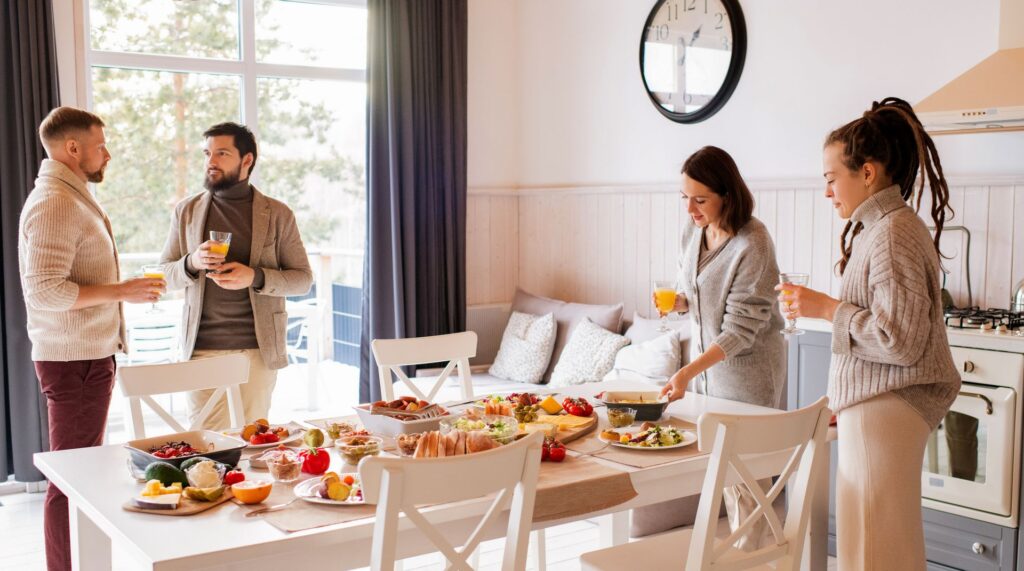
Food has a funny way of attracting people. Put the drinks, starters, plates and desserts on one table and suddenly everyone is standing around that table. Someone is trying to serve dinner. Someone else is reaching over them. Another person is trying to find somewhere to put a glass. It gets messy quickly. There is no need to overthink it. Spread things out. Drinks can go on a sideboard or trolley. Starters can sit on a small table somewhere nearby. Dessert can come out later and go somewhere else. It also makes the room feel less crowded.
For gatherings around Ramadan, planning home changes early can be useful too. Checking the Ramadan 2027 dates gives homeowners a better idea of how much time is available for dining-area updates, furniture changes or small renovation jobs before the month begins. The idea isn’t to make everything look perfectly organised. It is just about making things easier.
Lighting Doesn’t Have to Stay the Same All Evening
The lighting needed while preparing dinner is not necessarily the lighting wanted once everyone is sitting down. A kitchen needs to be bright enough to work in. A dining area usually doesn’t need to feel like an office. This is where having a few different light sources helps.
Task lighting can handle areas where food is being prepared. General lighting can cover the room. Smaller lamps or accent lights can make the sitting and dining areas feel a little warmer later. Dimmers are particularly useful because the same room can have completely different needs during the evening.
LED bulbs are worth considering when old lighting is being replaced as well. The U.S. Department of Energy notes that LED lighting generally uses less energy and lasts longer than incandescent lighting.
Keep The Extra Decorations Under Control
When a special occasion is coming up, people always want to add more. More candles. More flowers. More lights. More little decorative pieces. And suddenly there is nowhere to put a dinner plate. Decorations should not make it harder to use the room. Candles especially need some thought. The National Fire Protection Association recommends keeping them at least 12 inches away from anything that can burn. Decorative lights and extension cords also need to stay away from busy walking routes. It is worth checking these things before everyone arrives, rather than noticing a problem halfway through dinner.
The Kitchen Needs the Same Attention.
When several people are cooking, serving and talking at the same time, there isn’t much spare space. Keeping the main cooking area clear and moving finished dishes to another surface can make the whole room easier to work in. The room still needs to work on normal days. This is probably the biggest thing to keep in mind. A home shouldn’t be designed around hosting three or four times a year and then feel awkward for the rest of it. That expandable table should still work when there are only two people having dinner. Those extra chairs need somewhere to go. The serving trolley should still be useful when there isn’t a gathering happening.
The same goes for the layout. Furniture that can move, lighting that can change and surfaces that can serve different purposes tend to work better than spaces designed for one specific occasion. There is no need for the room to look like an event venue. Actually, it is better if it doesn’t. The nicest gathering spaces usually feel fairly normal before the guests arrive. Then a few chairs come out, the table gets extended, food is spread around, the lights are adjusted and suddenly the room works for twenty people instead of six. That flexibility is what makes a home useful. Not having a perfect room. Just having one that can change when it needs to.
