The best watch straps for the outdoors need to offer more than a rugged look. Repeated movement, changing temperatures, dirt, rain and sweat from hiking, camping and trail use all wear a strap down. Security matters too: a failed spring bar can mean a lost watch.
Nylon, technical textiles and rubber all work outdoors, but each behaves differently depending on the weather, the activity and how much moisture the strap takes on.
What Watch Strap Suits Outdoor Use?
Pass-through nylon is a practical outdoor option because if one spring bar fails, the watch stays attached. Technical textile straps offer a balance of flexibility, comfort and durability, and rubber is the sensible choice where the strap will see frequent rain, sweat or water. Whatever the material, an outdoor strap should stay comfortable, dry and snug as conditions change and as wrist size varies through the day.
Is a Nylon Watch Strap Good for Hiking?
Nylon is an excellent choice when low weight, flexibility and easy maintenance matter. For hiking, camping and general travel, a well-made nylon webbing strap is hard to beat.
If you’re choosing an adventure strap, look at the weave, edge finishing, hardware and thickness rather than assuming every nylon strap is the same.
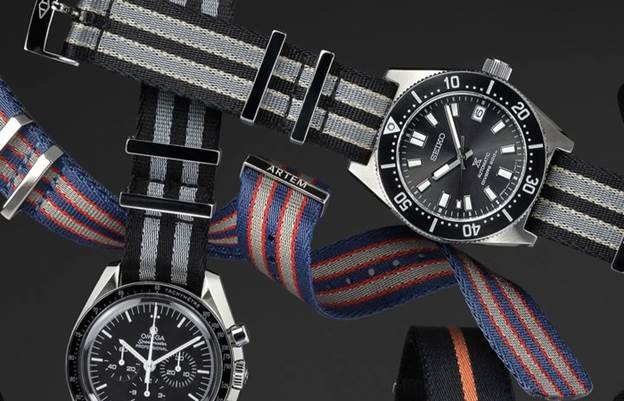
High-quality nylon straps offer a more refined build alongside all the practical qualities that make nylon a good fit for the outdoors.
When Is Rubber the Better Choice?
Rubber is especially useful where the strap will get wet often. It doesn’t absorb water the way woven materials do, and it’s usually easy to clean after contact with sweat, mud or rain.
Comfort still depends on the individual strap. Some rubber constructions feel warmer against the wrist than woven alternatives, especially on long hikes in hot weather.
Don’t assume all rubber straps compounds respond the same way to temperature, water or cleaning products.
What Makes a Long-Lasting Watch Strap for Camping?
On a camping trip, a strap needs to stand up to heavy use without demanding much attention.
Look at the whole construction: material, stitching, keepers, buckle and spring bars. Good strap material counts for little if the hardware is loose or the spring bars are worn.
The strap also needs to be sturdy enough for the weight of the watch. A larger outdoor watch may call for a more rigid strap, while a smaller watch sits comfortably on something thinner and more flexible.
Outdoors, simplicity is an advantage. Fewer components mean fewer places for dirt and moisture to collect.
What Happens to Watch Straps in Cold Weather?
A strap should stay comfortable in the cold, though how it behaves depends on the material.
Some materials stiffen as temperatures drop, and fit can change depending on whether the watch is worn over clothing.
A strap that works well for summer hiking may not perform the same in winter. Where available, follow the manufacturer’s temperature and care guidance, especially in harsher conditions.
A wide adjustment range is also useful when wearing the watch over extra layers.
What Is the Best Way to Clean an Outdoor Watch Strap?
After a hike, gently brush off any visible dirt and let the strap dry fully before storing it. Always clean according to the recommendations for the specific material.
Nylon and technical textiles hold water in the weave, so allow plenty of drying time. Rubber is generally easier to wipe down, but still follow the care directions.
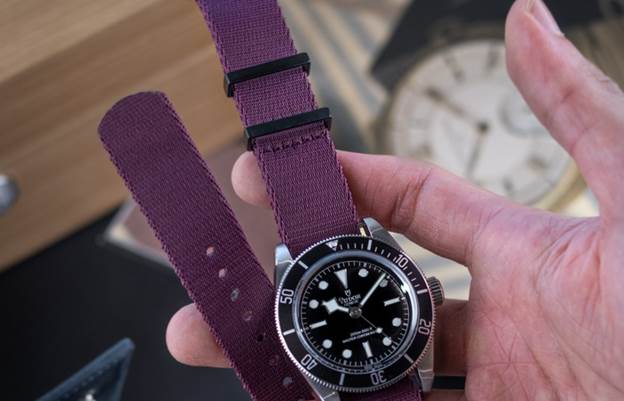
Pay attention to the hardware and spring bars too. Check for trapped debris, rust or damage before the next trip.
Frequently Asked Questions
Which is the best hiking strap material?
There’s no single best option. Nylon is light and flexible, technical textiles balance comfort and structure, and rubber is the practical choice for frequently wet conditions.
Should you use pass-through straps for hiking?
They add an extra level of security: if one spring bar breaks, the watch stays on the strap. They do add material under the case, however.
Can you wear a leather strap hiking?
You can, but leather needs more care around sweat, rain and prolonged moisture than nylon, rubber or a suitable technical textile.
What makes a watch strap rugged?
A rugged strap combines the right material, secure fastening, reliable spring bars, good edge finishing and enough structure to support the weight of the watch. Don’t assume that because a strap looks rugged, it will last.
Should I clean my watch strap after every hike?
It depends on the conditions. A strap exposed to heavy sweat, rain, mud or dirt should be cleaned and dried before storage. After lighter use, less frequent cleaning is fine.
