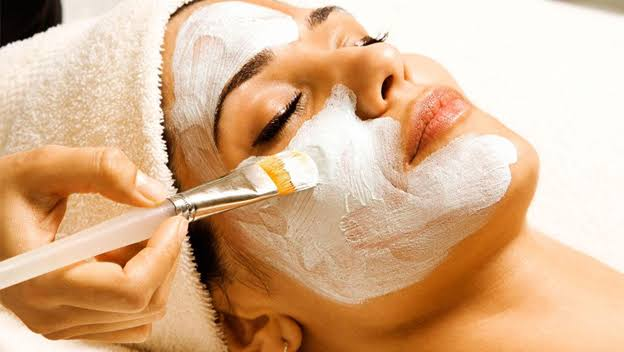
While facial treatment menus have exploded in recent years, most have been composed by simply stacking together the same existing modalities to create new “treatments”. Thus, rather than a list of individual treatments, it is more useful to categorize the many popular skin care treatments into a handful of distinct mechanisms that can be matched to specific skin care concerns, as well as a client’s skin type and desired amount of downtime and frequency of treatments. Here is a working list of the most demanded modalities, what they do to the skin, and how to sequence them for optimal results in a series of treatments.
The five categories that account for most demand
Most “top-of-the-line” treatments fall into one of a few categories. Knowing the names of these categories helps to get to the good stuff quickly in a consultation and prevents patients from buying into a facial by name.
- Chemical exfoliation. Alpha and beta hydroxy acids, plus stronger peel formulations, loosen corneocyte adhesion and speed turnover. Salicylic acid is lipophilic and works inside the follicle, which makes it the default for congestion.
- Mechanical exfoliation and extraction. Dermaplaning, microdermabrasion, and hydradermabrasion-style devices remove surface debris and vellus hair while priming the skin for product penetration.
- Controlled injury. Microneedling and fractional energy devices create a wound healing response that remodels collagen. This is the only category that meaningfully addresses atrophic scarring and laxity.
- Barrier support and hydration. Occlusive masks, humectant infusions, and low-irritation actives return transepidermal water loss to normal ranges. This group is undervalued and is frequently the correct first move.
- Light and energy without ablation. LED, intense pulsed light, and radiofrequency target pigment, vascular concerns, and dermal tightening with minimal recovery.
Why mechanism matters more than branding
Many of the proprietary facials use a combination of the above treatments. It is good to know what you’re getting when you purchase a “hot-off-the-press” new treatment. Ask your esthetician to break down the branded treatment into its individual treatment components before you agree to them. A client with a compromised barrier may need exfoliation reduced or removed from a full resurfacing treatment, not the whole treatment canceled.
Matching treatment to presenting concern
Concern-led facial selection is far quicker to deliver than menu-led and is far better to deliver in terms of retention as clients can clearly see the reasoning behind their recommended treatment.
| Primary concern | First-line approach | Typical interval | Main trade-off |
| Dryness and tightness | Hydrating infusion, barrier repair, minimal exfoliation | Every 3 to 4 weeks | Slow visible change, needs home care support |
| Dullness and sallow tone | Superficial acid peel or enzyme exfoliation | Every 4 weeks | Transient sensitivity and sun caution |
| Congestion and comedones | Salicylic treatment with manual extraction | Every 2 to 4 weeks initially | Post-extraction erythema, purging phase |
| Uneven texture and scarring | Microneedling, sometimes with resurfacing | Every 4 to 6 weeks, series of 3 to 6 | Genuine downtime, higher cost per session |
| Pigment irregularity | Light-based treatment plus tyrosinase inhibitors | Every 4 weeks, series-based | Risk of rebound in higher Fitzpatrick types |
Reading the skin before the client speaks
It is very common for a client to describe how they feel regarding their skin and NOT how their skin actually is. For example, dull skin often means dehydrated skin NOT slow skin cell turnover. Using acids on dehydrated skin only makes things worse! Assess the skin’s hydration level, its barrier integrity and degree of inflammation before choosing an exfoliation method. Also, find out the client’s skin type (Fitzpatrick) before choosing the energy level or depth of the treatment.
Building a course rather than selling a session
A single treatment has temporary effects. The changes caused by a single treatment can be measured and this must have a logical endpoint.
- Stabilize. Two to three barrier-focused sessions with corrective home care if the skin arrives reactive, dehydrated, or over-exfoliated.
- Correct. The active phase runs four to six sessions of the modality matched to the primary concern, with intensity stepped up as tolerance is confirmed.
- Maintain. Every six to eight weeks, usually a lighter version of the corrective treatment, with reassessment every second visit.
Where combinations help and where they do not
Complementary modalities that work at different depths of the skin can be paired for greater benefit, such as aftercare LED therapy after microneedling or dermaplaning before a superficial exfoliating peel. If you want that kind of layered protocol handled properly, book facials in Jacksonville FL with a provider who adjusts each step to how your skin responded last time. Note that dermaplaning increases the effective strength of exfoliants so contact time needs to be reduced for best results and to prevent irritation.
Setting expectations that survive the follow-up
Hydration starts working within a few days. Improvement in texture and fine lines takes 8-12 weeks as it takes that long for new collagen to mature. Pigmentation correction is the slowest as it involves stopping pigment production and removing existing pigment deposits. Therefore, it takes a long time and can’t be fully explained to the client. Documentation of pre-treatment images with a baseline discussion and the reminder that improvement is not visible is best for client retention.
In the end, looking for a provider who explains the mechanism of action of the different services they offer and how frequently you should come in for each of them to obtain the best results for your skin is so much better than reading through a list of different facial services that a salon or spa offers. It gives you a good idea of whether or not they operate based on your skin type and concerns, or off of a long menu of different services.
