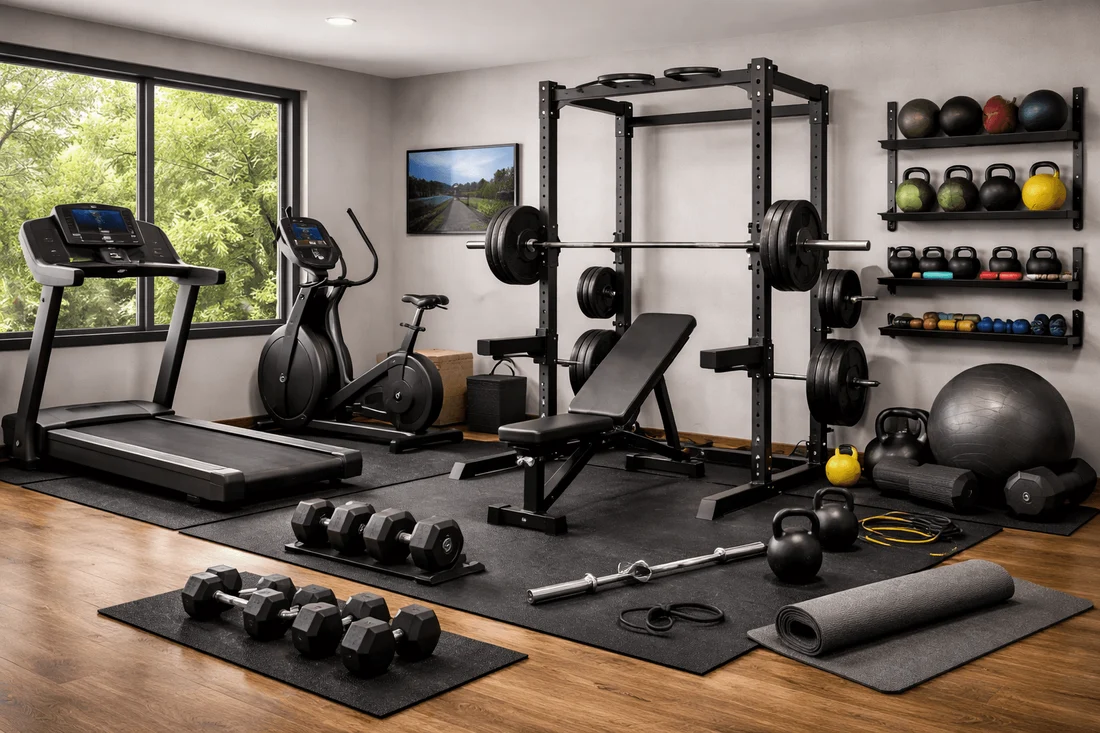
Buying gym equipment is surprisingly easy. Buying the right equipment is where people get into trouble.
A new machine can look perfect in a showroom or product photo, then spend the next two years becoming an expensive clothes rack. The problem usually isn’t motivation. It’s that the equipment doesn’t suit the person, the available space, or the way they actually like to train.
A better approach is to think about your workouts before thinking about products. What movements do you enjoy? How much room do you really have? And, perhaps most importantly, what will you still want to use six months from now?
Start With the Exercises You Already Do
It’s tempting to build a home gym around the workouts you imagine yourself doing. That’s how people end up buying equipment for routines they’ve never actually tried.
Instead, look at the exercises you already enjoy.
If strength training is your priority, your first purchases might include dumbbells, a bench, a barbell, plates, and eventually a rack. Someone focused on general fitness may get more use from a combination of free weights and cardio equipment.
This is also where versatility matters. A good adjustable bench, for example, can support dozens of exercises. A highly specialised machine might perform one movement brilliantly but take up a large chunk of the room.
Before buying anything, ask yourself a simple question: how many times will I realistically use this each week?
If you struggle to think of an answer, hold off.
Measure More Than the Floor
People often measure the footprint of a machine and stop there.
That’s risky.
You also need enough space to actually use the equipment. A rack may technically fit against the wall, but you’ll need room to load plates onto a bar. A bench needs space to move in and out of position. Cable equipment requires clearance for handles, attachments, and your own body.
Ceiling height can matter too, particularly with racks, pull-up stations, and overhead exercises.
Marking equipment dimensions on the floor with painter’s tape is a simple trick that works remarkably well. Walk around the outline. Pretend you’re loading a bar or adjusting the bench. Does the room suddenly feel cramped?
It’s much cheaper to discover that with tape than after a 150-kilogram machine arrives.
Build Around a Few Useful Pieces
You don’t need to recreate a commercial gym at home.
In fact, trying to do so can make a home setup worse. Commercial gyms need dozens of machines because they’re serving hundreds of people with different training styles. Your gym only needs to serve you and perhaps a few other people in your household.
For many strength-focused setups, a small collection of versatile equipment covers an enormous number of movements.
Adjustable dumbbells or a selection of fixed dumbbells can handle presses, rows, lunges, curls, raises, and loaded carries. Add a bench and the exercise list grows quickly. A barbell and rack open up heavier squats, presses, and other compound movements.
When you’re ready to expand beyond the basics, browsing gym equipment by Flex Equipment can help you see the range of strength, cardio, weight, and conditioning options available for different types of setups.
The goal isn’t to own everything. It’s to avoid owning equipment that duplicates something you can already do.
Think About Progression Before You Buy
Equipment should work for you now without becoming useless as you get stronger.
Imagine buying a set of weights that’s challenging today but offers no practical way to increase resistance. A few months of consistent training could leave you needing another purchase.
This is why progression deserves attention from the beginning.
For free weights, consider how easily you can add small increases. For cable machines, look at the available resistance range. With benches and racks, consider adjustment options and weight capacity.
You don’t necessarily need commercial-grade equipment for a home gym. You do want equipment with enough room for your training to develop.
Buying slightly ahead of your current ability can make more sense than replacing equipment every year.
Don’t Ignore the Annoying Little Details
Specifications tell you a lot, but they don’t tell you what living with a piece of equipment will feel like.
Small inconveniences become surprisingly important when you encounter them four times a week.
How difficult is the bench to move? Where will you store plates? Do adjustments require pulling multiple pins? Can one person safely change the setup? Does a folding piece actually fold easily enough that you’ll bother doing it?
Storage deserves special attention.
Weights scattered across the floor don’t just look messy. They eat into usable training space. Plate trees, dumbbell racks, wall storage, and attachment holders can make a relatively small gym feel much larger.
Try to imagine the room at the end of a workout, not just when everything is perfectly arranged.
Decide Where to Spend More
Not every piece of equipment deserves the same share of your budget.
If you’re going to use something constantly, paying more for durability and better adjustment can be worthwhile. A bench that wobbles slightly might seem acceptable during a quick test but become irritating during hundreds of workouts.
At the same time, expensive doesn’t automatically mean useful.
A premium machine you rarely touch is still poor value. A basic piece of equipment used four times a week may be one of the smartest purchases in the room.
Think in terms of cost per use rather than purchase price alone.
A $1,000 piece used 500 times works out very differently from a $300 accessory used six times before being forgotten.
Leave Room for Your Gym to Change
One of the smartest things you can do when setting up a gym is not finish it.
Start with the equipment that covers your current routine. Train with it for a few months. You’ll quickly notice what’s missing.
Maybe you keep wishing you had a cable movement for back training. Perhaps cardio is the obvious gap. Maybe you discover that additional plates would improve your workouts more than another machine.
Those real-world observations are far more useful than trying to predict every future need on day one.
They also protect your budget. Instead of filling the room immediately, each new purchase solves a problem you’ve actually experienced.
The Best Gym Is the One That Fits Your Routine
A great home gym doesn’t need to impress anyone.
It needs to make training easier.
Choose equipment around movements you’ll actually perform, measure your space carefully, prioritise versatile pieces, and make sure your setup can grow with you. Pay attention to storage and everyday usability as much as headline specifications.
Then give yourself permission to build slowly.
After a few months of regular workouts, you’ll know far more about what your gym needs than you ever could while staring at an empty room. That’s when the next purchase becomes much easier to get right.
