Most homeowners spend more time staring at their backyard than actually using it. The lawn needs mowing, the patio has cracked, and every rainstorm turns the side yard into a mud pit. At some point, the question shifts from how to maintain what you have to whether it is worth replacing it entirely with something better. Artificial grass and pavers are the two most popular answers to that question, and choosing between them is not always obvious.
This article breaks down how both options perform across the factors that matter most: cost, longevity, drainage, heat, maintenance, and fit for different uses. Whether you are redoing a small courtyard or a full backyard, the comparison here should give you a clear picture of what each surface actually delivers.
What Artificial Grass Actually Is
Modern artificial grass is not the carpet-like plastic of old football fields. Today’s residential turf is engineered with multiple layers. A backing material, usually polyurethane or latex, holds synthetic fibers made from polyethylene or polypropylene. Those fibers are tufted into the backing at varying heights and densities depending on the intended use, whether that is a pet area, a lawn for kids, or a decorative putting green.
Beneath the turf itself, proper installation requires a compacted aggregate base, typically crushed granite or decomposed granite, to ensure stability and drainage. Infill material, such as silica sand or crumb rubber, is then spread between the blades to help them stand upright and to add cushioning. The whole system is designed to look and feel closer to natural grass while eliminating the need for watering, mowing, and fertilizing.
What Pavers Bring to the Table
Pavers are individual units of hard material, laid in a pattern over a prepared base, to create a solid, walkable surface. They come in a wide range of materials, each with different looks, price points, and durability profiles. The most common types used in residential projects include concrete pavers, natural stone such as travertine or bluestone, clay brick, and porcelain tile pavers.
A key structural advantage of pavers over poured concrete or asphalt is their flexibility. Because they are individual units with joints between them, they can shift slightly without cracking. When one paver does become damaged or stained, it can be removed and replaced without disturbing the surrounding surface. That repairability is a significant long-term benefit.
Head-to-Head: Key Performance Factors
| Factor | Artificial Grass | Pavers |
| Upfront cost (per sq ft, installed) | $8 to $20 | $10 to $30 |
| Lifespan | 10 to 20 years | 25 to 50+ years |
| Maintenance | Occasional brushing, rinsing | Periodic sealing, weed control in joints |
| Drainage | Good with proper base | Excellent with permeable jointing |
| Heat retention | Can get hot in direct sun | Varies by material; light stone stays cooler |
| Pet suitability | High; designed for pets | Moderate; harder surface on paws |
| Child play areas | High; soft and cushioned | Moderate; harder falls |
| Resale appeal | Growing acceptance | Widely valued by buyers |
Cost and Installation Considerations
Upfront cost is often the first thing people compare, but the smarter comparison is total cost over time. Artificial turf has a higher installation cost than basic sod, but it eliminates ongoing expenses for water, fertilizer, and lawn care services. According to the Water Research Foundation, a typical irrigated lawn uses between 30,000 and 60,000 gallons of water per year depending on climate and lawn size. Switching to artificial grass can eliminate that usage almost entirely.
Pavers sit at a higher price point for materials like natural travertine or thick porcelain, but their longevity often justifies the investment. Concrete pavers, which sit at the more affordable end, can last 30 years or more with minimal intervention. The main ongoing cost for pavers is resealing every two to five years, which helps protect against staining and moisture intrusion, particularly in freeze-thaw climates.
Installation complexity matters too. Both surfaces require proper ground preparation, and cutting corners on the base will cause problems regardless of which surface goes on top. For artificial grass, a poorly compacted base causes uneven settling and drainage issues. For pavers, an inadequate sand or gravel base leads to rocking, sinking, and misalignment over time.
How Each Surface Handles Specific Situations
Pets and Play Areas
Artificial grass is often the preferred choice for households with dogs. The surface is soft enough to be comfortable for animals, it does not get muddy, and most modern turf is designed to drain urine efficiently while resisting odor when cleaned regularly. Some turf products include antimicrobial infill to further control bacteria. For children, the cushioning effect of turf over a proper base provides some impact absorption, which poured concrete and even most pavers do not offer.
Pavers work well in areas where pets or children need a firm, clean surface, such as a covered patio, a pathway between play zones, or a poolside area. The hard surface does not trap pet hair or debris the way carpet-like surfaces can, and it is easy to hose clean. The tradeoff is that it is unforgiving underfoot for long play sessions.
Heat and Climate
Heat retention is a real concern with artificial grass in sunny climates. Synthetic fibers can reach surface temperatures significantly above ambient air temperature on hot days. A study published in the journal Landscape and Urban Planning found that artificial turf surface temperatures can exceed 150 degrees Fahrenheit in full sun, compared to around 78 degrees for natural grass. Some turf manufacturers now offer heat-reducing infill or lighter-colored fiber options to address this.
Pavers vary considerably in how they absorb and retain heat. Dark materials like certain slate or basalt absorb more heat. Light-colored natural stone such as travertine or cream limestone stays noticeably cooler, which is one reason travertine pavers are so popular around pools in hot climates. Porcelain pavers, especially those with textured light finishes, also perform well in heat.
Drainage and Water Management
Both surfaces can handle drainage well when installed correctly. Artificial turf relies on perforations in the backing material and the aggregate base beneath to move water away. A properly installed turf system drains at roughly 30 inches of water per hour, which exceeds the drainage rate of most natural lawns. Pavers, especially those installed with permeable jointing sand, allow water to pass between units directly into the base and eventually the soil below. This approach, called permeable paving, is increasingly recognized by municipalities as a stormwater management strategy.
Combining Turf and Pavers
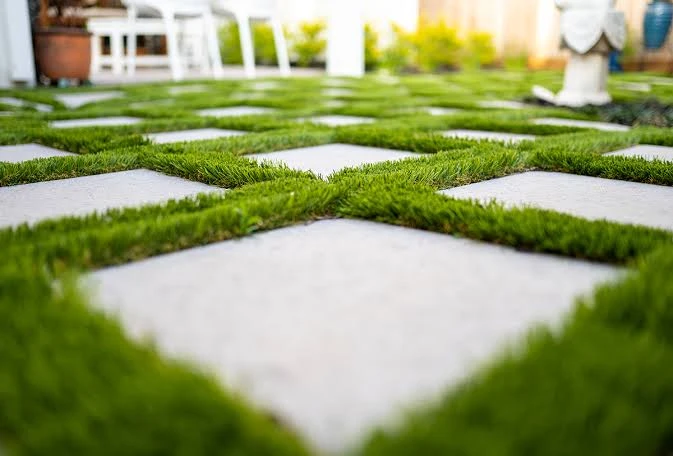
One of the most practical insights from landscape design is that artificial grass and pavers do not have to compete. Many homeowners use both in the same project, creating defined zones that serve different functions. A paved patio area with a dining table and chairs flows into a turf section for kids or pets. Stepping stone paths made from pavers cut through turf sections. Paver borders give turf edges a clean, finished look and prevent the backing from curling over time.
Companies that specialize in both surfaces understand how to make these transitions work structurally and visually. Go Turf Artificial Grass & Pavers, for example, is one such company that focuses specifically on designing outdoor spaces where synthetic turf and hardscape elements are planned together from the start, rather than added as separate afterthoughts.
The design principle is simple: use each material where it performs best. Hard surfaces handle foot traffic, furniture weight, and wet outdoor kitchen areas. Soft turf handles open lawn areas, play zones, and landscaped spaces that benefit from a green, natural look without the watering bill.
Questions Worth Asking Before You Decide
- How much of your outdoor space gets direct sun for most of the day, and in what climate?
- Do you have pets or young children who will use the space heavily?
- Is the area primarily for walking and entertaining, or for open lawn use?
- What is your tolerance for ongoing maintenance tasks like sealing, brushing, or joint weeding?
- Are there local water restrictions or utility costs that make lawn irrigation expensive?
- Do you plan to sell the property within a decade, and how does curb appeal factor in?
- Is there a drainage challenge in the yard that needs to be solved during the installation process?
These questions do not have universal right answers. A family with two large dogs in a dry climate will land on a different solution than a couple designing a low-maintenance patio garden in a rainy region. Getting honest answers to these questions before selecting a surface saves money and avoids redoing work a few years down the line.
Both artificial grass and pavers have earned their place in residential outdoor design. Each offers genuine advantages over traditional lawns and plain concrete, and each comes with real tradeoffs. The best choice comes down to how the space will be used, what the local climate demands, and how much ongoing attention you actually want to give to your outdoor surfaces. Understanding those factors clearly is the foundation of any outdoor project that holds up well and gets used often.
