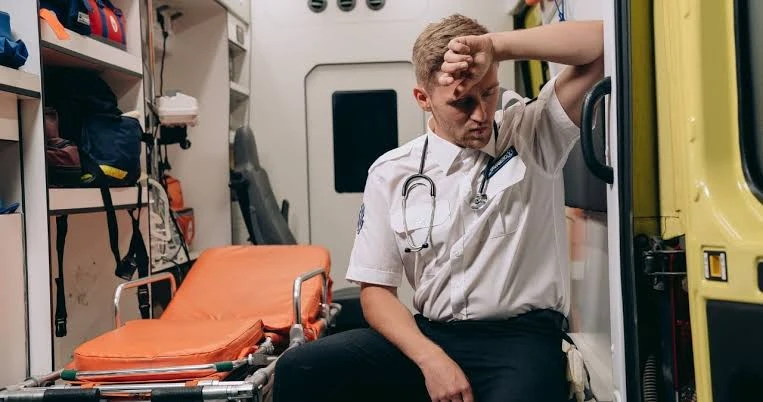
Every shift ends, but the weight of what first responders witness does not always leave when the uniform comes off. Firefighters, paramedics, law enforcement officers, and emergency dispatchers absorb traumatic events at a rate most people will never experience. Yet for decades, the culture surrounding these professions quietly discouraged anyone from admitting they were struggling. That silence has cost lives. Understanding the mental health landscape for first responders, and the progress being made to change it, matters for the responders themselves, their families, and the communities they serve.
Why First Responders Face Elevated Mental Health Risks
The nature of emergency work creates conditions that systematically wear down psychological resilience. A single traumatic incident might be manageable for most people given time and support. First responders, however, experience cumulative trauma, meaning repeated exposure to death, injury, violence, and human suffering over years or even decades. The nervous system was not designed to process that volume of distress without some form of intervention.
Beyond the calls themselves, the job structure adds pressure. Shift work disrupts sleep, and chronic sleep deprivation is directly linked to mood disorders and impaired emotional regulation. Many departments still operate with significant understaffing, which increases workload and reduces recovery time between difficult incidents. Administrative stress, interpersonal conflict within tight-knit crews, and the expectation to project strength at all times compound the problem.
According to the Substance Abuse and Mental Health Services Administration, roughly 30 percent of first responders develop behavioral health conditions including depression and post-traumatic stress disorder, compared to 20 percent of the general population. Some research suggests that firefighters and police officers die by suicide at higher rates than they die in the line of duty, though exact figures vary by study and reporting methods. The point is not to shock but to establish the real scale of a problem that deserves serious attention.
Common Conditions Affecting Emergency Personnel
Mental health challenges among first responders are not a single condition with a single solution. Several distinct issues tend to cluster together, sometimes feeding into one another.
- Post-Traumatic Stress Disorder (PTSD): Recurring intrusive memories, hypervigilance, emotional numbness, and avoidance of trauma reminders. PTSD in first responders is often triggered by a specific critical incident but can also develop gradually through repeated exposures.
- Occupational Burnout: A state of chronic exhaustion, cynicism, and reduced sense of personal accomplishment. Burnout erodes a person’s connection to work they once found meaningful and often precedes more serious mental illness.
- Depression: Persistent low mood, loss of interest, changes in sleep and appetite, and feelings of hopelessness. Depression is frequently underdiagnosed in first responders because many learn to mask symptoms.
- Anxiety Disorders: Generalized anxiety, panic attacks, and phobia-related conditions can develop in response to prolonged stress and hyperarousal.
- Substance Use Disorders: Alcohol and drug misuse are sometimes used as coping mechanisms for unaddressed emotional pain. Rates of problematic drinking are notably elevated in fire and law enforcement professions.
- Moral Injury: A relatively newer framework that describes the psychological damage caused when someone is forced to act against their values, witnesses ethical violations, or feels responsible for an outcome they could not prevent.
Barriers to Seeking Help
Knowing that mental health conditions exist is not the same as being able to access care. First responders face a distinct set of obstacles that often prevent them from seeking help even when they recognize something is wrong.
Stigma remains the most commonly cited barrier. In many departments, admitting to psychological distress is still perceived as weakness or instability. Officers and firefighters worry, sometimes with legitimate reason, that disclosing mental health struggles could affect their assignment, their standing with peers, or their career trajectory. That fear is not irrational; it is a reflection of workplace cultures that have historically treated mental health as a liability rather than a health issue.
Access is another real problem. General practitioners and even many licensed therapists have limited training in trauma-specific treatments or the particular pressures of emergency work. A first responder sitting across from a clinician who has never understood shift culture, command hierarchy, or the specific emotional aftermath of a mass casualty event may feel fundamentally misunderstood. That experience often ends in early dropout from treatment.
Scheduling presents practical challenges as well. Treatment programs built around standard business hours are difficult to use for someone working 24-hour shifts, rotating schedules, or mandatory overtime. Cost and insurance coverage add further complexity, particularly for volunteer firefighters and emergency medical technicians who may not have employer-sponsored health benefits.
What Effective Support Actually Looks Like
The good news is that evidence-based treatments work for first responders when the conditions are right. Several approaches have shown consistent results across research and clinical practice.
| Treatment or Support Type | What It Involves | Best Suited For |
| Cognitive Processing Therapy (CPT) | Structured therapy that helps individuals examine and reframe unhelpful beliefs formed around trauma | PTSD and moral injury |
| Eye Movement Desensitization and Reprocessing (EMDR) | A therapy that uses bilateral stimulation to help the brain process traumatic memories | Single-incident and complex trauma |
| Peer Support Programs | Trained fellow first responders who provide confidential emotional support and referrals | Stigma reduction, early intervention |
| Critical Incident Stress Management (CISM) | Structured group debriefs and one-on-one support following major traumatic events | Acute post-incident support |
| Medication Management | Psychiatric evaluation and medication for depression, anxiety, or PTSD when clinically indicated | Moderate to severe symptoms |
| Residential and Intensive Outpatient Programs | Structured programs offering concentrated care, sometimes designed specifically for first responders | Burnout, PTSD, and co-occurring substance use |
Peer support programs deserve particular mention because they address the stigma barrier directly. When a firefighter or officer sees a respected colleague speaking openly about their own mental health journey and offering support, it signals that help-seeking is compatible with strength and professionalism. Many departments across the country have invested in formal peer support training programs for exactly this reason.
How Families and Departments Can Help
Mental health recovery does not happen in isolation. The environment a first responder returns to after a difficult shift, and the institutional culture they work within, have enormous influence on outcomes.
For Families
Family members often notice warning signs before the responder acknowledges them. Withdrawal, increased irritability, changes in sleep, numbing with alcohol, or talking about hopelessness are signals worth taking seriously. Approaching a struggling loved one with curiosity rather than confrontation, and avoiding pressure to simply toughen up, tends to be more effective. Family therapy can also help partners and children understand what the responder is going through and learn how to support recovery without enabling avoidance.
For Departments and Agencies
Leadership behavior sets the tone for an entire department. When senior officers and chiefs speak openly about mental health, use employee assistance programs themselves, and visibly support those who seek treatment, it reshapes what is considered acceptable. Structural changes matter too: clear confidentiality policies around mental health disclosures, protected time for post-incident support, and access to vetted clinicians with first responder experience all reduce the practical barriers to care.
Organizations and Resources Making a Difference
A growing ecosystem of organizations has emerged specifically to serve the mental health needs of emergency personnel. Some are national nonprofits, some are state-level programs, and some are embedded within specific agencies. What distinguishes the most effective ones is a combination of clinical credibility, peer-informed programming, and genuine understanding of first responder culture.
In California, where the first responder workforce is among the largest in the country and the demand on emergency services is relentless due to wildfires, seismic risk, and dense urban populations, specialized support organizations have become particularly important. First Responders of California is one example of a state-level organization focused on connecting emergency personnel with mental health resources, peer support, and clinical care tailored specifically to the realities of the profession.
National resources also exist. The Firefighter Behavioral Health Alliance, the First Responder Support Network, and the Code Green Campaign all offer educational materials, peer referrals, and advocacy for systemic change. The Veterans Crisis Line, while primarily designed for veterans, also serves active law enforcement and fire personnel in crisis. Most states now have some version of a first responder-specific crisis line or employee assistance program, though awareness of these resources is uneven.
The Shift Toward Prevention
The most meaningful evolution in this field is a gradual move away from crisis response and toward prevention. Rather than waiting until a firefighter or officer is in acute distress, forward-thinking programs focus on building psychological resilience before problems develop. That includes training in stress inoculation, mindfulness-based practices adapted for high-stress environments, and regular mental health check-ins normalized as a routine part of the job rather than a stigmatized intervention.
Pre-employment psychological screening, when used thoughtfully rather than as a gatekeeping mechanism, can help identify individuals who would benefit from additional support from the start of their careers. Annual mental health assessments, modeled on the physical fitness standards already common in emergency services, are gaining traction as a framework for early detection.
The cultural shift required is significant, but there is genuine momentum. A generation of first responders who have been willing to speak openly about their own struggles is slowly changing what younger recruits believe is acceptable to feel and acceptable to say. That shift, more than any single program or resource, may be the most important development of all. The people who run toward emergencies deserve the same quality of care and support that they spend their careers providing to everyone else.
